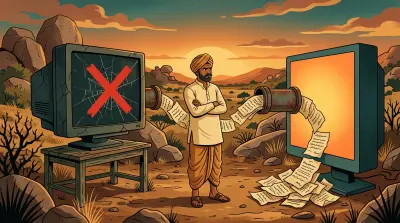
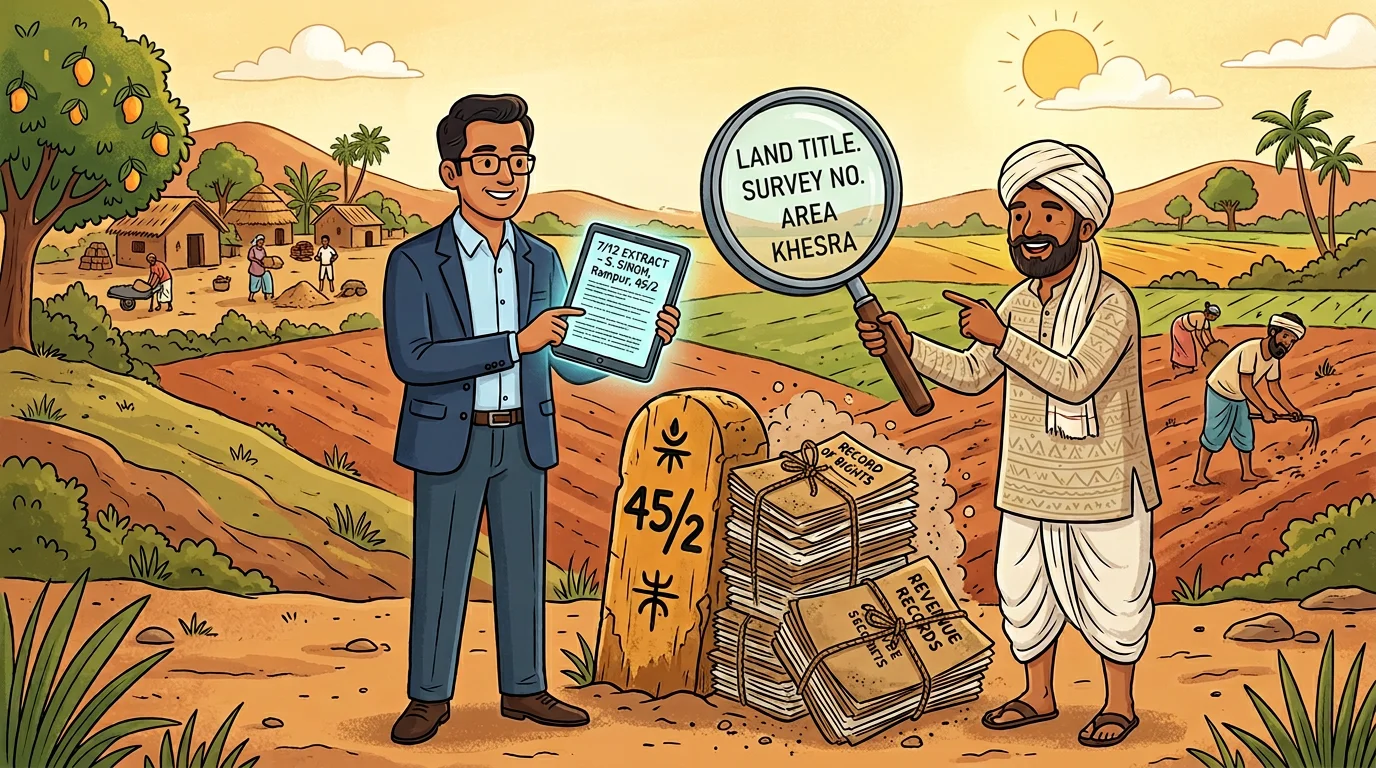

India has over 280 million rural land parcels spread across 28 states and 8 union territories, each with its own revenue record. Each state calls its land revenue record something different. Maharashtra has the 7/12 extract. Karnataka has the RTC. Telangana and Andhra Pradesh have the pahani. Punjab and Haryana have the jamabandi. Tamil Nadu has the chitta and adangal. Rajasthan has the khasra and khatauni.
Same concept. Different names. And if you own property in more than one state, or you are an NRI trying to make sense of your family’s land holdings from abroad, the terminology alone can make your head spin.
This guide breaks it all down. What land revenue records are, why they exist, how they differ from your title deed, what each state calls them, how to read them, and how to access them from anywhere in the world.
Portal URLs and record formats in this guide are current as of March 2026. State governments update these periodically. Verify on the respective state portal before acting.
What Are Land Revenue Records?
Think of it this way. When the British colonised India, they needed to collect land tax efficiently. They could not knock on every farmer’s door and ask who owned what. So they created a system of written registers that tracked every piece of land in every village: who held it, how big it was, what it was used for, and how much tax was owed.
Independent India inherited this system. It has been updated, digitised (partially), and renamed multiple times. But the core idea remains the same: the government maintains a parallel set of records about every land parcel in the country, separate from the registration system that handles sale deeds and title documents.
These are your land revenue records. They are sometimes called the Record of Rights (RoR), and they are maintained by the state revenue department, not the registration department.
In plain English, a land revenue record is the government’s own notebook about your land. It is not the document that gives you ownership (that is your registered sale deed). It is the government’s internal note that says: “This person holds this land, it is this big, it is used for this purpose, and this is the tax situation.”
The Two-System Problem: Registration vs Revenue Records
This is where most property confusion in India begins. And it is worth understanding properly, because this gap is behind a staggering number of the property disputes clogging Indian courts.
India runs two completely separate systems for tracking property:
System 1: Registration. When you buy property, you go to the Sub-Registrar’s office, pay stamp duty, and register your sale deed. This is governed by the Registration Act, 1908 and the Transfer of Property Act, 1882. The registration department records the transaction. This is what gives you legal ownership.
System 2: Revenue Records. The state revenue department maintains its own set of records about every land parcel. This tracks who is in possession, what the land is used for, and what taxes are owed. This is governed by each state’s own land revenue code or act.
Here is the problem: these two systems do not automatically talk to each other.
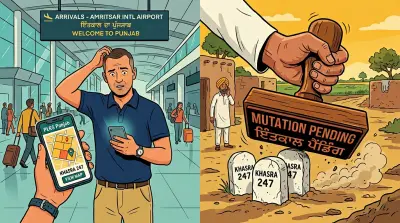
You can register a sale deed and become the legal owner of a property, but the revenue records might still show the previous owner’s name. Until you apply for mutation (the process of updating revenue records after a transfer), the government’s own records do not reflect the change.
And conversely, someone’s name appearing in the revenue records does not mean they actually own the property. The Supreme Court has been clear about this. In Gurunath Manohar Pavaskar v. Nagesh Siddappa Navalgund (2008), the Court held: “A revenue record is not a document of title. It merely raises a presumption in regard to the possession.”
This distinction matters because people confuse the two systems all the time. Someone checks the revenue record, sees a name, and assumes that person owns the land. Or someone registers a purchase but never updates the revenue records, and years later discovers that the government’s records still show someone else as the landholder.
A few states have started integrating the two systems. Telangana’s Bhu Bharati portal (formerly Dharani) automatically triggers mutation when a property is registered. Andhra Pradesh has auto-mutation for purchase transactions. But in most of India, these remain two separate processes that you need to handle independently.
What Do States Call Their Revenue Records?
Every state has its own name for essentially the same document. Here is a comprehensive reference:
| State | Revenue Record Name | Online Portal |
|---|---|---|
| Maharashtra | 7/12 Extract (Satbara Utara), Property Card (urban) | bhulekh.mahabhumi.gov.in |
| Gujarat | 7/12 Utara, 8A Extract | anyror.gujarat.gov.in |
| Karnataka | RTC (Record of Rights, Tenancy and Crops) | landrecords.karnataka.gov.in |
| Telangana | Pahani (Passbook) | bhubharati.telangana.gov.in |
| Andhra Pradesh | Pahani, Adangal, 1B (title record) | meebhoomi.ap.gov.in |
| Tamil Nadu | Chitta, Adangal, Patta, FMB Sketch | eservices.tn.gov.in |
| Punjab | Jamabandi, Fard | jamabandi.punjab.gov.in |
| Haryana | Jamabandi, Fard | jamabandi.nic.in |
| Himachal Pradesh | Jamabandi | lrc.hp.nic.in |
| Uttar Pradesh | Khasra, Khatauni | upbhulekh.gov.in |
| Madhya Pradesh | Khasra, B1 (Khatauni) | mpbhulekh.gov.in |
| Rajasthan | Khasra, Khatauni, Jamabandi | apnakhata.rajasthan.gov.in |
| Bihar | Khata, Khesra | biharbhumi.bihar.gov.in |
| Jharkhand | Khata, Khesra | jharbhoomi.jharkhand.gov.in |
| West Bengal | Khatian, Plot Information | banglarbhumi.gov.in |
| Odisha | RoR (Record of Rights) | bhulekh.ori.nic.in |
| Chhattisgarh | Khasra, B1 | bhuiyan.cg.nic.in |
| Uttarakhand | Khatauni | bhulekh.uk.gov.in |
| Kerala | Thandaper, RoR | erekha.kerala.gov.in |
| Goa | Form I and XIV | egov.goa.nic.in |
| Assam | Dag (plot) records, Jamabandi | revenueassam.nic.in |
The names are different. The underlying concept is the same: a government-maintained record of who holds each piece of land, how big it is, and what it is used for.
What Information Do Revenue Records Contain?
Despite the different names, revenue records across states generally contain the same categories of information:
Owner/Holder Details. The name of the person recorded as the landholder (called “khatedar” in some states, “pattadar” in others). This may also list co-owners, if the land is held jointly.
Survey Number and Plot Details. Every piece of land in India has been surveyed and assigned a unique number. The revenue record identifies the land by its survey number (or dag number, or plot number, depending on the state), along with the village, taluk, and district.
Land Area. The total area of the land parcel, usually in hectares, acres, or local units like guntas (in Karnataka and parts of south India) or bighas (in north India).
Land Classification. Whether the land is agricultural, non-agricultural, residential, commercial, or government-owned. This classification affects what you can do with the land, what taxes you pay, and whether you need conversion permissions.
Tenancy and Cultivation Details. For agricultural land, the record may show who is actually cultivating the land (which may be different from the owner), what crops are grown, and any tenancy arrangements.
Encumbrances and Liabilities. Any charges, liens, mortgages, or court orders affecting the land. This overlaps with but is not identical to the information in an encumbrance certificate, which comes from the registration department.
Mutation History. A record of how ownership has changed hands over time. Each transfer (through sale, inheritance, gift, or court order) should be reflected as a mutation entry.
Tax Details. The land revenue or property tax assessed and whether it has been paid.
How to Read a 7/12 Extract: A Walkthrough
The 7/12 extract is perhaps the most well-known revenue record in India, used across Maharashtra and parts of Gujarat. It gets its name because it combines information from two village forms maintained by the talathi (village revenue officer).
Form 7 (Gaon Namuna Saat) records the rights of the owner. It contains:
- Survey number and subdivision number
- Name of the owner (khatedar)
- How the land was acquired (sale, inheritance, government grant, etc.)
- Any encumbrances (mortgages, charges, court orders)
- Other rights (easements, rights of way)
Form 12 (Gaon Namuna Baara) records the cultivation and tenancy details. It contains:
- Who is actually cultivating the land
- Crop details (type, season, area under each crop)
- Whether the land is irrigated or rain-fed
- Land use category
When you get a 7/12 extract, both forms are combined into a single document. Here is what to look for:
Top section: Survey number, village name, taluka, district. This identifies the exact parcel of land.
Left column (Form 7 side): Owner’s name, source of right (how they got the land), and any encumbrances. Check that your name appears here if you are the owner. If it shows someone else’s name, mutation has not been done.
Right column (Form 12 side): Cultivator’s name, crop details, land type. For non-agricultural land, this section may be simpler.
Bottom section: Area of land (in hectares and ares), and mutation entries showing the history of ownership changes.
Red flags to watch for:
- Someone else’s name in the owner column (mutation not done)
- Encumbrance entries you do not recognise (possible fraud or unreleased mortgage)
- Land classified as “government” or “disputed”
- Missing mutation entries in the chain of ownership
- Area discrepancies between what you bought and what the record shows
In Maharashtra, you can now view and download your 7/12 extract online through the Mahabhulekh portal (bhulekh.mahabhumi.gov.in). Enter your district, taluka, village, and survey number to pull up the record.
Common Problems and Fraud Patterns
Revenue records are supposed to be a reliable reflection of who holds what land. In practice, they are often outdated, incorrect, or deliberately tampered with. Here are the patterns that cause the most trouble.
Outdated Records After Inheritance
This is the single most common problem, and it affects families across India. A property owner passes away. The heirs know the property exists. Nobody gets around to updating the revenue records. Ten, twenty, thirty years pass. By the time someone tries to sell or mortgage the property, the revenue record still shows the deceased person’s name. Now you need death certificates, legal heir certificates, succession certificates, and NOCs from every heir. What should have been a simple mutation becomes a multi-year project.
Mismatch Between Registration and Revenue Records
You registered your sale deed years ago, but never applied for mutation. The Sub-Registrar’s records show you as the owner. The revenue records show the previous owner. This creates confusion when you try to sell, take a loan, or if the government acquires the land for a public project. Compensation for acquired land often goes to whoever’s name appears in the revenue records, not necessarily the registered owner.
Fraudulent Entries by Revenue Officials
In states where patwaris and village-level revenue officers still manually maintain records, fraudulent entries are a real risk. Cases from across India show revenue officials processing mutations based on forged documents, entering fictitious names, or changing land classifications without authorisation. In Haryana, the Anti-Corruption Bureau has registered multiple cases against patwaris for illegal manipulation of land records.
Even digital systems are not immune. In Telangana, there have been documented cases of land record tampering through the now-discontinued Dharani portal, where records were altered using compromised login credentials. A government-ordered code audit confirmed systemic irregularities.
Boundary and Area Disputes
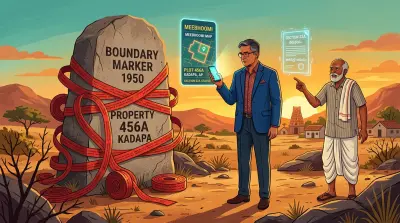
The survey data underlying revenue records in many states dates back decades, sometimes to the colonial era. Boundaries that were once marked by trees, streams, or footpaths may no longer exist. The area recorded in the revenue record may not match the actual ground reality. These discrepancies fuel boundary disputes between neighbours and between landowners and the government.
Multiple Claimants
When the same piece of land shows up in two different revenue records, or when two people claim the same survey number through different chains of ownership, you have a dispute that can take years to resolve. This is particularly common in areas where land surveys were incomplete or where partition of joint family land was never properly recorded.
How to Get Revenue Records from Abroad
If you are an NRI, you do not need to fly to India just to check your land records. Most states now have online portals that let you view revenue records from anywhere.
Step 1: Identify the right portal. Use the state-by-state table above to find your state’s land record portal. You will need the survey number (or khata number, or khasra number, depending on the state), the village name, taluka/tehsil, and district.
Step 2: Search for your record. Most portals let you search by survey number, owner name, or khata number. Enter the details and pull up the record. You can usually view and download it as a PDF.
Step 3: Verify the details. Check that the owner name matches yours (or your family member’s, if you are checking inherited property). Look for any encumbrances, disputed entries, or classification changes you did not expect.
Step 4: If something is wrong, act quickly. If the records show someone else’s name, or if there are entries you do not recognise, you need to act. Contact a lawyer in the relevant jurisdiction. File a complaint with the Tehsildar or District Collector. If the tampering is through a digital portal, file a grievance through the portal’s complaint mechanism.
Step 5: Keep digital copies of everything. Download and save your revenue records along with your title deeds, encumbrance certificates, tax receipts, and mutation records. Platforms like Assetly let you organise all your property documents in one place and access them from anywhere, so you are not scrambling when you need something urgently.
For actions that require physical presence, such as applying for corrections, filing objections, or getting certified copies, you will need a Power of Attorney holder in India. The POA must be notarised, attested by the Indian Embassy or apostilled (for Hague Convention countries), and registered in India within three months.
DILRMP: The Digital Transition
The Digital India Land Records Modernisation Programme (DILRMP) is the central government’s effort to bring India’s land records into the 21st century. Launched in 2016, it aims to digitise all land records, integrate registration and revenue systems, and create a single window for land-related services.
Here is where things stand:
What has been done. At the national level, digitisation of Record of Rights has reached 98.5% of available land records in rural areas (excluding some northeastern states and Ladakh). Over 23 crore land parcels have been assigned a Unique Land Parcel Identification Number (ULPIN), essentially a Bhu-Aadhaar for land. As of late 2023, 168 districts across 16 states achieved Platinum Grading by completing 99% or more of the digitisation work across six core components.
What is still in progress. The programme has been extended to March 2026 with an outlay of Rs 875 crore. Two new components have been added: computerisation of all revenue courts and their integration with land records, and consent-based linking of Aadhaar with Records of Rights.
What it means for you. The practical impact varies wildly by state. In states like Telangana (which replaced its entire Dharani system with Bhu Bharati after widespread data errors), Karnataka, and Maharashtra, the digital systems are relatively mature. You can view records online, apply for mutations digitally, and track application status. In other states, the portal exists but the data is incomplete, outdated, or the online application process still requires physical follow-up.
The long-term vision is a system where registration and mutation happen simultaneously, land records update in real time, and disputes caused by outdated or conflicting records become rare. Some states are closer to this vision than others. But even in the best-case states, periodic verification of your records remains important.
NRI-Specific Concerns
If you are an NRI with property in India, revenue records deserve special attention for several reasons.
You cannot check in person. When you live near your property, you might hear from neighbours if someone is messing with boundary markers or if the local revenue office has made changes. When you live abroad, months or years can pass before you discover a problem. Make it a habit to check your revenue records online at least once a year.
Inherited property is especially vulnerable. Many NRIs own property that was inherited from parents or grandparents. If the revenue records were never updated to reflect the inheritance, the land is effectively “orphaned” in the system. The recorded owner is deceased, no heir has claimed the land in the revenue records, and in some cases, opportunistic encroachers or fraudulent claimants move in. The longer you wait to get mutation done after inheritance, the harder it gets.
Agricultural land restrictions apply. Under FEMA regulations, NRIs cannot purchase agricultural land in India (with limited exceptions). But many NRIs inherit agricultural land. The revenue records will show the land classification. If you have inherited agricultural land, you can hold it, but you should understand the restrictions on selling it and the tax implications.
Power of Attorney management. Most revenue-related actions in India, from applying for mutation to filing objections to getting certified copies, require someone to appear in person. A registered POA is essential. But POAs need to be specific about what actions the holder can take. A general POA may not be sufficient for some revenue department processes. Make sure yours specifically authorises the holder to deal with revenue records, apply for mutations, file objections, and obtain certified copies.
State-specific portals vary in NRI-friendliness. Some portals work well from abroad. Others have geo-restrictions, require Indian mobile numbers for OTP verification, or have interfaces that assume you are accessing them from within India. For states with less NRI-friendly portals, your POA holder may need to access the portal on your behalf or visit the revenue office in person. State-specific guides for Telangana, Andhra Pradesh, Punjab, and Kerala cover the details of each state’s process.
The Bottom Line
Land revenue records are not glamorous. They are not the document that gives you ownership. Courts have said this over and over. In Narain Prasad Agarwal v. State of Madhya Pradesh (2007), the Supreme Court noted that a record of right “is not a document of title” and that while entries carry “a presumption of correctness” under Section 35 of the Indian Evidence Act, “such a presumption is rebuttable.”
But try selling property without clean revenue records. Try getting a bank loan when the 7/12 extract shows someone else’s name. Try claiming government compensation for acquired land when the pahani lists your grandfather. The legal theory says revenue records do not matter for ownership. The practical reality says they matter for almost everything else.
The good news is that checking your records has never been easier. Every major state has an online portal. You can pull up your 7/12, your RTC, your jamabandi, or your pahani from a laptop in London or a phone in San Francisco. The bad news is that the records are only as good as the data that went into them, and decades of manual record-keeping, incomplete surveys, and occasional corruption mean that errors and fraud are not rare.
Check your records. Check them regularly. And if something looks wrong, do not wait.
Where the record and the ground appear not to match, an independent measurement can help you frame the question before you apply for official action. Our guide to private land surveyors in India explains the useful role of that report, and why it cannot itself alter a revenue record or decide title.
Assetly is a property document management platform that helps Indian property owners, especially NRIs, organise, verify, and track their property documents digitally. Learn more.