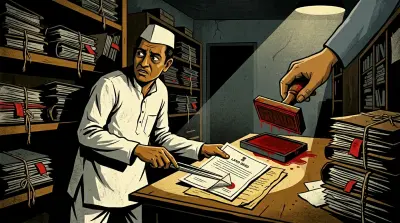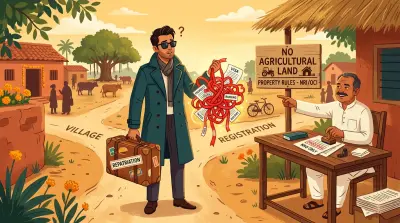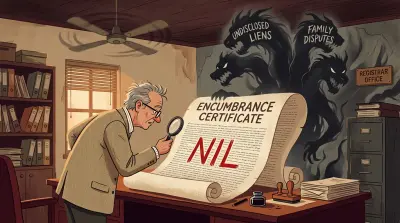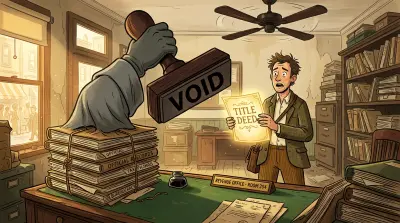


In May 2025, Justice Harpreet Singh Brar of the Punjab and Haryana High Court described a pattern he had seen one too many times. NRI-owned properties in Punjab were being sold through impersonation, forged documents, and misused Powers of Attorney, often for a fraction of their real value.
His words were blunt: “The scale of this deceit is symptomatic of systemic abuse, where absence is weaponised and legal safeguards are routinely undermined.”
That case involved a 14-kanal property in Ludhiana, owned by an NRI in the United States, allegedly sold through impersonation for Rs 30.20 lakh. The property was worth several crores. The cheques issued as payment were never even encashed. The Tehsildar, a registration clerk, a computer operator, and the local Nambardar were all implicated.
Punjab is not just another Indian state for NRI property problems. It is arguably the epicentre. The Punjabi diaspora numbers around 3 to 5 million worldwide, heavily concentrated in Canada (approximately 950,000), the United Kingdom, the United States, and Australia. Doaba, the region between the Beas and Sutlej rivers, is popularly known as Punjab’s “NRI belt” because so many families have at least one member abroad.
That diaspora connection means vast amounts of ancestral and purchased property sit in Punjab with owners who cannot physically monitor it. And as the courts keep finding, that absence is exactly what fraudsters exploit.
This guide covers what you need to know to manage Punjab property from abroad: the documents, the portals, the registration and mutation process, the fraud risks, and the legal protections available to you.
If you have not read our overview of India’s property dispute crisis, start there for the national context.
The documents every Punjab property owner needs
Punjab’s land records follow the system inherited from the colonial-era Punjab Land Revenue Act, 1887. The terminology is different from southern states, and if you grew up hearing words like Jamabandi and Khasra at family gatherings without really understanding them, here is what they actually mean.
Jamabandi (Record of Rights)
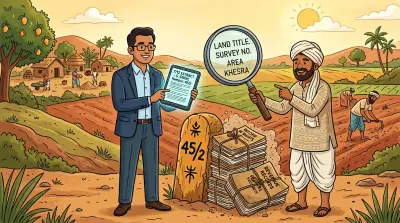
The Jamabandi is Punjab’s equivalent of the Record of Rights. It records the owner’s name, father’s name, Khewat number (ownership number), Khatauni number (cultivation number), Khasra number (plot number), area, land type, and any encumbrances or mortgages. Revenue officials update this periodically.
Think of the Jamabandi as the master document that tells you who legally owns which plot. If your name is not in the Jamabandi, you have a problem, regardless of what your sale deed says.
Fard (Certified Copy)
A Fard is a certified extract of the Jamabandi for a specific Khasra number. When someone says “get a Fard,” they mean get a certified copy of your ownership record from the Patwari or online through the PLRS portal. This is the document you show when you need to prove ownership quickly.
Khasra Girdawari (Crop Inspection Register)
The Girdawari is a seasonal inspection record maintained by the Patwari. It records what crop is being grown, who is cultivating the land, the land classification, and any physical changes. For NRIs, the Girdawari matters because it reveals who is actually using your land. If someone else’s name appears as the cultivator and you did not authorise it, that is an early warning sign.
Mutation (Intkal)
Mutation is the process of updating the Jamabandi when property changes hands, whether through sale, inheritance, gift, or court decree. A mutation does not transfer title. Only a registered sale deed does that. But without mutation, the revenue records will not reflect you as the owner, creating problems for everything from property tax to future sales.
Registered Sale Deed
Your registered sale deed is your primary proof of purchase. In Punjab, registration services run through the official Easy Registry portal and the local Sub-Registrar’s office. Keep the original safe and maintain certified copies.
Encumbrance Certificate (EC)
The EC shows every registered transaction on a property over a specified period. Before any transaction, get an EC for the longest period available. For more on what ECs reveal and what they miss, see our complete guide to encumbrance certificates.
Why Punjab is different for NRIs
Every Indian state has property challenges, but Punjab has a specific combination that makes it particularly treacherous for absent owners.
The diaspora factor. With millions of Punjabis settled abroad, the volume of absentee-owned property is enormous. Entire villages in Doaba have more property owned by NRIs than by residents. This creates opportunity for fraud at a scale that smaller diasporas do not face.
The Patwari system. Unlike states that have moved to fully digital land records (Telangana’s Bhu Bharati portal, for instance), Punjab still relies heavily on the Patwari, the village-level revenue official who maintains land records, conducts inspections, and processes mutations. The Patwari system is not inherently corrupt, but it creates single points of failure. When the person who maintains your records is also the person who can alter them, the risk is obvious. We covered a detailed case of Patwari-enabled fraud in neighbouring Haryana that follows the same pattern seen in Punjab.
Agricultural land dominance. A large proportion of NRI-owned land in Punjab is agricultural. Under FEMA rules, NRIs cannot purchase agricultural land but can inherit it. This creates a peculiar situation: you legally own land you cannot easily manage, cannot sell to another NRI, and cannot always convert to non-agricultural use without state approvals.
GPA culture. Punjab and Haryana were historically the epicentre of property transfers through General Power of Attorney (GPA). The Supreme Court’s 2011 ruling in Suraj Lamp & Industries v. State of Haryana declared these transfers invalid, but the practice left behind a legacy of unclear titles, especially for NRIs who executed GPAs in favour of relatives.
Property registration in Punjab
All property transactions in Punjab must be registered with the Sub-Registrar. Punjab’s current National Generic Document Registration System, branded NGDRS 2.0 / Easy Registry, is available at easyregistry.punjab.gov.in.
The registration process
- Valuation. The government publishes collector rates (minimum circle rates) for every area. Stamp duty is calculated on the higher of the collector rate or the actual transaction value.
- E-stamping. Pay stamp duty through the applicable e-stamping channel and follow the current instructions on the Easy Registry portal.
- Document preparation. The sale deed is prepared, typically by a deed writer or lawyer, with details of both parties, property description, consideration amount, and schedules.
- Appointment at Sub-Registrar. Book a slot at the relevant Sub-Registrar’s office. Both buyer and seller (or their PoA holders) must appear with witnesses.
- Biometric verification. NGDRS requires biometric verification (fingerprints and photographs) of all parties.
- Registration. The Sub-Registrar verifies documents, collects fees, and registers the deed. A certified copy is issued.
Stamp duty and registration charges
| Buyer Category | Sale-deed duty and levies | Registration Fee |
|---|---|---|
| Male | 7.25% total: 5% basic duty + 1% SIC + 1% PIDB fee + 0.25% Special Infrastructure Development Fee | 1% (max Rs 2 lakh) |
| Female | 5.25% total: 3% concessional basic duty + the same 2.25% in levies | 1% (max Rs 2 lakh) |
| Joint (Male + Female) | Basic duty is apportioned by each buyer’s ownership share; the additional 2.25% applies to the full assessable value | 1% (max Rs 2 lakh) |
Punjab’s female-buyer concession reduces the basic stamp duty by two percentage points. It does not reduce the SIC, PIDB fee or Special Infrastructure Development Fee. For a 50:50 male-female purchase, the resulting combined duty and levies would ordinarily be 6.25%, but the deed must state the ownership shares and the portal calculation should be checked before payment. Facilitation and pasting charges may apply separately.
Additional charges for specific documents:
| Document | Stamp Duty | Registration Fee |
|---|---|---|
| Mortgage deed | 4% | Max Rs 2 lakh |
| General Power of Attorney (up to 5 persons) | Rs 2,000 | Rs 400 |
| Special Power of Attorney | Rs 1,000 | Rs 100 |
| Will | Nil | Rs 4,000 |
| Cancellation deed | Nil | Rs 4,000 |
For NRIs specifically
If you cannot be present in Punjab, you can execute a Power of Attorney (PoA) at your nearest Indian consulate or embassy. Use a Special Power of Attorney, not a General one. Specify the exact property, the exact transaction, and the exact person authorised to act. A general PoA leaves your property exposed to misuse. The Suraj Lamp ruling did not ban PoAs for facilitating registration; it banned the use of GPA as a substitute for registration itself.
Mutation in Punjab
Mutation (Intkal) is the process of recording a change of ownership in the revenue records. It does not create title, but without it, the Jamabandi will not show your name.
How it works
- Triggering event. A sale deed is registered, an inheritance occurs, or a court decree is passed.
- Application. The Patwari is supposed to initiate the mutation entry within 15 days of the triggering event. In practice, you or your representative often need to file the application yourself at the Tehsil office.
- Verification. The Patwari verifies the documents and conducts a field inspection if needed. The Kanungo (supervising revenue official) reviews the entry.
- Public notice. A notice is issued allowing objections. If no objections arise, or once objections are resolved, the Tehsildar approves the mutation.
- Entry in Jamabandi. The mutation is incorporated into the Jamabandi.
Timeline and fees
The official timeline is 30 days for uncontested mutations. The mutation fee is Rs 600, fixed by the Board of Revenue across all property types. In reality, contested mutations or those requiring multiple verifications can take months.
Checking mutation status online
Visit the PLRS portal and click “Status of transfer after registration.” Enter your district, tehsil, village, and transfer number. You can also check the Roznamcha (daily register of mutation entries) to see whether a mutation has been initiated for your property, which matters if you suspect someone has filed a fraudulent mutation application.
Digital portals: what you can do from abroad
Punjab has digitised a significant portion of its land records, though the system is not as comprehensive as some southern states. Here is what is available.
PLRS Portal (jamabandi.punjab.gov.in)
The Punjab Land Records Society portal is your primary tool for monitoring your property from abroad.
| Service | Available Online? | Notes |
|---|---|---|
| View Jamabandi | Yes | Search by owner name, Khewat, Khasra, or Khatauni number |
| Download Fard | Yes | Certified copy of ownership record |
| Check mutation status | Yes | Track pending and completed mutations |
| View Roznamcha | Yes | Daily register of mutation entries |
| View Girdawari | Yes | Seasonal crop and cultivation records |
| Property tax register | Yes | View property tax details |
| File mutation application | Limited | Available through Easy Jamabandi portal |
| File corrections | No | Requires physical visit or PoA representative |
Easy Registry / NGDRS 2.0 (easyregistry.punjab.gov.in)
The official Easy Registry portal provides citizen registration, appointment viewing and registry-office information. The final registration process still involves the relevant Sub-Registrar’s office and the required appearance by the parties or their authorised representatives.
Easy Jamabandi Portal (easyjamabandi.punjab.gov.in)
A newer portal that offers streamlined access to mutation applications, Fard requests, and status tracking. It reduces (but does not eliminate) the need to visit the Patwari or Tehsil office.
NRI E-Sanad Portal
Launched by the Punjab government, this portal provides NRIs access to 27 government services online, including birth, death, residence, income, and marriage certificates. Property documentation services are being expanded. The portal includes bilingual support in Punjabi and English, and help desks have been set up at district and tehsil offices for family members who need help getting through the system.
What still requires physical presence
Despite digitisation, several critical tasks still require someone on the ground:
- Attending the Sub-Registrar’s office for property registration
- Resolving disputed mutations at the Tehsil office
- Filing corrections to revenue records
- Conducting boundary demarcation or survey
- Responding to encroachment complaints
- Attending court hearings
For these, you will need either a personal visit or a trusted representative with a registered PoA.
Property tax in Punjab
Property tax in Punjab is levied by municipal corporations and municipal councils. The rates and methods vary by city.
How to pay from abroad
Punjab’s e-Nigam / mSeva portal provides municipal property-tax and related citizen services. Confirm that your municipality and property are available in the live service before paying, and save the receipt.
Major municipal corporations like Ludhiana, Amritsar, Jalandhar, and Patiala have their own online payment portals. For Ludhiana, visit propertytax.mcludhiana.gov.in.
Keep your payment receipts. Property tax receipts serve as supplementary evidence of possession and ownership. Courts have considered them when evaluating competing ownership claims. For a deeper look at why property tax matters and how to pay from abroad, see our dedicated guide.
For queries, contact the Punjab local government helpline at 1800 1800 0172 or email pgrs.lg@punjab.gov.in.
Common fraud patterns in Punjab
The Punjab and Haryana High Court has described the rising tide of NRI property fraud as having “cascading effects on public trust in the real estate ecosystem, and ultimately, the economic stability of the State.” Here are the patterns the courts keep seeing.
Impersonation at the Sub-Registrar’s office
In the Bagel Singh case (2025), someone walked into the Ludhiana Sub-Registrar’s office pretending to be the NRI owner and registered a sale deed transferring 14 kanals to a buyer. The local Nambardar (village headman) falsely identified the impersonator as the real owner. The Sub-Registrar’s office staff were implicated. The court found CCTV evidence confirming the accused persons’ presence during the registration.
This is not a one-off. Justice Brar called it “yet another example” of a trend where “unscrupulous individuals take advantage of Non-Resident Indians.”
Power of Attorney misuse
An NRI grants a PoA to a relative or agent to manage their property. The agent uses the PoA to sell the property, mortgage it, or transfer it to someone else without the owner’s knowledge. By the time the NRI discovers what happened, the property has changed hands, sometimes multiple times.
This is why the type of PoA matters. A General Power of Attorney gives broad authority across all your affairs. A Special Power of Attorney limits authority to a specific action on a specific property. Always use an SPA, and always get it attested at an Indian consulate. For more on why GPA-based property sales are legally invalid, see our analysis of the Supreme Court ruling.
Patwari collusion
The Patwari controls the ground-level records. In fraud cases, Patwaris have been found to process mutations based on forged documents, alter land classifications to manipulate valuations, delay legitimate mutations while fast-tracking fraudulent ones, and prepare false verification reports that misrepresent the property’s value, location, or classification.
We documented a detailed case from Sonipat, Haryana where a Patwari misclassified commercial land as agricultural, reducing the valuation from Rs 17 crore to Rs 2.30 crore per acre. The same Patwari system operates across Punjab.
Encroachment
When land sits empty for years because the owner is abroad, neighbours, tenants, or strangers move in. They build structures, start farming, or simply occupy the space. Over time, they may attempt to formalise their occupation through fraudulent mutations or by claiming adverse possession.
The Sandhar case from Jalandhar is a cautionary tale. The property owner lost his encroachment case in three courts because he could not prove where his property boundaries were. No survey report, no GPS coordinates, no measurements. The court never even reached the question of whether encroachment had occurred. For a practical guide on preventing encroachment, see our step-by-step protection guide.
What the courts are saying
The Punjab and Haryana High Court has been increasingly vocal about NRI property fraud. Here are the key judicial observations.
Bagel Singh v. State of Punjab (2025)
Case: CRM-M-23740-2025, decided May 2025 Judge: Justice Harpreet Singh Brar
An NRI property in Ludhiana worth several crores was sold through impersonation for Rs 30.20 lakh. The court refused anticipatory bail to the accused, finding them “part of a larger conspiracy of usurping the properties of Non-Resident Indians.”
Key observations from the bench:
“This case is yet another example of a disturbing trend that is steadily gaining ground, wherein unscrupulous individuals take advantage of Non-Resident Indians (NRIs), particularly those who are unable to visit India frequently or manage their properties here.”
“Time and again, such vulnerable property owners are defrauded through forged documents, misuse of Powers of Attorney often resulting in sale of their properties at grossly undervalued rates.”
“These offences are rooted in a breach of trust and stand on a different pedestal than conventional criminal offences… they not only impact the personal and financial security of the victims but also have cascading effects on public trust in the real estate ecosystem, and ultimately, the economic stability of the State.”
The court noted the accused Nambardar’s criminal antecedents and reportedly had been suspended by the Deputy Commissioner of Ludhiana.
The Sandhar case (2014)
Case: RSA No. 1851 of 2013, decided 25 November 2014 Judge: Justice Amit Rawal
A property owner in Jalandhar claimed his neighbour had encroached on his land by constructing a boundary wall. He fought the case through three courts and lost every time. The reason was not that encroachment had not occurred. The court never reached that question. The plaintiff’s own surveyor had not measured the defendant’s property, and a government official could not identify the property’s location.
Justice Rawal noted:
“Both the witnesses of the plaintiff-appellant prima facie conceded of not even giving the location of the property much less factum of measurement of the alleged encroachment.”
The lesson: if you own property in Punjab, maintain a certified survey map with GPS coordinates and clear boundary descriptions. Without this, even a genuine encroachment claim will fail in court.
The broader pattern
Justice Brar’s 2025 observation that “the scale of this deceit is symptomatic of systemic abuse, where absence is weaponised” captures something important. The courts are no longer treating these as isolated incidents. They see a pattern of organised fraud that specifically targets NRIs because they are not present to monitor their property. This judicial awareness is a positive development, but court cases take years. Prevention is better than litigation.
Punjab NRI Commission
The Punjab State Commission for NRIs was established under the Punjab State Commission for Non-Resident Indians Act, 2011. It serves as a single-window grievance redressal authority for NRIs, though its powers are persuasive rather than binding.
What it can do
- Register and investigate complaints from NRIs
- Coordinate with police, revenue, and municipal departments on your behalf
- Recommend action to government officials
- Expedite police FIRs in property fraud cases
- Escalate matters where local authorities are unresponsive
What it cannot do
- Issue binding orders (its directions are persuasive, not enforceable)
- Award compensation
- Decide property disputes (courts do that)
- Order arrests
How to file a complaint
Online: The Department of NRI Affairs currently directs complainants to the Punjab Government’s Connect Punjab grievance portal. Its own site also publishes the official NRI complaint format.
By email: Send complaint with documents to nricommpb@gmail.com
By phone: The Punjab Government lists 0172-2741330 for the Punjab State Commission for NRIs.
In person: Punjab State Commission for NRIs, Block A, Room 6, Punjab Civil Secretariat-2, Sector 9, Chandigarh.
Required documents:
- The completed official complaint format or an equivalent signed complaint
- Your overseas and Indian contact details
- A clear chronology of the grievance
- Copies of relevant property documents, such as the sale deed, Jamabandi and Fard
- NRI status and identity documents relevant to the complaint
- Copies of police or departmental complaints already filed and any responses
- Your representative’s details and Power of Attorney, where applicable
The official sources reviewed do not publish a dependable response or resolution deadline. Keep the acknowledgement or grievance number and follow up through the same channel.
Is it effective?
The Commission is not a court, and it cannot force outcomes. But practitioners report that it can be useful in two ways: getting police to register FIRs when they are reluctant, and getting revenue officials to respond to complaints they have been sitting on. Filing with both the police and the NRI Commission simultaneously creates pressure from multiple directions. Think of it as an escalation mechanism, not a solution in itself.
Punjab also has NRI police stations and district-level NRI support. The Punjab Police district site explains the NRI police-station route. If your complaint involves criminal fraud such as impersonation, forgery or cheating, file with the police first and then escalate through the Commission.
Agricultural land: what NRIs need to know
This is where many Punjab NRIs get confused, because the rules create a paradox.
Under FEMA regulations, NRIs are prohibited from purchasing agricultural land, plantation property, or farmhouses anywhere in India. This is a blanket restriction, not specific to Punjab.
However, NRIs can inherit agricultural land from a resident Indian. If your father or mother passes away and leaves you agricultural land in Punjab, you become the legal owner. This is how most NRIs end up holding agricultural land.
What you can do with inherited agricultural land
- Hold it. You can retain ownership indefinitely.
- Lease it. You can lease the land to local farmers, though the terms should be documented to prevent tenancy claims.
- Sell it. You can sell it, but only to a resident Indian citizen who is eligible to purchase agricultural land under state regulations. You cannot sell to another NRI.
What you cannot do
- Buy more. You cannot purchase additional agricultural land, even adjacent plots.
- Inherit from NRI siblings (restricted). Inheriting agricultural land from another NRI is legally restricted under FEMA and may require RBI approval. The practical position is uncertain, and legal advice is essential in this situation.
- Convert automatically. Converting agricultural land to non-agricultural use requires state government approval. Do not assume this will be granted.
Revenue records matter
Verify the land classification in your Jamabandi. If the records show the land as agricultural but it is actually being used commercially (or vice versa), that discrepancy needs to be corrected. Incorrect classification creates problems for sales, taxation, and even legal disputes about land use.
Check the Girdawari regularly. If someone else is cultivating your land without your permission, the Girdawari will show their name. This can create complications over time, particularly if the cultivator claims tenancy rights.
RERA Punjab
The Real Estate Regulatory Authority, Punjab was established on 10 August 2017 under the RERA Act to regulate the real estate sector. For NRIs buying new construction or under-construction properties in Punjab, RERA verification is essential.
What RERA covers
- All under-construction residential and commercial projects must be RERA-registered
- Developers must disclose project plans, timelines, approvals, and financials
- Buyers can file complaints against developers for delays, defects, or misrepresentation
- Project details are publicly searchable on rera.punjab.gov.in
What NRIs should do
Before investing in any new construction project in Punjab, verify the RERA registration number on the official portal. Check the developer’s compliance history. RERA does not cover resale properties or agricultural land, so it is relevant only for new developments.
Filing complaints
NRIs can file complaints through the RERA Punjab portal against registered developers. The process is online, and hearings can sometimes be attended through authorised representatives.
Your step-by-step plan for managing Punjab property from abroad
If you own or have inherited property in Punjab, here is what to do now, not when a crisis hits.
1. Check your Jamabandi. Go to jamabandi.punjab.gov.in, search your Khasra number, and confirm the owner name matches your records. If it does not, you need to investigate immediately.
2. Download your Fard. Get a certified copy of your ownership record. Compare it against your sale deed or inheritance documents.
3. Review the Girdawari. Check who is recorded as cultivating your land. If an unauthorised person’s name appears, that is a red flag.
4. Check the Roznamcha. Look for any mutation entries you did not initiate. A mutation application filed by someone else on your property is an early warning of attempted fraud.
5. Get a fresh Encumbrance Certificate. Apply for the longest available period. Look for any transactions you did not authorise. Any mortgage, lien, or sale you did not know about needs immediate legal attention.
6. Pay your property tax. Use the Punjab e-Nigam / mSeva portal or your municipal corporation’s official portal. Keep the receipt.
7. Organise your documents digitally. Collect your sale deed, Jamabandi Fard, Girdawari, EC, mutation records, and property tax receipts in one place. The free title readiness check helps identify which ownership, mutation, tax and Encumbrance Certificate records are still missing, so you are not relying on an incomplete bundle sitting in a relative’s house in Jalandhar.
8. Get a survey done. Commission a licensed surveyor to prepare a map with GPS coordinates and clear boundary measurements. This is your insurance against encroachment disputes. Without it, you could win on facts and lose on evidence, just like the Sandhar case.
9. Review your Power of Attorney. If you have granted a PoA to anyone, verify its scope. If it is a General Power of Attorney, consider revoking it and issuing a narrow Special Power of Attorney instead. Get it attested at your nearest Indian consulate.
10. Set up annual monitoring. Check your PLRS records at least once a year. Land records can change without notice. A mutation you did not authorise could be processing right now.
Property in Punjab does not sit still just because you moved abroad. The land records change, the Patwari visits, the neighbours notice. The NRIs who avoid problems are the ones who stay informed, even from 10,000 kilometres away.
Assetly is a property document management platform that helps Indian property owners, especially NRIs, organise, verify, and track their property documents digitally. Learn more.