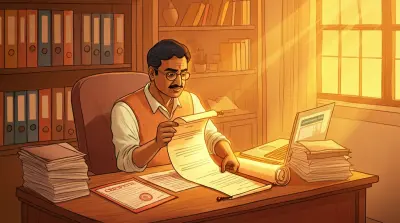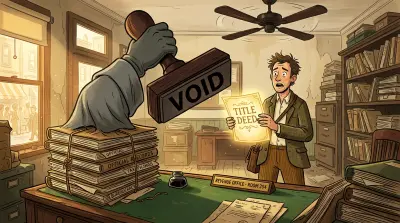
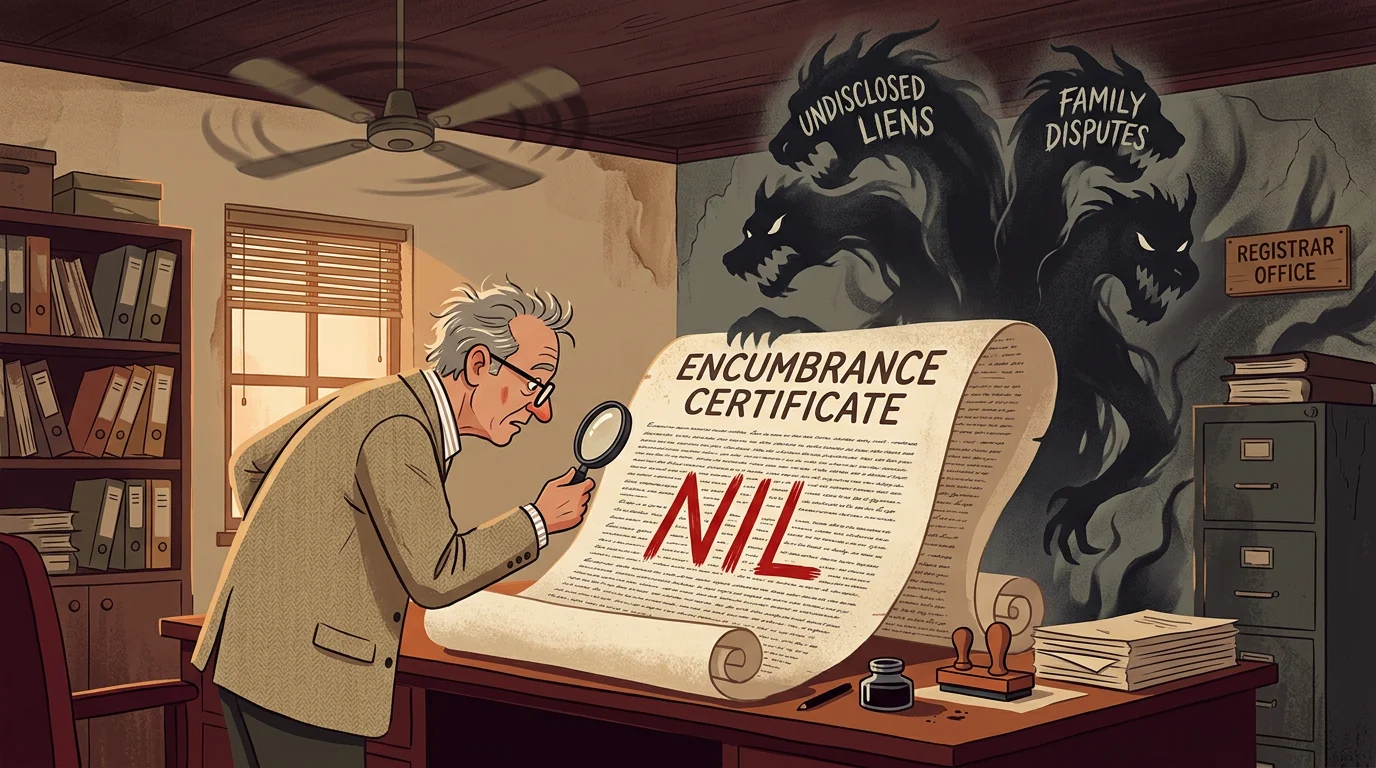

You are about to buy a flat. The seller shows you a registered sale deed. The property looks clean. The price is right. You are ready to sign.
But here is what you do not know: three years ago, the seller took a loan against this property. The bank has a mortgage on it. The seller did not mention it. And if you buy without checking, you inherit that mortgage.
This is the problem an encumbrance certificate solves. Or rather, this is the problem it is supposed to solve. Because as we will see, what an EC tells you is important. What it does not tell you might be more important.
Encumbrance Certificate Meaning in Plain English
Think of an encumbrance certificate as a transaction log for a property. Every time a registered document is executed on a piece of land or a building (a sale, a mortgage, a gift, a lease, a release, a court decree), the Sub-Registrar’s office records it in official registers and indexes. An EC is simply an extract of those entries for a specified property over a specified period.
The word “encumbrance” means a claim or liability attached to a property. A mortgage is an encumbrance. A registered lease is an encumbrance. A court-ordered attachment is an encumbrance. An EC lists all of these, giving you a chronological history of everything that has been registered against the property.
If you searched simply for “what is encumbrance?”, that is the core idea: an encumbrance is any claim, charge, or liability that can affect whether a property transfers cleanly.
The legal basis is straightforward. Under Section 57 of the Registration Act, 1908, the registers and indexes maintained by the Sub-Registrar are open to public inspection. Anyone can request a search, and the Sub-Registrar issues a certificate based on what the records show.
There are two types:
Form 15 lists all the registered encumbrances found during the search period. It shows each transaction with its date, document number, the names of the parties, the nature of the transaction, and the consideration amount.
Form 16 is the one people hope to get. It certifies that no encumbrances were found for the search period. This is the “nil encumbrance” certificate.
Getting Form 16 feels reassuring. But hold that thought.
Why You Need One Before Buying Property
Imagine you are buying a second-hand car. You would check if there are any loans outstanding against it, right? You would not just take the seller’s word for it. An EC does the same thing for property.
Without an EC, you are trusting the seller’s declaration that the property is free from claims. And courts have seen plenty of cases where that declaration turned out to be wrong.
In a case before the Karnataka High Court, a buyer was protected as a bona fide purchaser specifically because he had obtained an encumbrance certificate before buying. The court noted the buyer had taken “all reasonable caution and steps to find out as to whether there was any existing encumbrance.” The buyer who does the homework gets legal protection. The buyer who skips it gets a much harder fight in court.
Banks understand this well. No bank in India will approve a home loan without an EC. They typically require a 13-year search, and some insist on 30 years. If banks will not lend against a property without checking its transaction history, you probably should not buy it without checking either.
What an EC Shows
When you get an EC with entries (Form 15), here is what you will find:
Sales and transfers. Every registered sale deed, gift deed, or partition deed on the property. This helps you verify the chain of ownership and whether the person selling to you actually acquired the property the way they claim.
Mortgages. If the property has been pledged as collateral for a loan, the mortgage deed will appear here. This is the single most important thing an EC catches. A property with an outstanding mortgage cannot be sold cleanly until the mortgage is discharged.
Leases. Registered long-term leases (those exceeding one year, which are required to be registered under Section 17 of the Registration Act). This is why most rental agreements in India are drafted for 11 months: to stay below the registration threshold.
Court decrees. When courts pass orders affecting immovable property, the Registration Act (through state amendments in Kerala, Andhra Pradesh, and others) requires the court to send a copy to the Sub-Registrar for filing. If this has been done, the decree appears on the EC.
Release deeds and rectification deeds. If a co-owner released their share, or if a previous transaction was rectified, these show up too.
Attachments. If a property has been attached by a court or a tax authority and that attachment has been registered, it will appear.
Each entry shows the date of registration, the document number, names of the executing and claimant parties, and the nature of the transaction. Reading an EC chronologically gives you the full registered history of the property.
What an EC Does NOT Show (This Is the Important Part)
Here is where most people get tripped up. A “nil encumbrance” certificate feels like an all-clear. It is not. There is a significant gap between what an EC covers and what can actually affect your property.
Unregistered agreements. If someone has an unregistered agreement to sell the property, it will not appear on the EC. These agreements have limited legal force, but they can still lead to litigation, especially suits for specific performance.
Equitable mortgages. This is a big one. In India, banks can create a mortgage simply by having the borrower deposit their original title deeds with the bank. No registered document is created. No entry goes into the Sub-Registrar’s records. The EC will show nothing. But the bank absolutely has a claim on the property. This is called an equitable mortgage or mortgage by deposit of title deeds, and it is legal under Section 58 of the Transfer of Property Act.
Pending litigation. If someone has filed a lawsuit claiming ownership of the property but has not registered a lis pendens notice, the EC will not show it. You need to search the National Judicial Data Grid (njdg.ecourts.gov.in) separately to check for pending cases. The 2024 Supreme Court ruling in Shingara Singh v Daljit Singh on Section 52 lis pendens confirms that a buyer who purchases during a pending suit, even without notice, is bound by the eventual decree.
Tax arrears. Outstanding property tax, municipal dues, water charges, electricity dues. None of these appear on an EC. You need separate clearance certificates from the local municipal body.
Government acquisition proceedings. If the government has initiated land acquisition but the order has not been registered with the Sub-Registrar, the EC will miss it entirely.
Court orders not communicated to the Sub-Registrar. This is a systemic problem. Several states have amended the Registration Act to require courts to send copies of property-related orders to the registering officer. But in practice, courts routinely fail to do this. A Kerala High Court case exposed exactly this gap: a property was sold fraudulently despite a court decree in the rightful owner’s favour, because the decree was never communicated to the Sub-Registrar. The EC showed the property was “totally free from all encumbrances.” The officials even issued ECs with entries that were “different in each certificate pertaining to same periods,” which the court found indicated malpractice.
Charges registered by a company seller. If the owner is a company, a charge it created over the property is registered with the Registrar of Companies and, often, with the central registry under the SARFAESI Act. Neither register talks to the Sub-Registrar, so an EC can be clean while a registered charge sits against the same property, and section 80 of the Companies Act 2013 deems a buyer to have notice of it anyway. Our guide to buying property from a company explains where to search.
Adverse possession claims. If someone has been occupying the property for years and may have a claim through adverse possession, the EC will tell you nothing about this.
Transactions before your search period. If you request an EC for the last 13 years but the mortgage was created 14 years ago and never discharged, it will not appear. This is why longer search periods are better.
The lesson: an EC is necessary but not sufficient. It is one piece of the puzzle, not the whole picture.
Difference Between Encumbrance and Non-Encumbrance Certificate
People often search for the “difference between encumbrance and non-encumbrance certificate.” In practice, this usually means the difference between:
- an EC with one or more registered entries during the search period; and
- a nil encumbrance result, usually issued in Form 16.
India does not generally treat “non-encumbrance certificate” as a separate legal species of document. It is usually shorthand for a nil EC.
That distinction matters because a nil EC only means the Sub-Registrar found no registered encumbrances during the search period. It does not mean the property is free from every possible claim.
When ECs Go Wrong
An EC is only as good as the records behind it. And those records are maintained by humans, which means errors happen.
The National Consumer Disputes Redressal Commission ruled in a case that if an encumbrance certificate does not contain the complete list of encumbrances, the vendor or purchaser “would be seriously prejudiced, which, in most of the cases, would result in litigation and disputes.” The Commission held that an incomplete EC amounts to “deficiency in service” and that Sub-Registrars can be held liable under the Consumer Protection Act for issuing defective ECs.
Property fraud can be difficult to detect even with diligent checks, as the Nirmal Kaur PoA fraud case demonstrates. In another case before the Madras High Court, a fraudulent sale deed entry persisted on an EC even after the fraud had been proven. The court noted that continuing the entry would “virtually prevent the real owner of the property to deal with his property” and ordered the Sub-Registrar to record the fraud finding in the relevant books so it would be reflected in future ECs.
These are not edge cases. They point to a real limitation: the EC reflects what is in the register, and the register can be incomplete, delayed, or wrong.
How to Get an Encumbrance Certificate
You have two options: online or in person.
Online (from anywhere, including abroad)
Most major states now offer EC searches through their registration department portals. Here is what is available:
| State | Portal | Online records from | What you can do online |
|---|---|---|---|
| Tamil Nadu | tnreginet.gov.in | ~1987 | Full EC search and download |
| Telangana | registration.telangana.gov.in | 1983 | EC search, document search |
| Andhra Pradesh | registration.ap.gov.in | 1983 | EC search, certified copies |
| Karnataka | kaveri.karnataka.gov.in | 2003-04 | EC search, document verification |
| Maharashtra | igrmaharashtra.gov.in | 1985 (Mumbai) | e-Search for encumbrances |
| Kerala | pearl.registration.kerala.gov.in | 2000 | EC search |
What you will need: The property details (survey number, plot number, or door number), the Sub-Registrar office jurisdiction where the property falls, and the period you want to search. If you do not know which office covers the property, our free Sub-Registrar Office finder resolves it from the village or locality for Andhra Pradesh, Telangana, Tamil Nadu and Karnataka. For an AP or Telangana property, our EC search collects the details and the official portal steps that apply.
Limitation: Online records only go back as far as the state has digitised. For older transactions, you will need to visit the Sub-Registrar office or have someone visit on your behalf.
In person
Visit the Sub-Registrar office where the property was registered. Fill out an application (Form 22 in most states), pay the prescribed fee (typically Rs 50-500 depending on the state and search period), and submit. Processing times vary from same-day to 15 working days depending on the state and workload.
How to Read an Encumbrance Certificate
An EC can look intimidating if you have not seen one before. Here is what to look for:
1. Check the search period. The EC will state the “from” and “to” dates of the search. Make sure it covers the period you need. A 13-year EC is the minimum for a property purchase.
2. Look at every entry chronologically. Each entry represents a registered transaction. Read them in order. You are looking for the chain of ownership: does each transfer make sense? Does the person who sold the property in 2015 match the person who bought it in 2010?
3. Flag any mortgages. If there is a mortgage entry, check whether there is a corresponding release or discharge entry later. An unreleased mortgage means the property is still pledged as collateral.
4. Check for attachments. Any entry related to court attachments or tax attachments is a serious red flag. These need to be resolved before the property can change hands.
5. Verify the property description matches. Make sure the survey number, boundaries, and area on the EC match the property you are buying. Fraudulent sellers sometimes produce ECs for a different property with a similar address.
The 13-Year vs 30-Year Question
Banks typically require a minimum 13-year EC. This roughly corresponds to the 12-year limitation period for property suits under the Limitation Act, 1963, with an extra year as buffer. The logic: if no one has filed a claim within the limitation period, the right to file one has likely expired.
But 13 years is a floor, not a ceiling. Here is why a longer search is better:
A property might have changed hands five times in 30 years. A 13-year search might only show you the last two or three transfers. If there was a problem earlier in the chain (a forged deed, an unsettled mortgage, a disputed inheritance), the 13-year EC will miss it entirely.
If the property is high-value, if it has been in the same family for generations, or if you have any reason to suspect a complicated history, request the longest search period the portal or office will provide. The cost difference is minimal. The peace of mind is significant.
What to Do After Getting Your EC
An EC is a snapshot. It tells you what was in the register up to the date it was issued. Things can change the very next day. Here is how to use it properly:
Before buying: Get the EC as close to the registration date as possible. An EC from six months ago may have missed a recent mortgage or attachment. Some buyers get one at the start of due diligence and a second one just before registration.
After buying: Get a fresh EC a few months after your purchase to confirm your sale deed has been properly indexed. If your transaction does not appear, follow up with the Sub-Registrar. Errors in indexing happen, and catching them early is much easier than catching them years later when you need to sell.
Periodically: This is especially important for NRIs and people who own property in a different city. Get an EC every year or two, even if you are not buying or selling. It is the simplest way to check that no one has registered anything against your property without your knowledge. If a fraudulent document shows up, you want to catch it in months, not decades.
Store every EC you get with the date it was issued. If records change later, your dated copies are evidence of what the register showed at that point in time. Assetly can help you store and organise these documents digitally, accessible from anywhere.
A Useful Tool, Not a Perfect One
An encumbrance certificate is one of the most useful documents in Indian property due diligence. It is accessible, increasingly available online, and relatively inexpensive. Every property buyer should get one. Every property owner should check one periodically.
But it is not infallible. It only shows registered transactions. It misses equitable mortgages, pending litigation, tax dues, and court orders that were never communicated to the Sub-Registrar. A “nil encumbrance” certificate is not a guarantee. It is a starting point.
The complete picture requires an EC plus a legal title search plus a litigation check plus revenue record verification plus physical inspection. No single document does everything. But the EC is where you start. If you are preparing to sell, our pre-sale document checklist walks through every document you need alongside the EC.
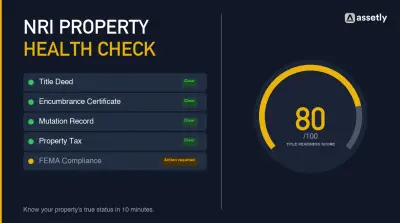
For more on how title deeds work and why registration matters, see our guide to title deeds and sale deeds and the Supreme Court’s 2025 ruling on why a registered sale deed does not prove ownership. For the broader picture of why property disputes consume Indian courts, see our overview of India’s property crisis. If you need the state-specific workflow, start with the permanent Telangana EC search or Andhra Pradesh EC search. To check your full property status across all five risk dimensions at once, see the NRI Property Health Check.
Assetly is a property document management platform that helps Indian property owners, especially NRIs, organise and track their property documents digitally. Learn more.