
A family in England owned agricultural land in Punjab. They had held it for decades. When two brothers finally visited India in 2008, they discovered something unsettling: their land was gone. The revenue records showed someone else’s name. A court decree they had never heard of had transferred ownership. And the document that made it all possible was a power of attorney they had never signed.
The Nirmal Kaur case (CRM-M-13581-2013), decided by the Punjab and Haryana High Court on 4 April 2019, is a textbook example of how a forged power of attorney can unravel an NRI’s property ownership. It is also a warning about the specific document vulnerability that makes this fraud possible.
The Document That Makes It All Possible
A power of attorney is, at its core, a trust document. You sign it. Someone else acts on your behalf. In property matters, it can authorise another person to manage your land, pay taxes, or even appear in court for you.
For NRIs, the power of attorney is practically unavoidable. You cannot fly to India every time a mutation needs processing or a tax receipt needs collecting. So you grant a PoA to a sibling, a parent, or a cousin. Someone you trust.
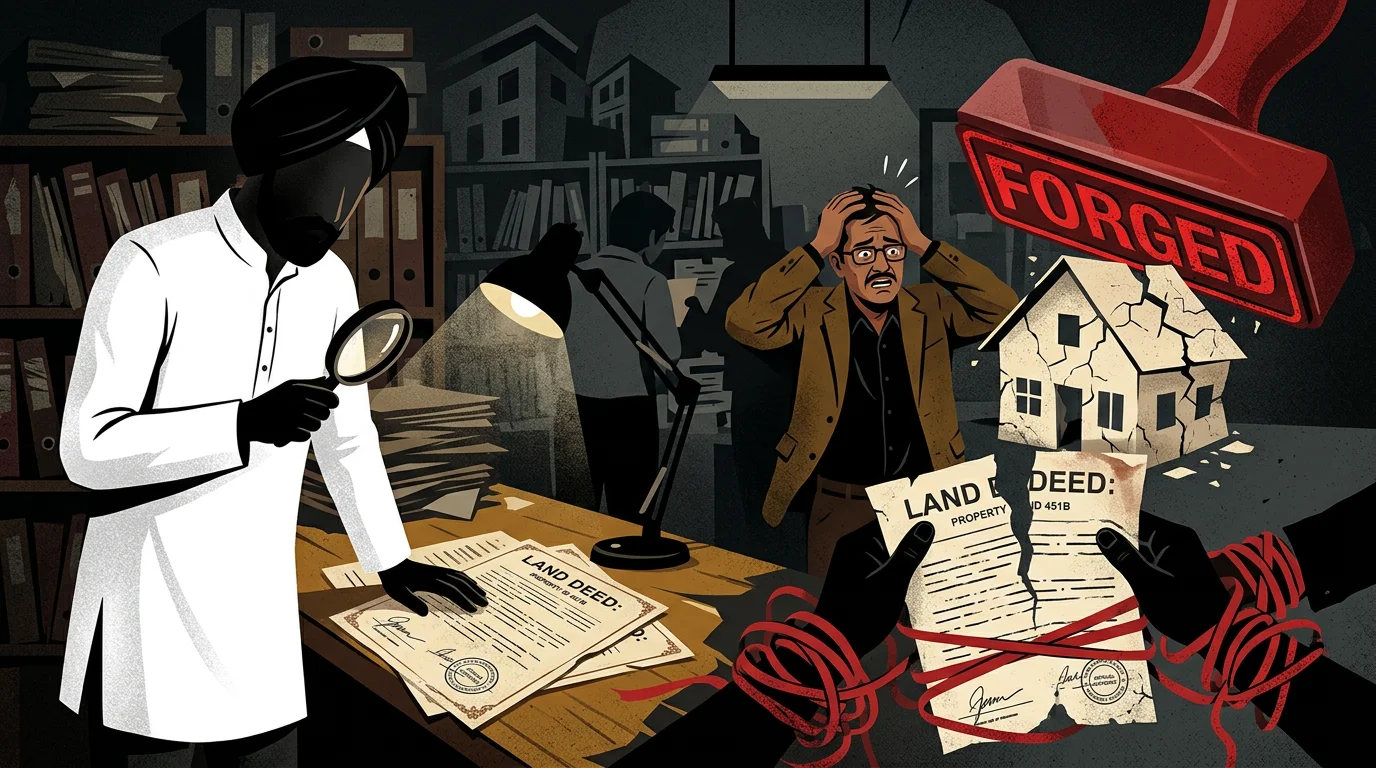
The problem is that the same document that makes remote property management possible also makes remote property theft possible. A forged PoA, attested by a notary who does not verify identity, can give a stranger (or a family member) the legal appearance of authority to deal with your property. And once that appearance exists, it can be used to file court cases, obtain decrees, and transfer ownership, all while you are thousands of miles away with no idea any of it is happening.
This is not a rare scenario. Punjab and Haryana are among the most affected regions for NRI property fraud, to the point where Punjab has established dedicated NRI Police Stations to handle property complaints. Indian Kanoon indexes hundreds of higher court judgments involving PoA fraud against NRIs in this region alone.
How It Played Out
The facts of the Nirmal Kaur case, as laid out in the Punjab and Haryana High Court judgment, follow a pattern that property lawyers across Punjab would recognise instantly.
Chet Singh owned agricultural land in Village Meethapur, Jalandhar district. After his death in 1977 (he died in the UK), a mutation of inheritance was recorded in favour of his natural heirs, including his sons Amrik Singh and Sukhwant Singh. Both brothers were settled in England and had been for decades.
The prosecution alleged that Nirmal Kaur and her son Jagjit Singh set a multi-step fraud in motion. First, the court found allegations of a backdated will, purportedly made by Chet Singh in 1975, bequeathing the property to his grandson Jagjit Singh. At the time the will was supposedly executed, Jagjit Singh was about one and a quarter years old.
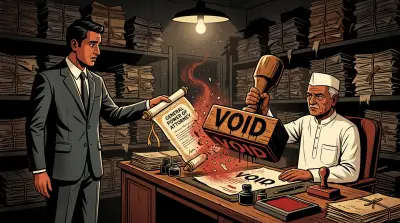
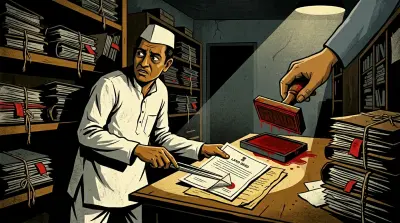
Second, and this is where the document vulnerability becomes critical, a General Power of Attorney was created in the names of Amrik Singh and Sukhwant Singh, appointing Jit Kaur as their attorney. The GPA was attested by a notary public in India. The problem: Amrik Singh and Sukhwant Singh were living in England at the time and, according to the prosecution, had never authorised the document.
Armed with the forged GPA, Jit Kaur appeared in a civil suit filed by Jagjit Singh against the two NRI brothers. She represented them in court as their attorney. The suit resulted in a decree in Jagjit Singh’s favour in March 2002. Following the decree, the mutation of the property was transferred into Jagjit Singh’s name in the revenue records.
Then the property was sold. The complainant’s counsel told the court that “both petitioners Jagjit Singh and his mother Nirmal Kaur had sold the entire property and usurped the amount worth crores of rupees.”
The two brothers discovered the fraud only when they visited India in May 2008. By then, the land had new owners and the money was gone.
What the Court Said
The Punjab and Haryana High Court dismissed the petitions filed by Nirmal Kaur and Jagjit Singh to quash the criminal proceedings against them. Justice Arvind Singh Sangwan noted that Jit Kaur herself had, in an earlier written statement in a civil suit, “admitted that petitioner Jagjit Singh had forged and fabricated the Will and she was never appointed as GPA by Amrik Singh and Sukhwant Singh.”
On the question of whether Jagjit Singh could be summoned as an additional accused, the court held that “the trial Court has rightly held that since petitioner Jagjit Singh is the beneficiary of the Will and collusive decree and there are allegations that GPA of Amrik Singh and Sukhwant Singh, in favour of Jit Kaur, who represented them in a civil suit filed by petitioner Jagjit Singh, was an outcome of fraud, which resulted into passing of the collusive decree and later on, the petitioner hurriedly had sold the entire land.”
The court directed the trial court to conclude the trial “expeditiously, preferably within a period of one year.”
The Pattern
The Nirmal Kaur case is not an isolated incident. The same playbook, forged PoA, court decree, mutation, sale, appears across Indian courts with depressing regularity.
A parallel pattern, though with a different mechanism, was documented in a 2026 Supreme Court case from Bengaluru. In Accamma Sam Jacob v. State of Karnataka (2026 INSC 362), an NRI from Toronto alleged that a consortium formed a welfare society, collected original title documents from NRI plot owners under the pretence of resolving “legal complications,” and then had her sign a confirmation deed under misrepresentation that the papers were for civil proceedings. The Supreme Court reversed the Karnataka High Court’s order quashing the FIR, restoring the criminal investigation. The case is covered in detail here.
In a more recent case, Sarabjit Kaur v. State of Punjab (CRM-M-66240-2025, decided 9 March 2026), an NRI property owner in America alleged that imposters were put up in place of the actual owners to execute a sale of property in Jalandhar for Rs 33 lakh. Justice Mandeep Pannu of the Punjab and Haryana High Court, refusing anticipatory bail, observed that “such allegations disclose a deliberate and calculated act of fraud and forgery causing substantial loss to the complainant.” The Economic Offences Wing investigation confirmed that false persons had been presented in place of the real owners during registration.
The Supreme Court’s landmark ruling in Suraj Lamp & Industries v. State of Haryana (2011) addressed this vulnerability head-on. The court declared that “a power of attorney is not an instrument of transfer in regard to any right, title or interest in an immovable property” and that “immovable property can be legally and lawfully transferred/conveyed only by a registered deed of conveyance.” But the ruling, while it ended the practice of GPA sales as a legitimate transfer method, did nothing to stop the forging of GPAs for fraudulent court proceedings and mutations.
What This Means for Property Owners
The Nirmal Kaur case highlights three specific vulnerabilities that every NRI property owner should understand.
The notary system has no real identity verification. A power of attorney in India can be notarised without biometric verification, without video confirmation, and in many cases without the notary ever meeting the person whose authority is supposedly being delegated. If the supposed principal is abroad, the notary has no practical way to verify that they authorised the document. This is the single biggest gap in the system.
Court decrees can be obtained without your knowledge. If someone has a forged PoA in your name, they can enter an appearance in a civil suit on your behalf, consent to a decree against you, and you will never receive notice. The Nirmal Kaur case is a perfect illustration: a civil suit was filed, a decree was obtained, and the NRI property owners had no idea until six years later.
Mutation follows the decree. Once a court decree exists, transferring the mutation in revenue records is straightforward. Revenue officials process the paperwork based on the decree. They do not independently verify whether the underlying PoA was genuine. Your name disappears from the records, and someone else’s appears.
For NRIs who are managing property from abroad, this chain of vulnerability, from notary to courtroom to revenue office, is the core risk. The fraud is not always violent or dramatic. It is a stack of documents, each one building on the last, each one looking legitimate on its face.
What You Should Do
If you own property in India and live abroad, here are the practical steps that address the specific vulnerabilities this case reveals.
1. Never grant a General Power of Attorney.
Use a Special Power of Attorney limited to a specific transaction, with a defined expiry date. Have it attested at the Indian consulate or embassy in your country of residence, not by a notary in India. Revoke it in writing once the transaction is complete.
2. Check your Encumbrance Certificate every year.
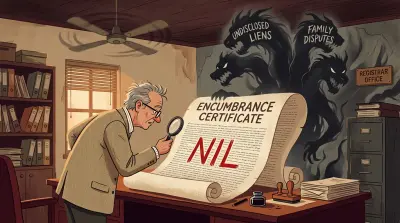
An Encumbrance Certificate from the Sub-Registrar’s office will show every registered transaction against your property. If someone has used a forged PoA to register a sale deed, it will appear here. This is the single most effective early warning system.
3. Monitor your mutation records.
Check your revenue records periodically for any ownership changes you did not authorise. Some states now offer online portals and SMS alerts for mutation applications. Register for these where available. If you own land in Punjab, check the PLRS (Punjab Land Records Society) portal.
4. Keep your own copies of every document.
If someone forges a PoA or obtains a fraudulent decree, having your own copies of original title deeds, mutation records, and sale deeds gives you a basis for comparison and evidence for challenging the fraud. Property document management tools like Assetly let NRIs store, organise, and track their property documents digitally, accessible from anywhere without depending on relatives.
5. File a caveat if you suspect risk.
If you believe someone may file a civil suit involving your property, you can file a caveat under Section 148A of the Code of Civil Procedure. This ensures you receive notice before any court passes an order against you. It costs very little and lasts 90 days (renewable).
6. Ensure your FEMA compliance is current.
NRIs holding property in India need to comply with FEMA regulations. If your property documents are not in order, or if your NRI status is not properly reflected in the records, it creates additional vulnerabilities that bad actors can exploit.
Assetly is a property document management platform that helps Indian property owners, especially NRIs, organise, verify, and track their property documents digitally. Learn more.