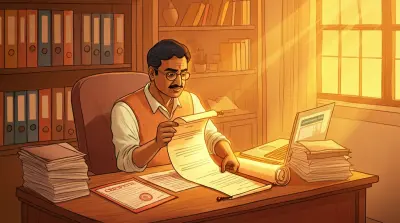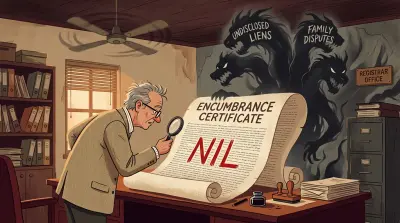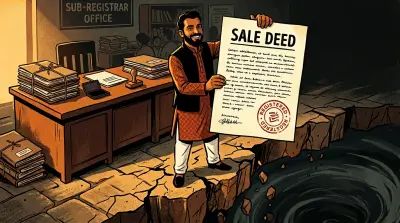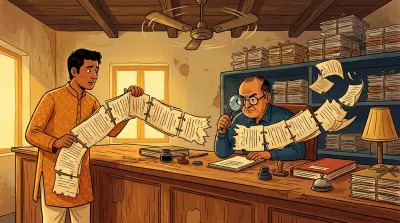
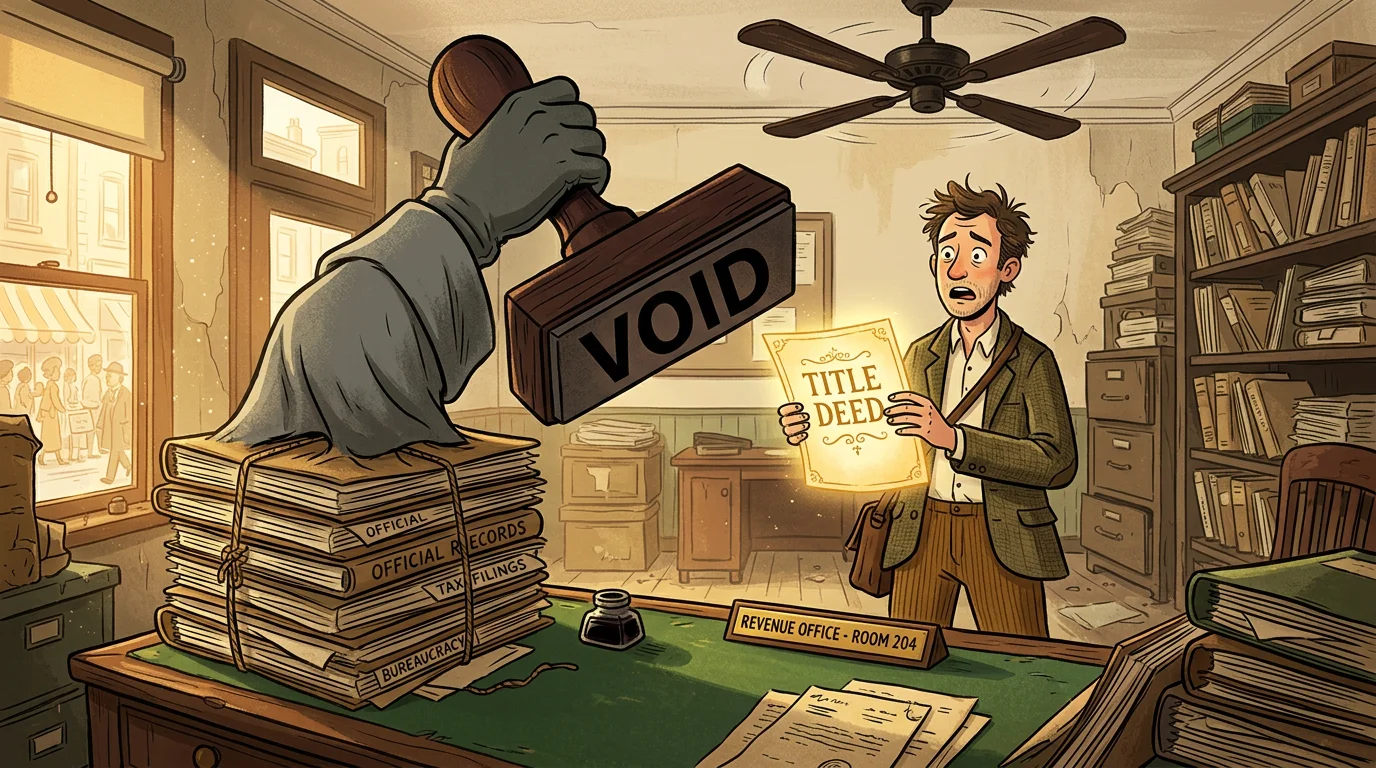

Here is a question that sounds simple but trips up more people than you would expect: do you actually own your property?
Not “do you live there” or “did you pay for it” or “does everyone in the neighbourhood know it is yours.” Do you have the one document that Indian law recognises as proof of ownership?
That document is your title deed. And if you do not have one, or if it is not registered, Indian courts have been remarkably consistent about what happens next. You lose.
What a Title Deed Actually Is
Let us start with the basics.
A “title deed” is not one specific document. It is a category. It is any document that legally establishes who owns a property. The most common type is a sale deed, the document created when someone buys property from someone else. But title deeds also include gift deeds (when property is given as a gift), partition deeds (when joint property is divided), succession certificates (when property is inherited), and court decrees (when a court awards property to someone).
When most people say “title deed,” they mean the sale deed. So that is what we will focus on.
A sale deed does one specific thing. It transfers ownership from a seller to a buyer, in exchange for a price. The Transfer of Property Act, 1882, defines this in Section 54:
“Sale is a transfer of ownership in exchange for a price paid or promised or part-paid and part-promised.”
Simple enough. But here is where it gets interesting. The same section adds a condition: for any property worth Rs 100 or more (which is every property in India today), this transfer must happen through a registered instrument. Not a handshake. Not a receipt. Not a photocopy. A registered sale deed, signed by both parties, stamped, and recorded at the Sub-Registrar’s office.
Without registration, the sale deed is a piece of paper. With registration, it is proof of ownership that courts will recognise.
Why Registration Is Not Optional
India has two laws that work together to make registration mandatory.
The Registration Act, 1908 (Section 17) lists documents that must be registered. Sale deeds are at the top of the list. So are gift deeds, long-term leases, and any document that creates or transfers rights in immovable property.
Section 49 of the same Act spells out the consequences of not registering:
“No document required by section 17… to be registered shall (a) affect any immovable property comprised therein, or (b) confer any power to adopt, or (c) be received as evidence of any transaction affecting such property… unless it has been registered.”
Read that again. An unregistered sale deed cannot “affect” the property. It cannot be used as “evidence” of the transaction. In legal terms, it is as if the sale never happened.
The Supreme Court put it even more plainly in 2003:
“Under the law a sale deed is required to be properly stamped and registered before it can convey title to the vendee.” (Bondar Singh v. Nihal Singh, 2003)
And in 2024, the court confirmed that registration creates a legal presumption:
“Once it is registered, there is a presumption of correctness attached to it, that is to say that the document has been duly executed and registered in accordance to law.” (Kaushik Premkumar Mishra v. Kanji Ravaria, 2024)
So a registered sale deed is presumed correct until proven otherwise. An unregistered one is presumed to not exist.
The Shortcut That Does Not Work
For decades, people in India used a workaround to avoid paying stamp duty and registration fees. Instead of executing a proper sale deed, they would sign an agreement to sell, give the buyer a General Power of Attorney (GPA) over the property, and execute a will in the buyer’s favour. This was called the “SA/GPA/Will” method.
It was popular because stamp duty on a sale deed can run 4-8% of the property value. On a Rs 1 crore flat, that is Rs 4-8 lakh saved. Tempting.
In 2011, the Supreme Court shut this down completely. In Suraj Lamp & Industries v. State of Haryana, the court ruled:
“Immovable property can be legally and lawfully transferred/conveyed only by a registered deed of conveyance.”
The court did not mince words about why people used the shortcut:
“Such transactions enable persons with undisclosed wealth/income to invest their black money and also earn profit/income, thereby encouraging circulation of black money and corruption.”
If you bought property through SA/GPA/Will before 2011, you do not own it in the eyes of the law. You have a contract that entitles you to ask the seller to execute a proper sale deed. But until that happens, the seller remains the legal owner. The court was clear: the buyer “remains in the position of a contract buyer” and “cannot claim title.”
This ruling affects thousands of properties across India, particularly in Delhi NCR where the SA/GPA/Will method was widespread.
What Is Actually Inside a Sale Deed
A sale deed is a structured document. Here is what it typically contains:
The parties. Full names, addresses, and parentage of both buyer and seller. If either party is an NRI, their passport details and overseas address are included.
The property description. Survey number, plot number, boundaries (north, south, east, west), total area, and address. This is what ties the document to a specific piece of land.
The price. How much was paid, how it was paid (cheque, bank transfer, etc.), and whether any amount is pending.
Title history. How the seller acquired the property. This is called the “recital” section. It traces ownership backward: “The seller acquired this property by way of sale deed dated…, registered as document number…, from…” This chain matters a lot. More on that shortly.
Encumbrance declaration. The seller declares the property is free from mortgages, liens, court cases, and other claims.
Possession clause. When the buyer gets physical possession.
Witnesses. At least two people who sign as witnesses.
Registration details. The stamp paper value, registration number, date, and which Sub-Registrar office recorded it.
The Chain of Title Problem
Think of property ownership like a chain. Each link is a transfer: a sale, a gift, an inheritance, a partition. For you to be the legal owner, every link in that chain must be valid. If even one link is an unregistered document, the chain breaks, and every transfer after it is suspect.
A 2018 case from Chhattisgarh illustrates this perfectly. A property had been transferred through an unregistered deed at one point in its history. When a later buyer tried to assert ownership, the court held:
“They cannot pass a better title to the purchaser.”
The legal principle is old Latin: nemo dat quod non habet. No one can give what they do not have. If the person who sold you the property did not have valid title (because their acquisition was through an unregistered document), they could not pass valid title to you. It does not matter that your sale deed is perfectly registered. The defect upstream poisons everything downstream.
A 2025 Telangana High Court case found documents that were “fabricated to rectify defects in the chain of title.” People literally created fake documents to fill gaps in the ownership chain. The court, of course, saw through it.
This is why title searches exist. Before you buy property, a lawyer traces the chain of ownership back 13 to 30 years (depending on the lender’s requirements), checking that every transfer was properly documented and registered.
Why NRIs Should Pay Extra Attention
Courts have repeatedly noted that NRIs are specifically targeted for property fraud, precisely because they cannot monitor their property in person.
In a 2010 Delhi High Court case, the court observed that the accused “keeps an eye on valuable properties which are bequeathed to NRIs by way of Wills and attempts are made to misappropriate such properties.” The target was an NRI professor in the US whose elderly relative had left him property through a will. Someone forged a second will and tried to claim the property.
In a 2017 Karnataka case involving approximately 1,500 plots sold to overseas buyers, the court noted the purchasers “were all residing abroad and were dependant on remote information.” A caretaker exploited the geographic distance to defraud them.
And in a 2019 Delhi case, an accused took keys to an NRI’s flat for “repair work,” broke into cupboards, stole original property documents, and produced forged sale agreements using signatures lifted from the stolen papers. The NRI proved the forgery using boarding passes and hotel bills showing he was in another city when the agreements were supposedly signed.
The common thread: NRIs are vulnerable because they are far away and their documents are sitting in a cupboard in India.
How to Verify a Title Deed
Whether you are buying property or just want to confirm that what you already own is secure, here is what to check:
1. Get an Encumbrance Certificate (EC)
An EC shows every registered transaction on a property for a specified period. If someone has mortgaged the property, or if there is a court attachment, or if the property was sold to someone else, the EC will show it. Most states now offer EC searches online through their registration department portals.
2. Verify the chain of documents
Trace ownership backward from the current owner through every prior transfer. Each link should be a registered document. If you find an unregistered deed anywhere in the chain, that is a red flag.
3. Check revenue records
Revenue records (pattadar passbook in Telangana, khata in Karnataka, pahani in AP) show who the government recognises as the current owner. These should match the name on the sale deed. If they do not, something went wrong with the mutation process after the sale.
4. Search for litigation
Use the National Judicial Data Grid (njdg.ecourts.gov.in) to check if there are any pending court cases involving the property or the seller. This is free and available online.
5. Physical verification
Visit the property (or have someone you trust visit). Check that the boundaries match what the sale deed describes. Check for encroachments. Confirm who is actually in possession.
For NRIs doing this from abroad: Steps 1, 3, and 4 can be done online. Step 2 needs a local lawyer. Step 5 needs a trusted person on the ground. Store every document you gather, along with screenshots of portal records, with dates. If records change later, your dated copies are your evidence. Platforms like Assetly can help you organise these digitally.
What to Do if Your Original Sale Deed Is Lost
Do not panic. The Sub-Registrar’s office keeps a copy of every document it registers. Under the Registration Act, all registered documents are copied into official books (Books 1 and 2), and Section 57 gives any person the right to inspect these records and obtain certified copies.
Apply for a certified copy at the Sub-Registrar office where the deed was originally registered. You will need the document number, registration year, and names of the parties. The fee is modest (typically Rs 50-500 depending on the state), and many states now process these applications online.
A certified copy is legally valid and can be used in place of the original for most purposes. It carries the same evidentiary weight in court.
State portals where you can apply online:
| State | Portal | What you can get |
|---|---|---|
| Maharashtra | igrmaharashtra.gov.in | Digital certified copies (e-Praman), document search |
| Tamil Nadu | tnreginet.gov.in | Certified copies, free encumbrance certificates |
| Telangana | registration.telangana.gov.in | Certified copies, EC search, market value search |
| Andhra Pradesh | registration.ap.gov.in | Certified copies, EC search |
| Karnataka | kaveri2.karnataka.gov.in | EC search, document verification |
The Stamp Duty Question
Sale deeds must be executed on stamp paper of the correct value. Stamp duty rates vary by state (typically 4-8% of the property value), and there is a separate registration fee (usually 1-2%).
Undervaluing the property in the sale deed to save on stamp duty is common but risky. If the Sub-Registrar’s office finds the declared value is below the government’s guideline value (circle rate/ready reckoner rate), the document can be impounded. Penalties vary by state: some states (like Maharashtra) impose up to ten times the deficient amount, while others charge a multiple of the deficit. In some states, criminal prosecution is also possible.
The Supreme Court observed in the Suraj Lamp case that the SA/GPA/Will shortcut was specifically designed “to avoid payment of stamp duty and registration fees,” and called it a practice that enabled “large scale evasion of income tax, wealth tax, stamp duty and registration fees.”
The lesson is straightforward. Pay the stamp duty. Register the deed. The cost of doing it right is predictable. The cost of not doing it can be the property itself. For a detailed look at how circle rates and stamp duty affect your transaction, including the Section 50C trap, see our dedicated guide.
One Document, Everything Depends on It
Property in India can be worth crores, but the entire legal claim rests on a single registered document. No registration, no ownership. An incomplete chain, and every downstream transfer is at risk. A shortcut to save on stamp duty, and the Supreme Court says you do not own what you paid for.
The registered sale deed is not just paperwork. It is the difference between owning property and thinking you own property. If you have one, keep it safe and keep copies. If you do not have one, that is the first problem to solve.
For the broader picture on why property disputes consume Indian courts, see our overview of India’s property crisis in numbers. If you own property in Telangana or Andhra Pradesh, our state-specific guides cover the full document requirements: Telangana and Andhra Pradesh.
If you are planning to sell, our pre-sale document checklist covers every document you need in order before listing.
See also: What Is an Encumbrance Certificate? for how to verify your title’s transaction history, why GPA property sales are legally worthless for the Supreme Court’s stance on shortcuts, the unregistered gift deed case for a real example of what happens when registration is skipped, TDS on property sale by NRI for the tax obligations NRIs face when selling, Occupancy Certificate and Completion Certificate Guide for the building compliance documents that complement your title deed, Land Revenue Records: 7/12 Extract, RTC, Pahani for the government-side records that track your land, and why your registered sale deed does not prove ownership for the Supreme Court’s 2025 ruling on what registration actually guarantees.
Sources: Section 54, Transfer of Property Act, 1882, Section 17, Registration Act, 1908, Section 49, Registration Act, 1908, Suraj Lamp v. State of Haryana (2012 SC), Kaushik Premkumar Mishra v. Kanji Ravaria (2024 SC), Bondar Singh v. Nihal Singh (2003 SC), Bishundeo Narain Rai v. Anmol Devi (1998 SC), Daulatram v. Tikam Prasad (2018 Chhattisgarh HC), Ragati Mallesh v. G. Sarojana (2025 Telangana HC), Sanjeev Kumar Mittal v. State (2010 Delhi HC), Joseph Chacko v. State of Karnataka (2017 Karnataka HC), Shyam Sunder v. State of NCT Delhi (2019 Delhi HC), Suresh Nakra v. Murugesan (2019 Bombay HC).
Assetly is a property document management platform that helps Indian property owners, especially NRIs, organise and track their property documents digitally. Learn more.