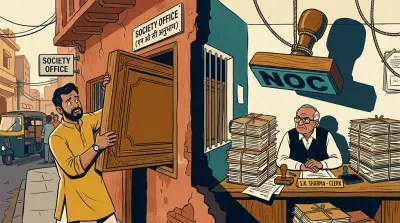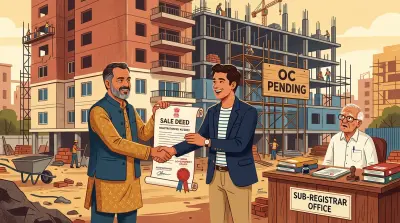
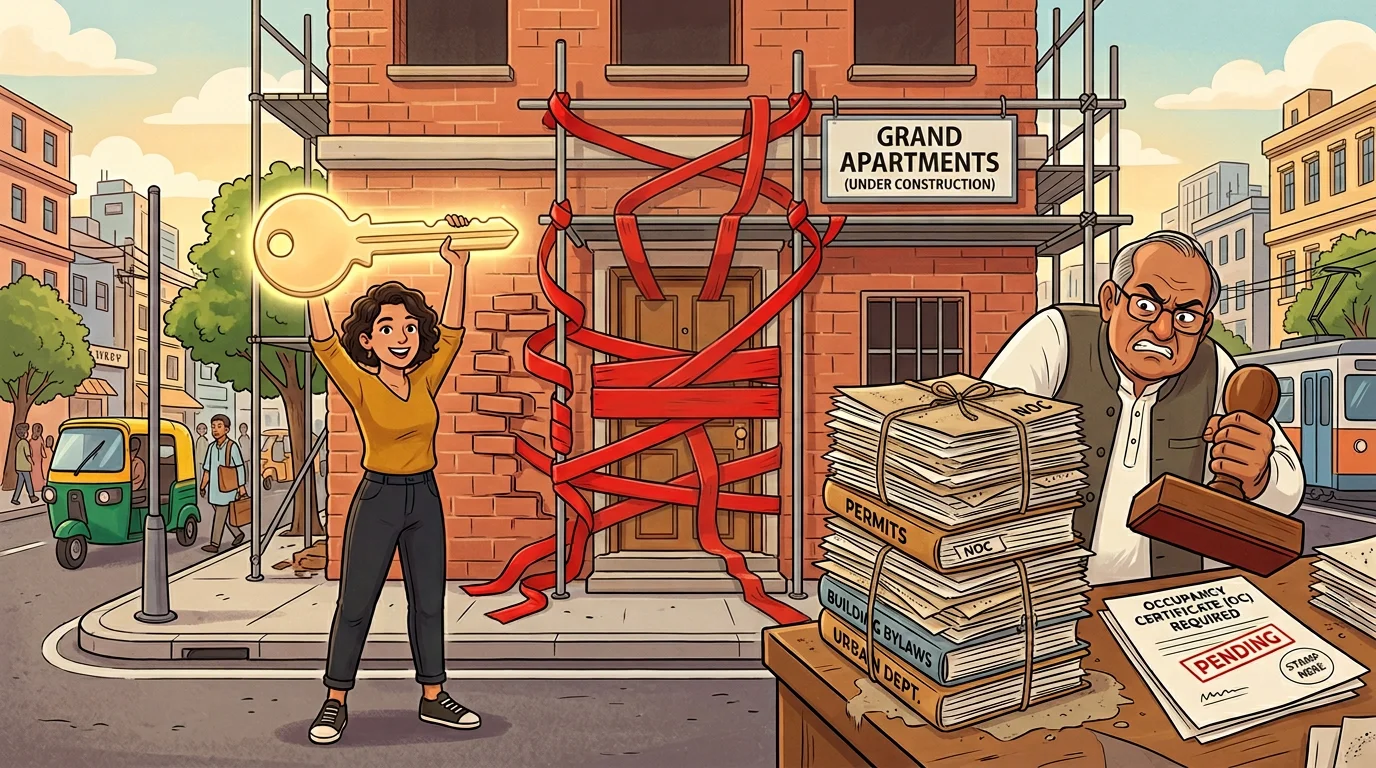

A Completion Certificate confirms that construction has been completed in line with the sanctioned plan and applicable requirements. An Occupancy Certificate permits occupation after the competent authority checks the conditions required by local law. The names, sequence and whether the certificates are combined vary by state and municipal authority.
| Question | Completion Certificate (CC) | Occupancy Certificate (OC) |
|---|---|---|
| Main purpose | Records completion against sanctioned construction requirements | Permits the building or covered part to be occupied |
| Issuer | Competent local or planning authority | Competent local or planning authority |
| What to match | Project, phase, sanctioned plan and issue date | Project, tower or phase covered, conditions and issue date |
| Biggest buyer risk | Assuming construction completion means occupation is permitted | Accepting possession when the unit or tower is not covered |
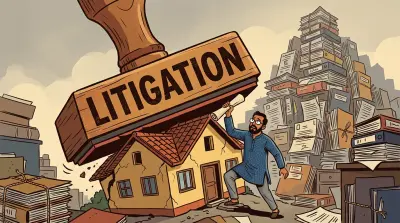
In 2018, a buyer named Govindan Raghavan paid over Rs 4.48 crore for a flat. The builder promised possession within 39 months. Two years after the deadline passed, the Occupancy Certificate finally arrived. By then, Raghavan had already gone to the Supreme Court. The court ordered a full refund with interest, finding that the builder’s terms were “wholly one-sided and unfair.”
One missing certificate. Years of litigation. Crores tied up.
This is not rare. Across India, thousands of homebuyers are stuck in properties without a valid Occupancy Certificate, unable to get proper utility connections, unable to sell, unable to get home loans. And many do not even know the certificate is missing until the problem hits them.
What Is a Completion Certificate?
Let us start with the simpler one.
A Completion Certificate (CC) is an official document issued by the local planning authority (municipal corporation, development authority, or town planning department) confirming that a building has been constructed according to the sanctioned building plan.
Think of it as a report card for construction. The authority checks: did the builder follow the approved blueprint? Are the floor heights correct? Is the floor area ratio (FAR) within limits? Are the setbacks (the gap between the building and the property boundary) as approved?
The CC says: “Yes, this building was built the way we said it could be built.”
What it does not say is whether the building is safe to live in. That is the next certificate’s job.
What Is an Occupancy Certificate?
An Occupancy Certificate (OC) goes a step further. It is issued by the same local authority, but only after verifying that the building is fit for people to actually move in.
The RERA Act defines it clearly: an occupancy certificate is issued by the competent authority “permitting occupation of any building… which has provision for civic infrastructure such as water, sanitation and electricity.”
Beyond the construction matching the plan, the OC confirms that fire safety systems are installed and functional, water supply and sewage connections are in place, electrical installations meet safety standards, lifts (if any) have been inspected and certified, and the building complies with environmental clearances.
Here is an analogy. If you are buying a car, the CC is like confirming the car was assembled correctly at the factory. The OC is the roadworthiness certificate that says the car is actually safe to drive on public roads. You need both.
Occupancy Certificate vs Completion Certificate: the key differences
| Completion Certificate (CC) | Occupancy Certificate (OC) | |
|---|---|---|
| What it confirms | Building matches approved plan | Building is safe for habitation |
| Who issues it | Local planning/municipal authority | Same authority, after further inspection |
| When it is issued | After construction is complete | After CC is granted and civic infrastructure is verified |
| What it checks | Floor area, height, setbacks, structural compliance | Water, sewage, electricity, fire safety, lifts |
| Sequence | Comes first | Comes second (CC is a prerequisite) |
| Required for | Property registration, transfer | Legal occupation, utility connections, home loans |
In some states, the CC and OC are issued as a single combined certificate. In others, they are separate documents with separate application processes. The terminology also varies: some municipal bodies call the OC a “Building Completion and Occupancy Certificate,” while others issue them as distinct documents. Always check what your specific municipal authority requires.
If you searched for “building occupancy certificate,” “building occupation certificate,” or “building completion certificate,” this distinction is the key one: a Completion Certificate confirms the building was constructed as approved, while the Occupancy Certificate confirms it is legally fit to be occupied.
What a partial Occupancy Certificate covers
A partial OC permits occupation only for the building, tower, phase or portion identified in the certificate. It does not automatically cover the whole project. Read the property schedule and conditions, then match them to your tower and unit. Also check whether common systems serving the occupied portion, such as access, fire safety and utilities, are included or subject to conditions.
Do not rely on the label alone. A certificate for Tower A does not authorise occupation of Tower B, and a phase-specific certificate may leave later amenities outside its scope.
When a deemed Occupancy Certificate may apply
Some local laws provide a deemed-approval mechanism when a complete application is not decided within a prescribed period. There is no single nationwide deemed-OC rule. The result depends on the applicable state or municipal provision, whether the application was valid and complete, and whether the building complied with the sanctioned plan.
Ask for the filed application, acknowledgement, plans and the exact statutory provision being relied upon. A builder’s statement that an OC is “deemed” is not a substitute for those documents or for local legal review.
What Happens Without an OC
This is where it gets serious.
You cannot legally live there. Occupying a building without an OC is considered unauthorised under most municipal laws. The Bombay High Court, in a 2024 suo motu case involving a building constructed without any permissions, was blunt: “none can benefit from an illegality.” The court held that structures built without fundamental approvals cannot be saved or regularised.
Utilities can be denied or disconnected. Municipal authorities can refuse permanent water and electricity connections to buildings without an OC. Some cities impose penalty charges: 25% extra on property tax, 50% additional on water charges. In extreme cases, existing connections can be disconnected.
Banks will not touch it. The OC is a mandatory document for home loan approval. No bank or housing finance company will sanction a loan against a property without one. If you are buying a resale flat and the building lacks an OC, you will not find a buyer who can get financing.
You cannot sell easily. A property without an OC has a significantly smaller buyer pool. Most informed buyers and their lawyers will walk away. You are left with cash buyers willing to take on the risk, which means a steep discount.
The builder can be held liable. Under RERA, the promoter is legally required to “obtain the completion certificate or the occupancy certificate, or both, as applicable, from the relevant competent authority as per local laws” and make it available to buyers. Failure to do so is a continuing breach. The Supreme Court has held that “the inordinate delay in handing over possession of the flat clearly amounts to deficiency of service” and that a buyer “cannot be made to wait indefinitely.”
In the worst case, demolition. Buildings constructed in serious violation of sanctioned plans, or on land where construction was never permitted, can be demolished by municipal authorities. The Bombay High Court rejected the argument that “everything that is built can be regularised or retained,” holding that structures lacking fundamental approvals cannot be saved.
What RERA Says
The Real Estate (Regulation and Development) Act, 2016 changed the game for homebuyers. Before RERA, builders routinely handed over possession without obtaining the OC, leaving buyers to deal with the consequences. RERA made several things mandatory.
Builder must obtain the OC. Section 11(4)(b) requires the promoter to obtain the completion certificate or occupancy certificate (or both) and make it available to allottees. This is not optional. It is a statutory duty.
No valid possession without OC. Courts have consistently held that offering possession without an OC is not a valid offer. As one tribunal put it: “Offering of the possession without obtaining the occupation certificate is no valid offer.”
Buyer can demand a refund. If the builder fails to deliver possession with the OC by the agreed date, Section 18 gives the buyer an “unqualified right” to demand a full refund with interest. The Supreme Court affirmed this in Newtech Promoters v. State of UP (2021), noting that RERA was “consciously enacted” as a retroactive statute to protect buyers.
All ongoing projects must register. Any project that had not received an OC before 1 May 2017 (when RERA came into effect) was required to register under RERA, regardless of when construction started.
Five-year structural warranty. Even after the OC is issued and possession is handed over, the builder remains liable for structural defects for five years under Section 14(3). The OC is not the end of the builder’s responsibility.
How to Check if Your Property Has an OC
This is easier than it used to be, thanks to digitisation. Here are the main ways:
1. State RERA portals
If the project is registered under RERA (and it should be, if it was ongoing after May 2017), the state RERA website will have a project page. Builders are required to upload project documents, including the OC. Search for the project by name or RERA registration number.
| State | RERA Portal |
|---|---|
| Maharashtra | maharera.mahaonline.gov.in |
| Karnataka | rera.karnataka.gov.in |
| Tamil Nadu | rera.tn.gov.in |
| Telangana | rera.telangana.gov.in |
| Uttar Pradesh | up-rera.in |
| Haryana | haryanarera.gov.in |
2. Municipal corporation websites
Many municipal bodies now have online portals where you can search for building approvals and certificates. For example, GHMC (Greater Hyderabad Municipal Corporation) and BMC (Mumbai) allow online searches.
3. Ask the builder directly
Request a copy of the OC. A legitimate builder will provide it without hesitation. If the builder stalls, deflects, or says “it is in process,” treat that as a red flag.
4. RTI application
If online portals do not have the information and the builder is not cooperating, file a Right to Information (RTI) application with the municipal authority that would have issued the OC. Ask specifically whether an OC has been issued for the building, and if so, the date and reference number.
Important: Always verify directly with the issuing authority. Do not rely solely on copies provided by the builder or seller. Forged OCs exist. Use official government portals (gov.in or nic.in domains) and avoid third-party websites that charge fees for “verification.”
How to Check If the Builder Has Applied for OC
This is not the same as checking whether the OC has already been issued.
If you want to verify whether the builder has actually applied:
- Ask for the acknowledgement number or inward number from the municipal authority.
- Check the project page on the relevant RERA portal. Builders often upload application-stage documents there before the final OC is uploaded.
- Check the municipal portal if the authority publishes application status online.
- Ask for the architect’s completion submission or covering letter if the builder says the OC is “under process.”
If the builder cannot show any submission proof, treat “the OC has been applied for” as unverified.
How to Get an Occupancy Certificate
For apartment projects, the builder usually applies for the Occupancy Certificate. Buyers do not obtain it themselves; they verify that the authority issued it.
The sequence is usually:
- Construction is completed in line with the sanctioned plan.
- The builder or architect submits completion documents to the competent authority.
- The authority inspects the building for plan compliance, water, sewage, electricity, fire safety, and access.
- If the building passes inspection, the Occupancy Certificate is issued.
For self-constructed houses, the owner may apply directly or through their architect, depending on local rules. For flat buyers, the practical task is verification, not filing.
State-by-State Variations
The OC process is not uniform across India. Local municipal laws govern the specifics, and these vary significantly.
Maharashtra
Maharashtra has some of the most detailed OC regulations. The OC is issued by the municipal commissioner or chief officer of the municipal council. Fees range from Rs 10 to Rs 50 per square foot. In a significant recent reform, Maharashtra now allows housing societies to apply for the OC themselves if the builder defaults. This is a big deal: previously, if a builder abandoned a project or refused to apply, flat owners were stuck. The new framework lets residents take matters into their own hands.
Maharashtra also recognises deemed OC: if the authority fails to act on a valid application within the prescribed timeframe, the OC is deemed to have been granted.
Karnataka
In Karnataka, the OC is issued by the local planning authority (BBMP in Bengaluru, or the respective city corporation elsewhere). Fees range from Rs 5,000 to Rs 25,000. The Karnataka High Court has directed the state government to issue clear guidelines to authorities on granting OCs, suggesting that the process was previously inconsistent. Individual houses on small plots below a certain height may be exempt from OC requirements, but apartments and commercial buildings are not.
Tamil Nadu
Tamil Nadu uses the term “Completion Certificate” for what many other states call the OC. The Chennai Metropolitan Development Authority (CMDA) or the respective local body issues it. Fees range from Rs 10,000 to Rs 40,000. Buildings below a certain height or with few units may obtain utility connections without a CC, but high-rises and multi-unit complexes still need one.
Telangana
In Telangana, the GHMC handles OCs for properties within Greater Hyderabad, while HMDA (Hyderabad Metropolitan Development Authority) covers the wider metropolitan area. You can check OC status online through the GHMC website or the Telangana RERA portal. Land records are now managed through the Bhu Bharati portal (which replaced the discontinued Dharani portal), but OC issuance remains with the municipal authority.
Delhi NCR
In Delhi, the DDA (Delhi Development Authority) or MCD (Municipal Corporation of Delhi) issues the OC. For Noida, Greater Noida, and Ghaziabad (all in UP), it is the respective development authority. The NCR region has seen some of the most high-profile OC disputes, with builders in Noida and Greater Noida facing multiple cases for delivering possession without valid certificates.
Common Mistakes (Especially for NRIs)
1. Confusing possession with legality. The builder hands you the keys, you move in (or your tenant moves in), and you assume everything is in order. But possession without an OC is not legal possession. It is occupation without authorisation. Many NRI buyers discover this years later when they try to sell or refinance. In February 2026, the Supreme Court made this explicit in Parsvnath Developers v. Mohit Khirbat - ruling that an offer of possession without an OC is legally invalid, regardless of what the builder-buyer agreement says.
2. Not asking for the OC before paying the final instalment. Once you have paid, your bargaining power drops dramatically. Always make final payment conditional on receiving a copy of the OC. This should be part of your sale agreement.
3. Accepting a partial OC as a full OC. A partial OC means only part of the project is cleared. Your specific tower or block may be covered, but common areas, amenities, and other infrastructure may not be complete. Shared facilities like fire exits, pumps, and generators that serve the entire complex need to be covered by the full OC.
4. Relying on the builder’s word. “The OC is in process” is one of the most common lines in Indian real estate. It can mean the application was filed yesterday. It can also mean there are serious compliance violations that prevent the OC from being issued. Always verify independently.
5. Not checking the OC for the specific unit. In large projects, OCs may be issued tower by tower or phase by phase. Make sure the OC covers your specific building, floor, and unit. A project-level OC for Tower A does not help you if your flat is in Tower B.
6. Ignoring the OC when buying resale property. This is common among NRIs buying older apartments. The building has been occupied for years, everyone has utility connections, the encumbrance certificate is clean. But if the building was never granted an OC (or was granted only a partial OC), the problem persists. Municipal authorities can act on it at any time.
What to Do if the OC Is Missing
If you already own a property in a building without an OC, or if you discover during due diligence that the building lacks one, here are your options.
If the project is RERA-registered: File a complaint with the state RERA authority. The builder is legally obligated to obtain the OC. RERA authorities can impose penalties and order the builder to comply. If the delay is unreasonable, you can seek a refund with interest.
If the builder has abandoned the project: Some states (notably Maharashtra) now allow the association of allottees to apply for the OC directly. Check if your state has a similar provision. If not, approach the RERA authority or the municipal body.
If the building has minor violations: In some cases, the OC is denied because of minor deviations from the sanctioned plan (an extra room, a balcony enclosure, a height variation). Some municipal bodies allow regularisation by paying a composition fee. This varies by state and by the nature of the violation.
If the building has major violations: If the building was constructed significantly beyond the approved plan, or on land not zoned for construction, regularisation may not be possible. In these cases, the property carries a permanent legal risk. Courts have been clear that not everything can be regularised.
Document everything. Whether you are fighting the builder, approaching RERA, or exploring regularisation, keep copies of every document: the sale deed, the builder-buyer agreement, payment receipts, correspondence with the builder, and any certificates (even partial ones). Store these with timestamps. If you are an NRI managing this from abroad, having all documents digitally organised on a platform like Assetly makes it significantly easier to share with lawyers and file complaints remotely.
The Checklist Before You Buy
Keep the flat’s area calculation separate from its occupancy approval. Our guide to comparing carpet area with built-up and saleable area explains which figures to request and how to compare two quotations on the same basis.
Before committing to any property purchase, ask these questions:
- Has the building received a full Occupancy Certificate? (Not partial, not “in process.”)
- Does the OC cover your specific unit or tower?
- Can you verify the OC independently through the RERA portal or municipal website?
- If the property is under construction, what is the builder’s track record of obtaining OCs for previous projects?
- Does your sale agreement make possession conditional on the builder providing the OC?
- Have you checked the encumbrance certificate and title deed as well?
If the answer to any of the first three questions is “no,” pause. No property is a good deal if it comes without the legal right to occupy it.
Assetly is a property document management platform that helps Indian property owners organise, verify, and track their property documents digitally. Learn more.