
Let us say you bought a flat in Bangalore three years ago. It was under construction at the time. You paid 40% of the price, signed the allotment agreement, and waited. Now your job is taking you to Singapore. You want to sell the flat and move on.
Simple enough, right? List it, find a buyer, sign a deed, done.
Except it is not that simple. Because somewhere between your allotment agreement and the sale, there is RERA. And what RERA requires of you depends entirely on whether your flat is still under construction or already complete.
Most sellers do not think about RERA. They think of it as a buyer’s law. Something that protects people who buy flats from dodgy builders. And they are half right. But RERA also creates obligations for sellers, and ignoring them can stall your sale, trigger penalties, or leave you tangled in disputes that follow you across borders.
A Quick RERA Refresher
The Real Estate (Regulation and Development) Act, 2016, was India’s first comprehensive law regulating the real estate sector. Before RERA, the relationship between builders and buyers was governed by a patchwork of consumer protection laws and whatever the builder decided to put in the agreement. Builders could delay projects for years, change layouts mid-construction, and sell the same flat twice. Buyers had limited recourse.
RERA changed that. It created state-level regulatory authorities, mandated project registration, imposed timelines on builders, and gave buyers enforceable rights. Every state now has its own RERA authority: MahaRERA in Maharashtra, KRERA in Karnataka, TNRERA in Tamil Nadu, UP-RERA in Uttar Pradesh, and so on.
The key thing to understand is this: RERA primarily governs the relationship between promoters (builders/developers) and allottees (buyers). It is not, strictly speaking, a law about resale transactions between two individuals. But its shadow falls over every property sale in India, because the protections it created travel with the property.
Selling an Under-Construction Flat
This is where things get interesting, and where most sellers trip up.
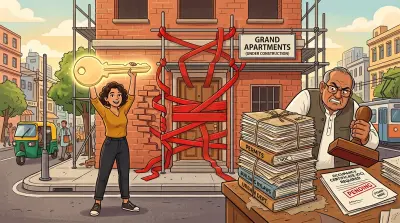
When you buy an under-construction flat, you do not actually own a flat. You own allotment rights. The builder has allotted a specific unit to you, and you have an agreement that says the builder will construct it, obtain the Occupancy Certificate, and hand over possession by a certain date. Until that happens, what you hold is a contractual right, not a property title.
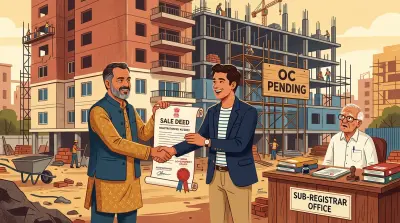
So when you “sell” an under-construction flat, you are not executing a sale deed. You are transferring your allotment rights to someone else. The legal term for this is “assignment.” The new buyer steps into your shoes. They take over your rights under the original agreement, and they also take over your obligations, including the remaining payments to the builder.
Do You Need the Builder’s Permission?
Almost always, yes.
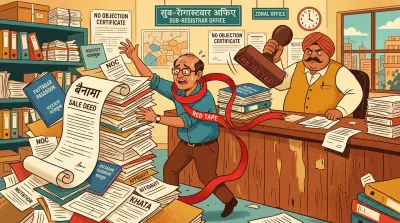
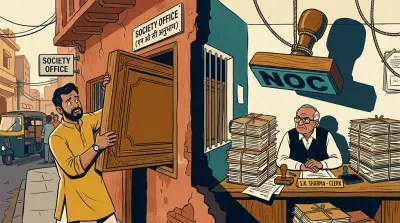
Check your allotment agreement. Most agreements contain a clause that says you cannot transfer, assign, or sell your allotment rights without the builder’s prior written consent. Some builders call this an NOC (No Objection Certificate). Some charge a transfer fee, typically 1-3% of the property value.
This is not just a contractual formality. If you transfer your allotment without the builder’s consent and the builder later refuses to recognise the new buyer, you have a mess on your hands. The new buyer has paid you, but the builder will not deal with them. The flat is stuck.
What About RERA Approval?
Section 15 of the RERA Act deals with the transfer of a promoter’s rights and liabilities in a project to a third party. This requires two-thirds consent of allottees and prior approval of the RERA authority.
Now, Section 15 is about promoters transferring their entire project (or a majority of rights in it) to another developer. It is not about individual buyers transferring their allotment. But some state RERA rules do require that individual allotment transfers be notified to or approved by the RERA authority.
In Maharashtra, for instance, MahaRERA has specific procedures for recording changes in allottee details. In Haryana, HRERA has guidelines for endorsement of third-party rights. The exact process varies by state, so check your state RERA authority’s website or consult a local property lawyer.
The bottom line: even though Section 15 technically covers promoter-level transfers, the spirit of RERA transparency means most states want to know when allotment rights change hands in a registered project.
What Happens to RERA Protections After Transfer?
This is a question many sellers (and buyers) overlook: when you transfer your allotment rights, do RERA protections transfer too?
Yes. The new buyer inherits all the protections that RERA provides. If the builder delays possession beyond the agreed date, the new buyer can file a complaint under Section 18 and claim interest or a refund. If the builder deviates from the sanctioned plan, the new buyer can challenge it. The Supreme Court has been emphatic about this. In Imperia Structures Ltd. v. Anil Patni (2020), the court observed that Section 18 confers an “unqualified right” on allottees to seek refunds with interest when builders fail to deliver possession on time. Importantly, the case also established that consumer forum remedies remain available alongside RERA - homebuyers are not forced to choose one forum over the other.
The key phrase in the proviso to Section 15(1) is worth noting:
“Such transfer or assignment shall not affect the allotment or sale of the apartments, plots or buildings, as the case may be, in the real estate project made by the erstwhile promoter.”
In plain English: even when a project changes hands from one developer to another, your allotment stays valid. The same principle applies when an individual allottee transfers their rights to a new buyer. The protections travel with the unit.
Is RERA Applicable for Resale Flats?
For a completed resale flat sold by one individual owner to another, RERA registration is not required. RERA applies to promoters marketing new projects, not to ordinary owners reselling a completed unit.
That is the direct answer to the search query. The longer answer is that RERA can still matter around the edges: the original project registration, the Occupancy Certificate, any pending complaint against the builder, defect liability, and project-level non-compliance may still affect the resale.
Selling a Completed Flat (Resale)
Now let us talk about the more common scenario: you have a flat, you have received possession, the building has an OC, and you want to sell.
Here is the single most important thing to know: RERA registration is for new projects, not resale transactions. If you are an individual selling a completed flat to another individual, you do not need to register with RERA. You are not a promoter. You are not developing a real estate project. You are selling your property.
This is a surprisingly common source of confusion. Buyers sometimes ask sellers for a “RERA number” on a 15-year-old flat in a completed building. That is not how RERA works. The RERA registration belonged to the original project when it was being marketed and constructed by the developer.
But RERA Still Matters for Resale
Even though your resale transaction is outside RERA’s direct jurisdiction, the original RERA protections may still be alive. Section 14 of the RERA Act creates a structural defect guarantee:
“In case any structural defect or any other defect in workmanship, quality or provision of services… is brought to the notice of the promoter within a period of five years by the allottee from the date of handing over possession, it shall be the duty of the promoter to rectify such defects without further charge, within thirty days.”
Here is the critical part. The proviso to Section 11(4)(a) adds that this responsibility “shall continue even after the conveyance deed of all the apartments, plots or buildings… to the allottees are executed.”
What does this mean for you as a seller? If your building received possession less than five years ago and the buyer discovers structural defects after purchase, the builder is still on the hook. Not you. The buyer can go after the builder under RERA. This is actually a selling point you should communicate to prospective buyers: the RERA defect guarantee is still active.
The Documents You Need
Buying rather than selling? Use the Hyderabad resale-flat document checklist to match the seller’s papers to the particular flat, tower and transaction before paying a token.
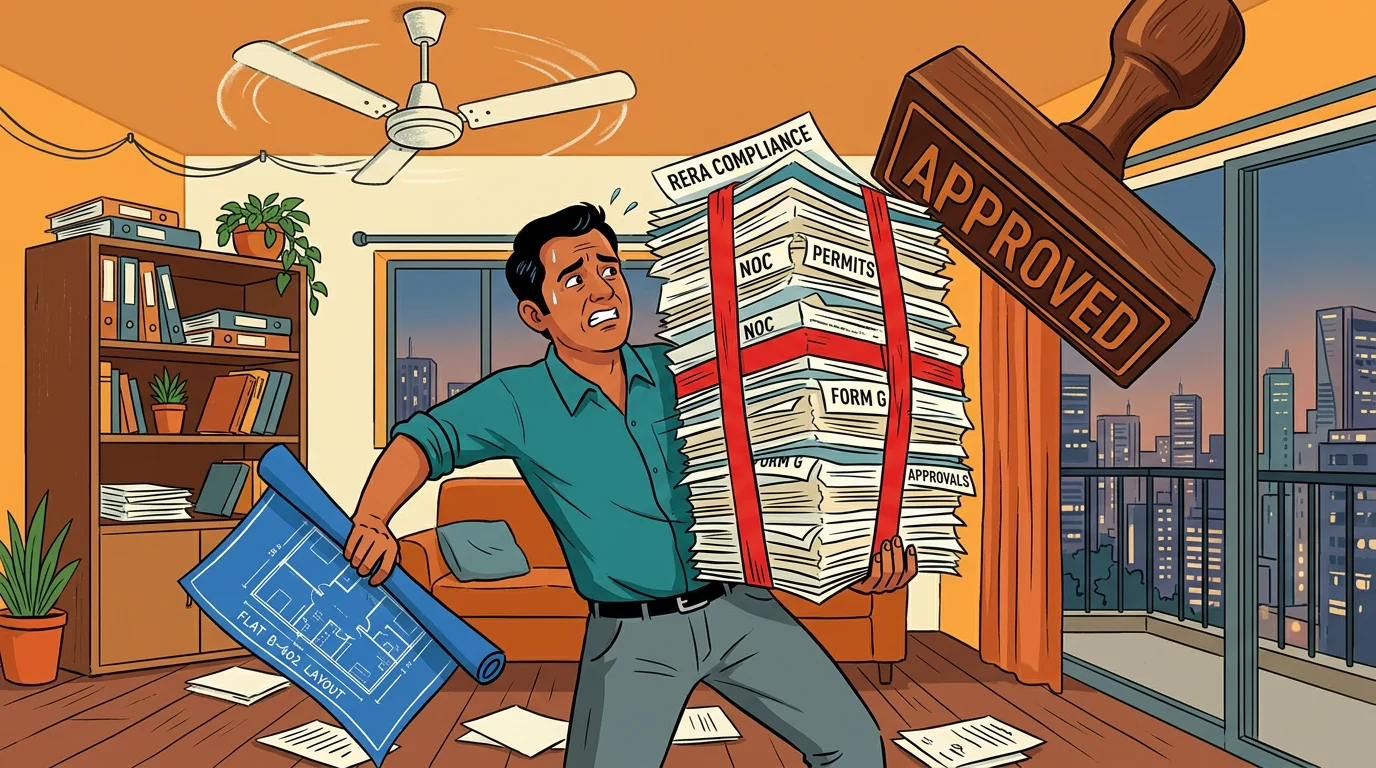
When selling a resale flat, you need to provide the buyer (and their lawyer, and their bank) with a paper trail that goes all the way back to the original purchase. At a minimum, gather the following:
- Original allotment letter from the builder
- Builder-buyer agreement (the agreement for sale)
- Possession letter from the builder
- Occupancy Certificate (OC) and/or Completion Certificate (CC) for the building
- Registered sale deed from your original purchase (this is your title deed)
- RERA registration number of the original project (if it was RERA-registered)
- Approved layout plan and carpet area details from the builder
- NOC from the housing society (if a cooperative society or apartment owners’ association has been formed)
- Encumbrance certificate for the relevant period
- Property tax receipts (current and past)
- Maintenance payment records
- Bank NOC (if you had a home loan that has been closed)
Missing even one of these can delay or derail your sale. Buyers’ lawyers will ask for them. Banks will insist on them before approving the buyer’s home loan.
Seller’s Disclosure Obligations
An outstanding home loan needs its own document trail. Our guide to a resale flat with an existing loan explains the lender confirmations to arrange before agreeing payment and original-document handover.
Indian property law does not have a formal “seller disclosure” requirement the way some Western countries do. There is no standard form you fill out listing known defects.
But that does not mean you can stay silent.
The general principle under the Transfer of Property Act (Section 55) is that the seller is bound to disclose to the buyer any material defect in the property or the seller’s title that the buyer could not discover through ordinary diligence. This includes known structural issues, water seepage problems, pending litigation involving the property or the building, disputes with the housing society, encumbrances or liens on the property, and any ongoing RERA complaints against the builder that might affect the unit.
Failing to disclose these is not just unethical. It is grounds for the buyer to seek rescission of the sale (cancellation of the deal and return of money) or damages. Courts have consistently held that a seller who conceals material facts acts in bad faith.
The practical advice: disclose everything upfront. It is better to negotiate a slightly lower price than to face litigation two years after the sale.
When the Builder Is in RERA Trouble
This is a scenario that catches many sellers off guard. You want to sell your flat, but the builder is embroiled in RERA complaints. Maybe the OC has not been obtained for parts of the project. Maybe there are pending complaints from other buyers about delayed possession. Maybe the builder is fighting orders to pay compensation.
How does this affect your sale?
If you have received possession and have a valid OC for your unit, the builder’s other problems do not directly prevent you from selling. Your title is separate from the builder’s regulatory compliance.
But practically, it creates complications. A prudent buyer will check the RERA portal, see the pending complaints, and get nervous. Their lawyer will flag it as a risk. Their bank might hesitate on the home loan.
If you have a pending RERA complaint of your own against the builder (say, for delayed possession compensation), think carefully before selling. Your complaint is tied to your status as an allottee. Selling the flat may affect your standing to pursue the complaint. In some cases, the RERA authority may allow substitution of the new buyer as the complainant, but this is not automatic and varies by state.
The NRI Dimension
For NRIs, selling a flat in India involves everything described above, plus the challenge of doing it from 5,000 miles away.
If you are an NRI selling an under-construction flat and the builder requires an in-person visit for the NOC, you will need to either visit India or appoint someone through a Power of Attorney. Make sure it is a specific, limited PoA for the purpose of executing the transfer, not a general PoA. Get it attested by the Indian consulate in your country of residence.
If the builder is in RERA trouble and you are trying to sell, you will need to monitor RERA orders and hearings from abroad. Most state RERA portals publish orders online, but keeping track requires diligence. Having all your property documents digitally organised on a platform like Assetly helps here, because you can share documents instantly with lawyers, buyers, or RERA consultants without waiting for physical copies to be couriered.
For NRIs filing or maintaining RERA complaints, most state authorities now accept online filings. You can authorise a representative through PoA to appear at hearings. The compensation for delayed possession, typically SBI MCLR + 2% interest on the amount paid, applies equally to NRI allottees.
And do not forget the tax angle. NRIs selling property in India face TDS obligations and capital gains tax rules that are different from resident sellers. That is a topic for another day, but make sure your chartered accountant is involved before you finalise the sale price. Our TDS guide for NRI property sellers covers this in detail.
Common Pitfalls
1. Not checking your allotment agreement before listing. Some agreements have lock-in periods or restrict transfers until a certain construction milestone is reached. If you violate these clauses, the builder can refuse to recognise the transfer.
2. Assuming RERA protections die when you sell. They do not. Section 14’s structural defect guarantee runs for five years from possession, regardless of how many times the flat changes hands. Communicate this to your buyer.
3. Selling without clearing your own dues. If you owe the builder money (remaining instalments, maintenance deposits, parking charges), clear them before selling. Outstanding dues give the builder a reason to withhold the NOC.
4. Ignoring the housing society. If a cooperative society has been formed, you typically need a society NOC and a share certificate transfer. Some societies charge a transfer premium (capped at Rs 25,000 in Maharashtra). Factor this into your timeline and costs.
5. Not getting the builder’s NOC in writing. Verbal assurances mean nothing. Get the NOC on the builder’s letterhead, signed by an authorised signatory. Keep a copy.
6. Forgetting to check for encumbrances. Before selling, pull a fresh encumbrance certificate to confirm there are no undisclosed liens, mortgages, or legal notices against the property. This is basic due diligence, but sellers often skip it because they assume they know their own property’s status.
A Quick State-Wise Reference
RERA rules on allotment transfers vary by state. Here is where to check:
| State | RERA Authority | Portal |
|---|---|---|
| Maharashtra | MahaRERA | maharera.maharashtra.gov.in |
| Karnataka | KRERA | rera.karnataka.gov.in |
| Tamil Nadu | TNRERA | rera.tn.gov.in |
| Uttar Pradesh | UP-RERA | up-rera.in |
| Haryana | HRERA | haryanarera.gov.in |
| Telangana | TSRERA | rera.telangana.gov.in |
| Delhi | Delhi RERA | rera.delhi.gov.in |
| Kerala | K-RERA | rera.kerala.gov.in |
| Gujarat | GujRERA | gujrera.gujarat.gov.in |
| West Bengal | WBRERA | rera.wb.gov.in |
Search for the project’s RERA registration number on the relevant portal. You will find project details, the builder’s compliance history, and any pending complaints. If you are selling an under-construction flat, your buyer will definitely check this. Make sure you know what they will find.
The Bottom Line
Selling a flat in India is not just about finding a buyer and agreeing on a price. If the flat is under construction, you are transferring allotment rights, and that requires builder consent, potentially RERA notification, and a clear understanding of what the new buyer inherits. If the flat is complete, RERA registration is not your concern, but the paper trail from the original purchase very much is.
The sellers who run into trouble are the ones who treat this as a simple transaction. The ones who sail through are the ones who have their documents in order, their disclosures upfront, and their RERA obligations understood.
If you are selling an under-construction flat:
- Check your allotment agreement for transfer restrictions or lock-in periods
- Get the builder’s written NOC before marketing the flat
- Check your state RERA portal for any pending complaints against the builder
- If you have a pending RERA complaint, consult a lawyer before selling
If you are selling a completed flat:
- Gather the full paper trail from your original purchase (allotment letter, builder agreement, OC, sale deed)
- Disclose any known defects, pending litigation, or society disputes to the buyer upfront
- Tell the buyer about the Section 14 structural defect guarantee if it is still active (five years from possession)
- Get the society NOC and clear all dues before listing
Whether you are sitting in Mumbai or Melbourne, the rules are the same. The only difference is how much harder it is to sort things out when you are doing it across time zones and oceans. India’s property crisis does not pause for anyone’s convenience.
Assetly is a property document management platform that helps Indian property owners organise, verify, and track their property documents digitally. Learn more.