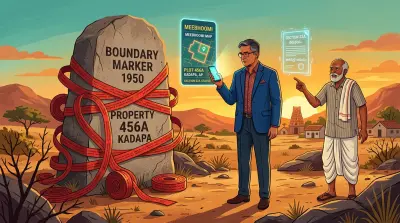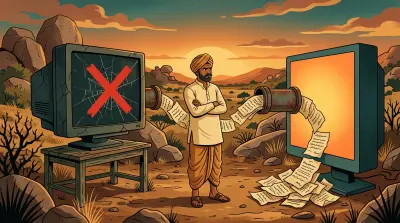


Every property transaction in India - a sale, a mortgage, an inheritance transfer - requires a current Encumbrance Certificate. Until a few years ago, getting one meant travelling to the Sub-Registrar office, submitting a written application, and returning a week later to collect a typed certificate.
For NRIs managing property from the United States, the UK, or the Gulf, that was a genuine obstacle. Not just inconvenient - often a reason transactions stalled for months while waiting for someone local to handle the paperwork.
Both Telangana and Andhra Pradesh now let you search for and download an EC directly through their IGRS portals, from anywhere in the world, in minutes. This guide covers how to use them - what you need, what to expect, what to do when the portal falls short, and when to hand it to someone else entirely.
For a full explanation of what an EC contains and what it misses, see our guide to encumbrance certificates. This post is about how to get one.
Why You Need a Current EC - Not the One You Already Have
An EC is a snapshot. It reflects registered transactions on a property up to the date it was issued. An EC from two years ago does not show whether a mortgage was created last year or a court attachment was registered in January.
This matters in three situations where the certificate must be recent:
Before selling. The buyer’s bank will order its own EC - but having one ready before the sale agreement is signed demonstrates clean title from the start and prevents the most common due diligence delay. Banks typically require an EC dated within three to six months of the loan application.
Before taking a home loan against the property. Lenders require a minimum 13-year EC, and many insist on 30 years for older properties. No lender will process the file without one.
As part of annual monitoring. If you own property you are not actively using, an annual EC check is the simplest way to confirm nothing has been registered against it without your knowledge. Fraudulent registrations do happen - and the sooner they are found, the easier they are to challenge.
Getting an EC on the IGRS Telangana Portal
Start with Assetly’s permanent Telangana EC workflow, then verify the result and any document you rely on through the live government service.
The Telangana IGRS portal at registration.telangana.gov.in holds digital EC records going back to 1983 for most districts. A standard search takes under five minutes once you have the right property identifiers.
What you need before you start:
- The Sub-Registrar Office (SRO) where the property was originally registered - for example, Musheerabad, Jubilee Hills, Secunderabad, or Warangal Urban. This is the SRO that registered the original sale deed, not necessarily the nearest office to the property’s current address.
- The survey number, plot number, or registered document number.
- The search period: from year and to year.
Step by step:
- Go to registration.telangana.gov.in
- On the homepage, find the Encumbrance Certificate option under Services or the Quick Links section
- Select your District - Hyderabad, Rangareddy, Medchal-Malkajgiri, Warangal, or the relevant district
- Select the Sub-Registrar Office from the dropdown. If you are unsure which SRO covers your property, check the original sale deed - it will state the SRO name and registration number
- Enter the Document Number if you have it, or search by Survey Number / Plot Number using the property details fields
- Set From Year and To Year. For a routine annual check, 13 years covers the Limitation Act period. For a pre-transaction search, request 30 years.
- Click Get EC or Search
The portal returns a list of all registered transactions within your period. Each entry shows the document number, registration date, the nature of the transaction (sale deed, mortgage deed, release deed, court attachment, etc.), and the names of the parties.
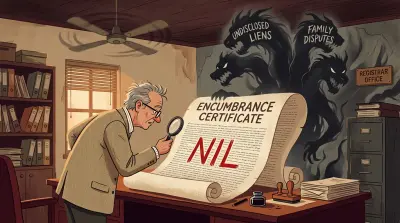
If no transactions are found, the result is a Form 16 - nil encumbrance. If entries exist, you get Form 15 listing each one. You can download the result as a PDF.
One thing to check immediately: if the portal returns nil for a property you know has been bought and sold, the SRO selection is likely wrong. Try adjacent SRO offices for the same district.
Getting an EC on the IGRS AP Portal
Start with Assetly’s permanent Andhra Pradesh EC workflow, then complete the applicable government-portal steps.
The Andhra Pradesh IGRS portal at registration.ap.gov.in follows an identical structure. Digital records run from 1983 for most districts. The navigation is slightly different.
What you need:
- The district and the Sub-Registrar Office / Mandal - for example, Vijayawada Urban, Guntur, Kurnool, Visakhapatnam North, or Nellore
- Survey number, document number, or plot number
- Search period
Step by step:
- Go to registration.ap.gov.in
- On the homepage, navigate to Services → Encumbrance Certificate (some versions label this as EC Search or EC Fetch)
- Select District - Krishna, Guntur, East Godavari, West Godavari, SPS Nellore, Visakhapatnam, etc.
- Select Mandal and then the Sub-Registrar Office
- Enter the property identifier
- Set the search period
- Click Get EC
The portal returns Form 15 or Form 16 in the same format as Telangana. Download the PDF for your records.
Vijayawada and urban AP properties: The AP government reorganised several mandals and SRO jurisdictions after bifurcation. If your property is in a peri-urban area near Vijayawada, Guntur, or Visakhapatnam, confirm whether the SRO that registered the original deed still exists under the same name - some were merged or renamed post-bifurcation. Selecting the wrong SRO returns no results, which can be misread as a nil EC. Note also that Vijayawada city moved to NTR district in April 2022; select NTR, not Krishna, for current records. The full SRO breakdown for Vijayawada is in the Vijayawada NRI property guide.
What to Do When the Portal Falls Short
Both portals work well for the majority of urban and semi-urban properties registered after 1983. There are four situations where they do not.
Records before 1983. Neither portal has digitised older registers. For ancestral properties, agricultural land that changed hands before 1983, or older plots in towns like Karimnagar, Nalgonda, or Ongole, physical registers at the Sub-Registrar office are the only source. You will need a PoA holder or a local agent to submit Form 22 in person and collect the certified EC. Processing time is three to fifteen working days depending on office workload.
Survey number discrepancies. If your property underwent a government resurvey after the original registration, the survey number in your sale deed may differ from the current revenue records. Try both numbers in the portal. If neither returns results, the correct identifier needs to be confirmed with the local Sub-Registrar before the EC search can proceed.
Patchy digitisation for rural properties. Some mandal-level offices in both states have incomplete digitisation even within the 1983–present window. A nil result on the portal for a property you know has transaction history is a warning sign - it suggests a gap in the digital records, not a clean title. Treat it as unverified until a manual check confirms it.
Portal downtime. Both portals have periodic maintenance windows and occasional server errors. The Telangana portal in particular has offline periods during system updates. If a search is urgent, try at off-peak hours - late evening typically has lower load - and build in a two-to-three day buffer.
Getting Your EC Fetched Without Any Visit
Running the portal search requires knowing the exact SRO jurisdiction, the correct property identifiers, and how to interpret what comes back. Getting any of these wrong - especially the SRO - produces misleading results that can create a false sense of security.
Assetly’s document services team handles EC retrieval for property owners and NRIs who need a verified result without working through the portals themselves. The process covers portal searches on both IGRS Telangana and IGRS AP, SRO identification and verification, and where the digital record is insufficient, coordination with the local Sub-Registrar office for a certified physical copy.
The certified copy is uploaded to your document vault and accessible from anywhere. Start an EC search with the property details you have, or search by owner name if the survey number is not to hand.
After You Have the EC
Verify the period. Confirm the certificate covers the years you need. A 13-year EC is the minimum for a bank or buyer. For anything with a complex ownership history, 30 years is safer.
Read every entry in Form 15. Every mortgage should have a corresponding release or discharge deed further down the list. Any court attachment should show a vacating order. An unreleased mortgage - even from twenty years ago - means the property cannot be transferred cleanly until it is formally discharged. For guidance on reading each entry type, see our property title verification guide.
Record the date it was issued. File the EC with the issue date clearly noted. If the register changes after your search, the dated copy is your evidence of what it showed at that point. Store it alongside your other property documents so it is accessible when you need it.
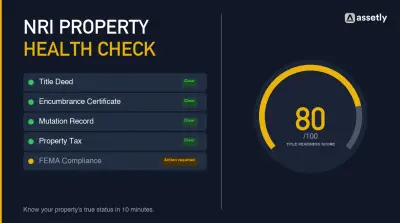
For a complete property status review that goes beyond the EC - covering revenue records, tax dues, and litigation in a single check - the NRI Property Health Check covers all five dimensions together.
Assetly helps Indian property owners - especially NRIs - obtain, organise, and track their property documents without visiting India. Learn more at assetlyhq.com.