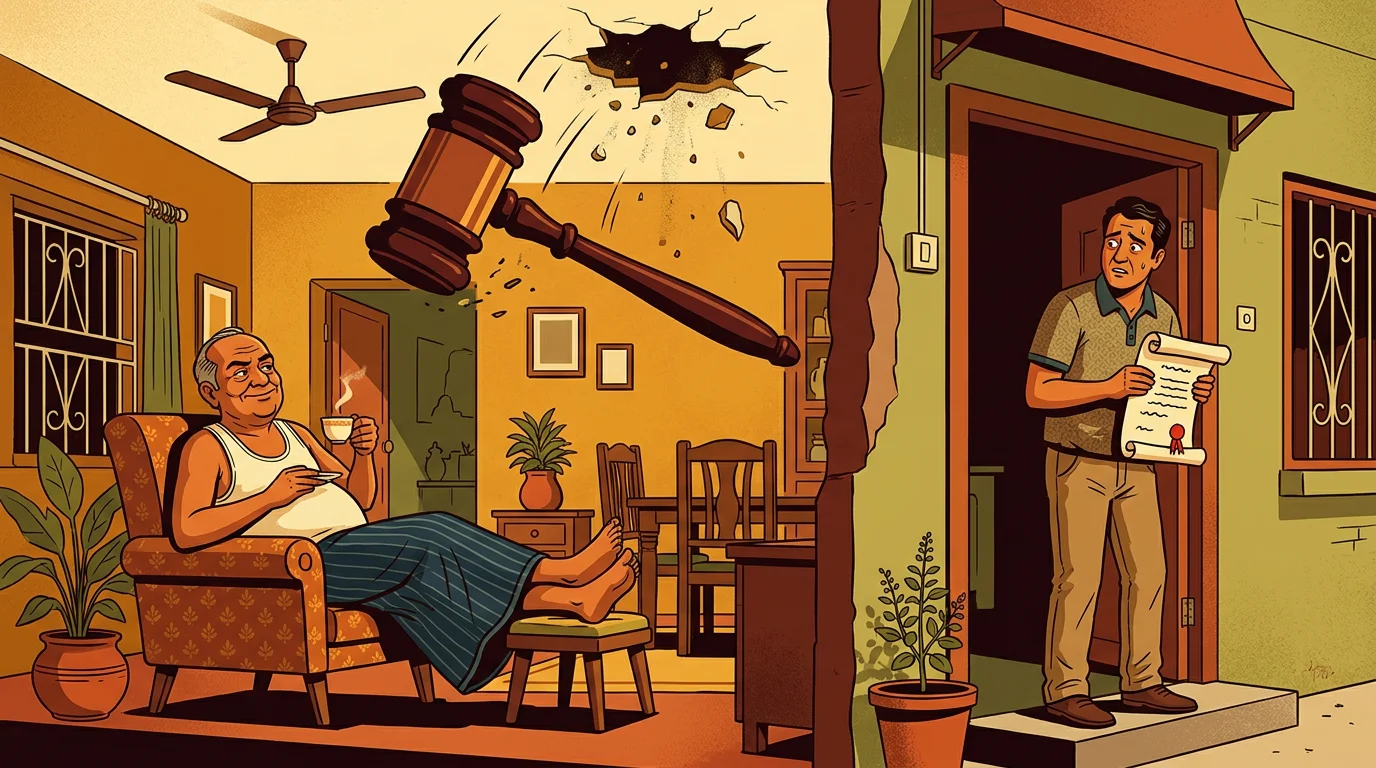

A Delhi landlord named Jyoti Sharma spent decades trying to evict a tenant from a property her family had owned since 1953. The tenant’s sons - who had taken over after their father - stopped paying rent, claimed the landlord had no valid title, and then made a bolder argument: that they had become the rightful owners through decades of uninterrupted occupation.
The dispute reached the Supreme Court. In September 2025, the court dismissed their claim with language that should be read by every NRI landlord renting out property in India.
“A tenant occupies the property only with the permission of the owner; therefore, the rule of adverse possession does not apply.”
That single line settles a question that has generated enormous anxiety among property owners who rent to tenants and then move abroad: can a tenant who stays long enough eventually claim the property as their own?
The answer, as of the Supreme Court’s ruling in Jyoti Sharma vs Vishnu Goyal (2025 INSC 1099), is a categorical no.
The Fear That Drove the Question
The anxiety among NRI landlords is understandable. You know that Indian law gives encroachers a 12-year clock. Under Article 65 of the Limitation Act 1963, if someone occupies your land continuously for 12 years without your permission, they can go to court and claim ownership. The clock on adverse possession is real, and it is unforgiving.
So when a tenant has been in your property for 15, 20, or 30 years - often with rent going unpaid, no lease renewal, and you living abroad unable to visit - it was natural to wonder: does the same rule apply to them?
It does not. And the reason is a legal distinction that matters enormously.
Permissive vs. Hostile Possession
Adverse possession requires possession that is “hostile” to the true owner’s title. Hostile, in legal terms, does not mean aggressive. It means that the person in possession is asserting ownership against the owner’s claim - openly, continuously, and without the owner’s consent.
A tenant’s possession is the opposite of this. A tenant enters the property because the landlord gave them permission. Their presence is, by definition, permissive. The moment you give someone a key and a rent agreement, their occupation of that property cannot be “against” your title - because you yourself invited them in.
The Supreme Court in the Jyoti Sharma case put it plainly:
“A tenant occupies the property only with the permission of the owner; therefore, the rule of adverse possession does not apply.”
The court went further, holding that a tenant who entered possession under a rent deed executed by the earlier landlord cannot later challenge the landlord’s ownership. No length of occupation - however long - converts permissive possession into adverse possession.
Decades of occupation. Arrears of rent. Refusal to vacate. None of it converts permissive possession into hostile possession. The contractual relationship - tenant and landlord - does not dissolve simply because a tenant stops paying or a landlord fails to pursue eviction.
Tenant Estoppel: The Legal Principle Behind the Ruling
There is a second legal principle at work here, older than the adverse possession debate itself.
Section 116 of the Indian Evidence Act 1872 - often called the tenant estoppel provision - prevents a tenant from denying, during the continuance of the tenancy, that the landlord had title to the property at the time the tenancy began. It is the statutory expression of a simple idea: you cannot accept someone’s keys, pay them rent for decades, and then turn around and say they never owned the place.
In plain terms: the moment you signed a rent agreement with your landlord, you legally acknowledged that the landlord owns the property. You cannot later go to court and say “the landlord has no title” - because you already admitted the opposite when you accepted the keys.
This is why the Jyoti Sharma ruling was not a close call. Once the tenant’s family accepted that the original tenancy began with a rent deed from the landlord’s predecessor, the ownership claim was dead on arrival. You cannot use decades of occupancy to erase a contractual acknowledgment of someone else’s title.
What This Does Not Settle
The ruling protects you from one specific threat: a tenant claiming ownership through adverse possession.
It does not make eviction easy.
State Rent Control Acts across India give tenants significant protection from eviction. Getting a tenant out - even one who has not paid rent in years - requires filing in the appropriate court (Rent Controller or Civil Court depending on the state), establishing a valid ground for eviction, and waiting for the judicial process to run its course.
The Supreme Court’s ruling means your tenant cannot become your property’s owner. But they can remain in your property for years while eviction proceedings continue.
For NRI landlords, this distinction is critical. You are safe from ownership claims. You are not safe from protracted eviction battles, especially if your rental agreement is expired, unregistered, or if your paper trail of rent payments and communications is incomplete.
The Encroacher Remains a Different Problem
While tenants cannot claim adverse possession, encroachers who enter without any permission still can. If your property is vacant - not rented, not occupied, just sitting idle while you are abroad - and a neighbour or stranger begins occupying it, the 12-year clock starts ticking immediately.
This distinction creates a practical question for NRI property owners: should you keep property vacant or rent it out?
A vacant property is vulnerable to encroachment claims. A rented property is not - because the occupant’s presence is permissive, not hostile, and can never ripen into ownership. This is one argument, rarely discussed, in favour of keeping NRI property occupied under a formal tenancy rather than leaving it empty.
But a formal tenancy, with a registered rent agreement, proper rent receipts, and documented communication, is very different from an informal arrangement where a relative or old acquaintance “looks after” the property. Informal arrangements can blur into neither tenancy nor encroachment - which creates precisely the ambiguity courts struggle with.
What NRI Landlords Should Do
Register your rent agreement. An unregistered rental agreement is harder to enforce and easier to dispute. Most states now offer online registration. A registered agreement is the clearest evidence that the occupant entered with your permission as a tenant - not as an independent occupant building an adverse possession claim.
Collect and preserve rent receipts. Even if your tenant pays through bank transfer, document it. A paper trail of payments is evidence of the tenancy relationship. Gaps in payment history, without any legal action by you, weaken your position in eviction proceedings (though not your ownership).
Act on non-payment promptly. The Supreme Court ruling protects your title, but delay in pursuing eviction still complicates matters. If rent has not been paid in months, consult a local lawyer about sending a legal notice. This creates a record that you actively asserted your rights.
Keep renewal current. If your original lease has expired, issue a renewal or at minimum document continued tenancy through correspondence. An expired lease does not transfer ownership, but a fresh agreement strengthens your eviction case when needed.
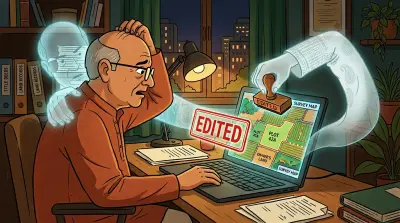
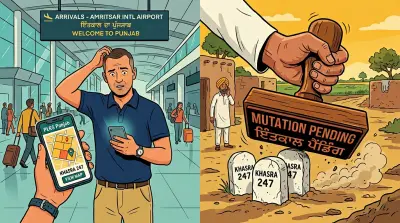
Check mutation and land records periodically. Tenants claiming adverse possession sometimes attempt to get fraudulent mutation entries made in land records. Check state portals - Bhu Bharati in Telangana, Bhoomi in Karnataka, Bhulekh in UP - to verify your name remains on record as owner.
Store your documents securely and accessibly. Your registered sale deed, rent agreements, tax receipts, and correspondence should all be accessible from abroad. Assetly (assetlyhq.com) helps NRI property owners organise and track these documents digitally without needing to visit India.
The Bigger Picture
India has over 4.7 crore pending cases across all courts. A significant fraction involve property disputes - many of them landlord-tenant conflicts where occupation stretched over decades and documentation was poor. The Supreme Court’s ruling in Jyoti Sharma is a firm signal that ownership claims built on time alone will not succeed when the original occupancy was consensual.
For NRI landlords who have been anxious about tenants “squatting” their way to ownership, the ruling is reassuring. But it also underlines what the broader pattern of property disputes in India consistently shows: the danger is rarely in the law itself. It is in poor documentation, informal arrangements, and absence that allows situations to drift for years without resolution.
A tenant cannot take your property. But paperwork neglect can make it very hard to take it back.
Assetly is a property document management platform that helps NRI landlords store, organise, and track all their property documents from anywhere in the world. Learn more at assetlyhq.com.