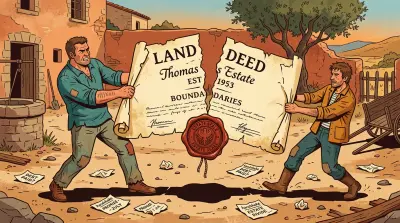
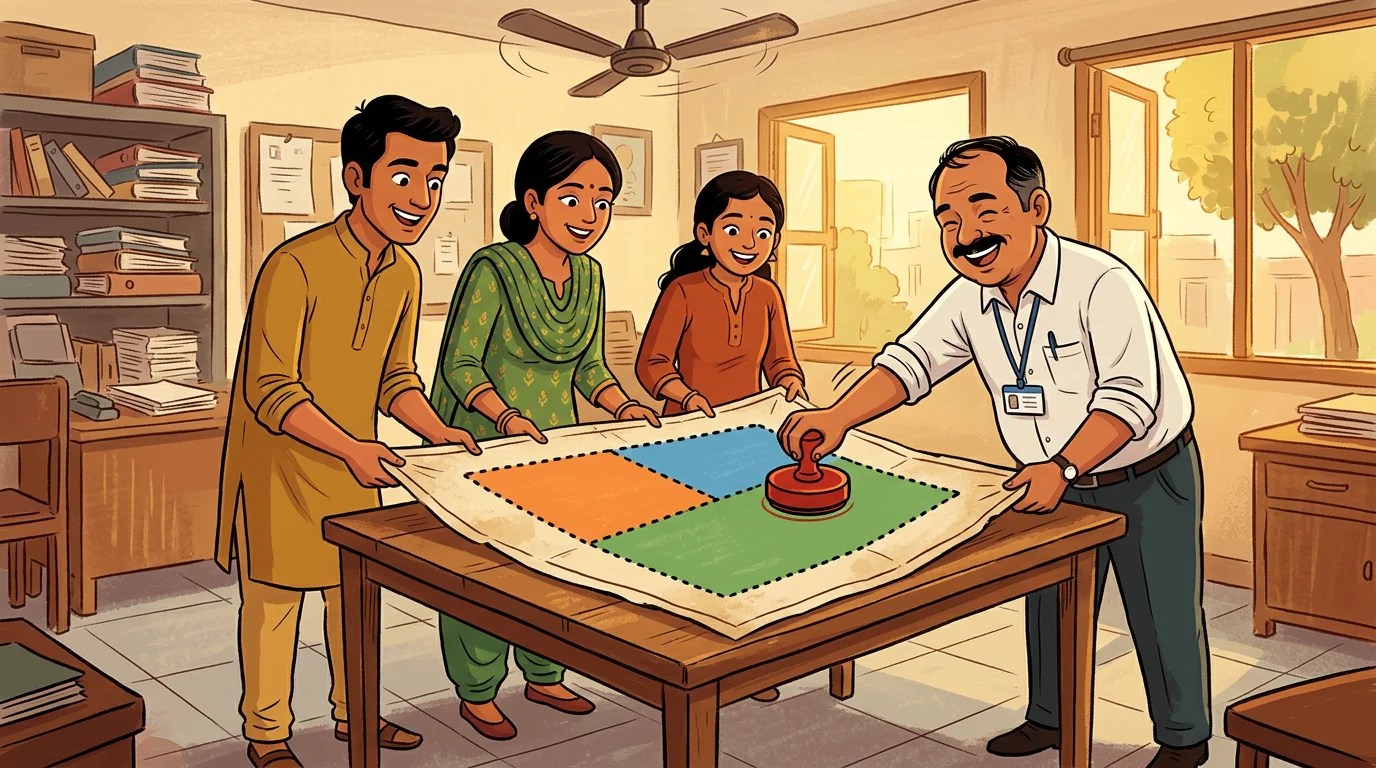

A Bangalore court in 2022 heard a family dispute that had been running for years. The plaintiff claimed an oral partition had happened decades earlier. The court, citing the Vineeta Sharma standard, was blunt: “Oral partition or unregistered memorandum of partition can be manufactured at any point in time without contemporaneous public documents and needs rejection at all costs.”
The family had informally divided the property. They had lived on their respective portions. But without a registered partition deed, the court treated the partition as if it never happened.
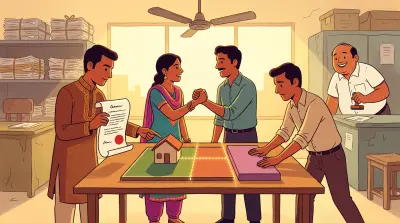
This is the pattern we covered in our post on why oral partitions fail. This guide is the other side: how to register a partition deed properly, what it costs, and why the process is simpler and cheaper than most families expect.
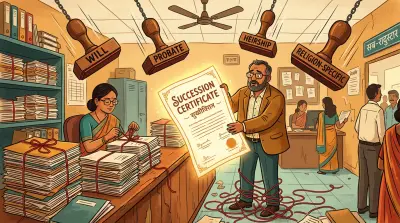
Where the joint ownership arose after a death, first establish the heirs and succession route. Our guide to the documents needed after a property owner dies explains that earlier step before the family chooses a partition or release.
Why Register at All?
The law technically allows oral partitions. The Supreme Court confirmed this in Tek Bahadur Bhujil v. Debi Singh Bhujil (1966): “Family arrangement as such can be arrived at orally.” Courts have upheld oral partitions where strong corroborating evidence exists.
The problem is what “strong corroborating evidence” means 20 or 30 years later. Witnesses die. Memories shift. Revenue records may never have been updated. And the next generation, who was not part of the original arrangement, has every reason to dispute it.
The Supreme Court in Roshan Singh v. Zile Singh (1988) drew the critical line: “If the writing itself effects a division, it must be registered.” The Telangana High Court in Sri L. Nagesh v. Smt L. Sandhya (2025) took this further, ruling that an unregistered partition deed “can be received in evidence only to prove the collateral purpose of severance in status, but not the main purpose of creating or extinguishing right over the property.” The court literally removed the unregistered partition deed from evidence. The family had a written document, but because it was not registered, it could not be used to prove who owned what.
Registration eliminates all of this. A registered partition deed is a public record, timestamped, signed by all parties, with biometric verification. It cannot be disputed as easily, and it cannot be “manufactured” after the fact.
Partition Deed vs Family Settlement
These are different instruments, and the distinction matters.
A partition deed divides jointly held property into specific individual shares. It says: this survey number goes to A, that portion goes to B, and this plot goes to C. It must be registered and attracts stamp duty.
A family settlement (or family arrangement) resolves disputes through mutual agreement. The Supreme Court in the landmark Kale v. Deputy Director of Consolidation (1976) held that family settlements are binding even without registration, and that “the object of the arrangement is to protect the family from long drawn litigation or perpetual strifes which mar the unity and solidarity of the family.”
The court went further: a family settlement can be oral, and a memorandum recording an already-completed oral arrangement does not need registration.
This sounds like the easier path. It is not. The distinction between a family settlement (which records what already happened) and a partition deed (which creates the division) is a legal grey zone that courts argue about endlessly. If the document is later classified as a partition deed rather than a family settlement, it becomes void for non-registration. And you are back to square one, but now with the added problem that years have passed.
For property, the practical advice is straightforward: always register. The cost difference between a registered partition deed and the litigation that follows an unregistered one is orders of magnitude.
There is also a third instrument families reach for when one heir simply wants to step back: a relinquishment or release deed, where a co-owner surrenders their share to the others. If you are unsure which of the three fits your situation, our decision guide on partition deed vs family settlement vs relinquishment deed walks through when each is appropriate. The rest of this guide assumes you have settled on a partition deed.
Before You Draft: The Readiness Work Most Families Skip
The registration itself is the easy part. The work that decides whether your partition holds up for the next fifty years happens before anyone drafts a word. Families that rush to a lawyer with “we’ve agreed, just write it up” are the ones whose deeds get reopened later. Do this groundwork first.
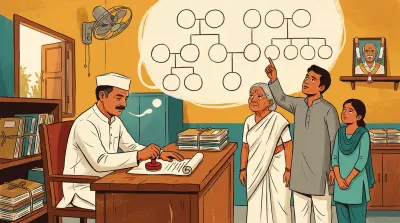
Step 1: Build the family tree and identify every claimant
A partition binds only the people who are parties to it. Miss one entitled co-owner and they can have the whole thing reopened. So the first exercise is not legal, it is genealogical: map the complete family tree of whoever originally owned the property, and identify every living person who has a share today.
Start from the last undisputed owner and work forward. For each person in the chain, ask: did they die? If so, who are their heirs under the applicable succession law? Are all of them accounted for? For a Hindu intestate owner, Class I heirs, sons, daughters (equally, since the 2005 amendment), the widow, and the mother, all inherit simultaneously, and a predeceased child’s children step into that branch. The list grows quickly across generations, which is exactly why third-generation partitions are the messiest.
A legal heir certificate is the standard way to establish who the surviving heirs of a deceased owner are, and you will usually need one for each deceased link in the chain.
Step 2: Trace acquisition and succession into the current co-owner list
Once you know who the people are, connect them to the property on paper. You are building the answer to a single question a buyer’s lawyer will one day ask: how did each of these co-owners come to hold a share?
- How was the property originally acquired? Purchase, inheritance, gift, or grant. Pull the original title deed and the link documents that establish the chain of title.
- Every death since then must be bridged by succession. For each owner who has died, the share passed to their heirs. Document that step, death certificate plus legal heir certificate, or a will with probate where relevant.
- The result is your co-owner list: the set of living people who, between them, own 100% of the property, with each person’s fractional share traced to a documented source.
Get this wrong, and the partition divides a property among people who do not actually own all of it, or omits someone who does.
Step 3: Handle deceased owners, minors, missing heirs, and PoA signers
Four situations need special care before drafting, because each can void a partition or leave it challengeable:
- A deceased co-owner. A dead person cannot sign, and their share does not disappear. It devolves on their heirs, who must be brought in as parties. You cannot partition around a deceased owner’s share; establish their heirs first.
- A minor’s share. A minor cannot execute a deed. A natural guardian acts, but under Section 8 of the Hindu Minority and Guardianship Act, 1956, the guardian cannot part with a minor’s immovable property without the previous permission of the court, and a disposal made without it is voidable at the minor’s instance. A partition touching a minor’s share should get court permission and allot the minor a fair share, or the child can challenge it on reaching majority.
- A missing or unreachable heir. Do not proceed as if they do not exist. A partition that omits an entitled heir does not bind them. Either locate and involve them, or take the route the law provides for genuinely untraceable parties.
- An heir who signs through a Power of Attorney. An overseas or absent co-owner can participate through a representative, but the PoA must specifically authorise executing this partition deed for this property. A vague, general PoA is a weak link. See our Power of Attorney guide for how to scope it, and why over-broad GPAs cause trouble.
Step 4: Inventory the property and gather documents
List every property (and every part of a property) to be divided, with its identifiers, and gather the paper for each:
- Original title deed and link documents (chain of title)
- Latest revenue records (RTC, pahani, pattadar passbook, khata)
- Encumbrance certificate for at least 30 years, to surface any mortgage, lien, or court attachment on the property
- FMB sketch or survey plan
- Property tax receipts
- Death certificates and legal heir certificates for every deceased link in the chain
- Identity proof of all co-owners
If the encumbrance certificate reveals an existing mortgage, deal with it before dividing. A mortgage runs with the property and continues to bind it after partition; the lender was never a party to your family arrangement and is not bound by it.
Step 5: Survey, value, and settle any unequal-value adjustment
Shares that are equal on paper are rarely equal on the ground. One portion has road frontage; another is landlocked. One floor is larger; another has the terrace rights. Before drafting:
- Get a fresh survey. A licensed surveyor demarcates the proposed portions and prepares a sketch. This is what turns “we’ll split it three ways” into specific, defensible boundaries.
- Get a professional valuation of each proposed share, not just the property as a whole. Stamp duty in most states is calculated on the value of the separated shares, and the guideline value (circle rate, ready reckoner) is usually the minimum basis.
- Agree the equalisation payment. If the shares are unequal in value and the family wants an even split, the person taking the more valuable portion pays the others the difference. Document the amount, who pays whom, and by when, inside the deed. Unwritten “he’ll settle up later” promises are a classic source of the next dispute.
Only once the people, the paper, the boundaries, and the money are all settled should the drafting begin.
What a Partition Deed Must Contain
A partition deed is only as good as its specificity. Vague descriptions cause the same disputes they are meant to prevent.
All co-owners. Full names, addresses, and relationship to each other. Every person who has a legal share in the property must be a party to the deed. If even one co-owner is left out, they can challenge the partition later.
How the property was acquired. Was it inherited? Purchased jointly? This establishes why all these people are co-owners and what governs their shares (Hindu Succession Act, Indian Succession Act, or Muslim Personal Law, depending on religion).
Complete property description. Survey numbers, total extent, all four boundaries (north, south, east, west), and the municipal or revenue jurisdiction. For agricultural land, include the pahani or pattadar passbook details. For urban property, include the khata or property tax assessment number.
Specific share allocation with metes and bounds. This is the most important part. Do not write “equal shares” and leave it at that. Specify exactly which physical portion goes to whom: “Plot A, measuring X sq. yards, bounded on the north by [boundary], on the south by [boundary]… shall be the exclusive property of [name].” Get a surveyor to prepare a sketch showing the division.
Easement rights. If the partition creates separate plots that share an access road, a well, a common wall, or a shared entrance, these must be documented. Otherwise, the next dispute is about access.
Financial adjustments. If the shares are not equal in value and the parties agree to equalisation payments (one party pays another to balance the division), document the amount, payment terms, and timeline.
Mutual consent declaration. All parties declare that the partition is by mutual consent, that they have no further claims on each other’s portions, and that each will cooperate in getting mutation and revenue records updated.
Step-by-Step: How to Register
Before the Sub-Registrar Visit
1. Agree on the division. Get all family members to agree on who gets what. This is often the hardest step. If agreement is not possible, see the section on partition suits below.
2. Get a professional valuation. The market value of the property determines the stamp duty. In most states, the government’s guideline value (circle rate, ready reckoner) is the minimum basis for calculation.
3. Gather your documents:
- Original title deed (the parent document through which the property was acquired)
- Encumbrance certificate for at least 30 years
- Latest revenue records (RTC, pahani, pattadar passbook)
- FMB sketch or surveyor’s report showing the proposed division
- Property tax receipts
- Identity proof of all parties (Aadhaar, PAN, passport)
- Death certificate of the original owner (if inherited)
- Legal heir certificate or succession certificate
- Photographs of all parties
- Link documents establishing the chain of title
4. Draft the partition deed. Hire a property lawyer to draft it. Do not use a generic template. The specificity of the property description and share allocation is what prevents future disputes. A good lawyer will cost Rs 5,000 to Rs 25,000 depending on the city and complexity.
5. Pay stamp duty. Purchase e-stamp paper of the required value. Stamp duty on partition deeds is concessional in most states:
| State | Stamp Duty | Registration Fee |
|---|---|---|
| Telangana | 0.5% (capped at Rs 1 lakh) | Rs 2,000 fixed |
| Tamil Nadu | 1% (capped at Rs 25,000 per share) | 1% (capped at Rs 2,000) |
| Kerala | Rs 1,000 fixed | 1% of fair value |
| Maharashtra | ~2% of separated share value | 1% |
| Karnataka | ~Rs 1,000 per share (family) | Per SRO calculation |
| Delhi | 2% of separated share value | 1% |
Compare this with sale deed stamp duty of 5-8%. Registration of a partition deed is a fraction of the cost.
At the Sub-Registrar’s Office
6. All parties must be present. Every co-owner (or their PoA holder) must attend the Sub-Registrar’s office. Bring the partition deed on stamp paper, all supporting documents, and two independent witnesses with their identity proof.
7. Registration process. The Sub-Registrar verifies documents, confirms identities through biometric verification (digital signatures, thumb impressions, photographs), cross-checks ownership records, and registers the deed. Processing typically takes 1 to 2 hours if documents are in order.
After Registration
8. Apply for mutation. This is where most families stop, and where future problems begin. Registration records the partition at the Sub-Registrar’s office. Mutation updates the revenue records at the Tahsildar or Revenue office to show individual ownership. Without mutation, government records still show joint ownership.
9. Get a fresh survey. Have a licensed surveyor demarcate the new boundaries on the ground. For agricultural land, apply for updated FMB sketches reflecting the partition.
10. Update property tax records. Apply at the municipal authority to split the property tax assessment into individual accounts.
11. Obtain a new encumbrance certificate. An EC after registration confirms the partition is on the public record. This is useful for future sales and loan applications.
Who Must Sign?
Every co-owner must be a party to the partition deed and must execute it, in person or through a properly authorised Power of Attorney holder. This is not a formality. A partition binds only the people who sign it. An omitted co-owner is not bound by the division and can have it reopened, however long ago it was registered.
That means your co-owner list from the readiness work is the exact list of signatories. If a share belongs to a deceased owner, their heirs sign in their place. If a share belongs to a minor, the natural guardian signs, ideally with court permission. If a co-owner is abroad, their PoA holder signs on their behalf. Nobody with a share can be left off.
A Realistic Timeline: From Family Agreement to Mutation
The registration appointment takes an afternoon. The whole journey takes longer, and most of it is the readiness work, not the paperwork. A realistic timeline for a straightforward, uncontested family partition:
| Stage | What happens | Typical time |
|---|---|---|
| Family agreement | Everyone agrees, in principle, on who gets what | Varies; the hardest step |
| Claimant and title work | Build the family tree, obtain legal heir certificates for deceased links, trace the chain of title | 2 to 6 weeks |
| Survey and valuation | Surveyor demarcates portions; valuation of each share | 1 to 3 weeks |
| Drafting | Lawyer drafts the deed with precise shares and boundaries | 1 to 2 weeks |
| Stamp duty and registration | Pay duty, book the slot, all parties attend the Sub-Registrar | 1 day at the office |
| Mutation | Update revenue records into individual names | Days to weeks, varies by state |
The ranges are indicative, not guarantees. They stretch if an heir is abroad, a legal heir certificate is delayed, or a co-owner drags their feet. They do not include a partition suit, which runs to years (see below). The lesson: start the readiness work early, because the registration itself is never the bottleneck.
For NRIs: How to Partition From Abroad
If you are an NRI who has inherited property jointly with family members in India, the partition process requires some additional steps.
Execute a Special Power of Attorney. The PoA must specifically authorise your representative to execute the partition deed for the named property. Follow the standard process: notarised in your country of residence, apostilled (Hague Convention countries) or attested by the Indian Consulate, and registered in India within four months of the document’s arrival in India. Our complete PoA guide covers this in detail.
FEMA considerations for agricultural land. Under FEMA, NRIs cannot purchase agricultural land in India. However, NRIs can inherit agricultural land and can receive it through a partition of inherited family property. If the partition involves agricultural land going to an NRI, this is legally permissible because it is a recognition of existing inheritance rights, not a purchase. But NRIs cannot then sell that agricultural land to another NRI; it can only be sold to a resident Indian. For more on this, see our guide to FEMA rules for NRI property and can NRIs buy agricultural land.
Verify the property’s current state. Before agreeing to a partition, get an updated encumbrance certificate and fresh revenue records. Confirm that no transactions have been registered against the property without your knowledge. NRIs are particularly vulnerable to family members conducting unauthorised transactions during long absences.
Store everything digitally. After the partition is registered and mutation is complete, keep the entire document chain accessible from abroad. Assetly helps NRIs organise their property documents in one place, so the partition deed, mutation certificate, updated revenue records, and survey sketches are all accessible from anywhere.
When a Voluntary Deed Is Impossible
A registered partition deed only works when everyone with a share is willing and able to sign. Sometimes that is not possible, and it is worth recognising the situation early rather than forcing a deed that will not hold:
- A co-owner refuses to participate. One branch of the family will not agree to any division, or to these particular shares.
- An heir cannot be traced. A co-owner is genuinely missing, and you cannot get their consent or signature.
- Heirship itself is disputed. The family cannot even agree on who the co-owners are, which is a title question a revenue office cannot settle.
- A protected share cannot be dealt with. A minor’s share needs court permission that has not been obtained.
In the first three cases, the recourse is a partition suit in civil court.
Under Order 20, Rule 18 of the Code of Civil Procedure, the court first issues a preliminary decree determining each person’s share based on applicable succession law. Then it issues a final decree specifying the physical division by metes and bounds. If the property cannot be physically divided (for example, a single flat), the court may order a sale and division of proceeds.
Be warned: partition suits take years and cost lakhs. The Supreme Court in Kale (1976) specifically noted that family settlements exist to “protect the family from long drawn litigation or perpetual strifes.” The irony is that the families who most need a partition deed are often the ones least willing to create one. By the time a suit is necessary, the cost in time, money, and family relationships is already enormous.
This is why the best time to register a partition deed is when everyone is still on speaking terms. The second best time is now.
The Cost of Not Registering
The total cost of a registered family partition in India ranges from Rs 10,000 to Rs 50,000 depending on the property value and state. It takes a few weeks to prepare and a couple of hours at the Sub-Registrar’s office.
The cost of not registering is a dispute that takes 20 years to resolve, costs lakhs in legal fees, and fractures families permanently. Every property lawyer in India will tell you the same thing: the cheapest legal work they do is partition deeds. The most expensive is partition suits.
Related Reading
- Partition Deed vs Family Settlement vs Relinquishment Deed - Choosing the right instrument before you draft
- How to Get a Legal Heir Certificate in India - Establishing the heirs of a deceased co-owner
- Family Property in India: How to Protect It Before Disputes Start - Why oral partitions fail and the scale of the problem
- What Is a Title Deed? - The parent document your partition deed builds on
- Mutation Record: The Document Most People Forget - The critical post-partition step
- Power of Attorney for Property - How NRIs can execute a partition deed from abroad
- NRI Inherited Property Guide - What to do when you inherit property in India
Assetly is a property document management platform for Indian property owners and NRIs. Organise your partition deeds, mutation certificates, and complete chain of title documents with access from anywhere. Learn more at assetlyhq.com.