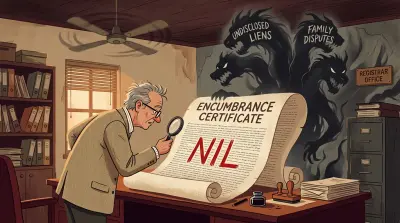


Bengaluru properties sit at the intersection of three competing legal regimes, the Karnataka Land Revenue Act, the BBMP Act, and RERA, layered on top of a colonial-era registration system. Add in an ongoing conflict between gram panchayat Khatas, BDA acquisitions, and the city’s explosive growth into agricultural land, and you have a property market where due diligence is genuinely complex.
For NRIs and remote owners, the complexity does not diminish just because you are not there to see it. In some ways it grows: the structural problems unique to Karnataka (the B-Khata issue, Section 79A restrictions on agricultural land, the BDA acquisition trap) are not things that sort themselves out over time. They compound.
This guide covers what is different about managing property in Karnataka compared to other states, and what to do about it from abroad.
The Land Records System: Bhoomi and Kaveri
Karnataka’s primary land records portal is Bhoomi at landrecords.karnataka.gov.in. It digitalised what was previously a paper-based village-level system and is now one of the more functional land records systems in India.
The core document Bhoomi manages is the RTC - Record of Rights, Tenancy and Crops. The RTC is Karnataka’s equivalent of Maharashtra’s 7/12 extract or Telangana’s Pahani. It records:
- The current owner’s name and khata number
- Survey number, extent, and boundaries
- Land classification: whether it is wet land, dry land, waste land, or converted
- Whether any tenancy exists
- Mutation history (all transfers recorded in revenue records)
- Liabilities, encumbrances, and court attachments noted against the property
You can download an i-RTC directly from Bhoomi for Rs 15, without logging in. This is one of the more NRI-friendly features of Karnataka’s system. From London or Houston, you can pull a current copy of your property’s revenue records in minutes.
One important legal point: an RTC is a revenue record, not a title document. The Supreme Court has consistently held that revenue records raise a presumption of possession but are not conclusive proof of ownership. You need both the registered sale deed chain and an updated RTC - neither alone is sufficient.
For registration documents, use the Kaveri portal at kaveri.karnataka.gov.in. This is the Karnataka registration department’s portal, used for:
- Encumbrance certificate searches (showing all registered transactions on a property)
- Registered document searches by survey number or property details
- Checking registration status
The encumbrance certificate you pull from Kaveri shows every registered sale deed, gift deed, mortgage, or court attachment on the property. For due diligence before any purchase, request an EC going back 30 years.
The Problem No One Tells You About: A-Khata vs B-Khata
If you own or are considering buying property in Bengaluru, this is the most important thing to understand.
BBMP (Bruhat Bengaluru Mahanagara Palike) issues two types of Khata:
A-Khata is issued to properties that have proper layout approval from BDA, BBMP, or the relevant planning authority, and where the land has a DC conversion order (more on that below) if it was originally agricultural. An A-Khata property can get building plan approvals, occupancy certificates, and bank home loans. It is a legally clean property for most purposes.
B-Khata is issued to properties within BBMP limits that pay property tax but do not have proper layout approval or DC conversion. BBMP collects tax from these properties. It records them in a separate register. But it does not endorse their legal status.
A B-Khata property cannot easily:
- Obtain building plan approval or an occupancy certificate
- Get a bank home loan (most banks will not lend against B-Khata)
- Obtain certain utility connections
Many B-Khata properties exist in Bengaluru because of how the city grew. Outer villages with clean gram panchayat Khatas were absorbed into BBMP over time, in major expansions in 2007 and subsequent years. When absorption happens, GP Khatas become B-Khatas because they lack BBMP-compliant approvals. The Karnataka government attempted to regularise these properties through a scheme called Akrama Sakrama, but it has been legally challenged and effectively stalled.
The practical consequence: many Bengaluru buyers - including NRIs - purchased properties marketed as normal residential flats or plots, paid full market price, and later discovered the property is B-Khata. Reselling B-Khata properties is harder. Loan financing is harder. Demolition risk, while low in practice, is technically nonzero.
Before buying any property in Bengaluru, confirm A-Khata status with BBMP directly at bbmptax.karnataka.gov.in. The Khata certificate should say “A-Khata.” If a developer or seller cannot produce this, be cautious.
Section 79A: The Agricultural Land Trap
This is the second Karnataka-specific risk that catches many buyers off guard, particularly in peri-urban areas around Bengaluru.
Sections 79A and 79B of the Karnataka Land Reforms Act, 1961 (not to be confused with the Karnataka Land Revenue Act, 1964, which governs DC conversion and revenue administration) historically prohibited non-agriculturists from purchasing or holding agricultural land. The Karnataka High Court applied these provisions in multiple cases, including State of Karnataka v. M/S Scotts Plantation (P) Ltd. (2023), where it stated that “registration of agricultural land in favour of a non-agriculturist is barred under Section 79A and 79B.”
Important note on current status: Sections 79A and 79B were repealed by the Karnataka Land Reforms (Amendment) Act, 2020. As of the date of this post, they are not operative law for new transactions. However, the repeal does not cure titles from transactions completed before 2020 that violated these sections. Properties in peri-urban Bengaluru that changed hands before 2020 - where developers or buyers were non-agriculturists acquiring agricultural land - may still carry clouded titles from that era. Readers should verify the current legal position with a Karnataka property lawyer before relying on any specific advice about these provisions.
This matters for property buyers in areas like Whitefield, Sarjapur, Hoskote, and Devanahalli. Many residential layouts in these zones were formed by developers who purchased agricultural land before 2020. If the original acquisition violated the then-operative restrictions and was never regularised, the subsequent chain of sales may be clouded.
The FEMA layer remains fully operative: under FEMA, NRIs cannot purchase agricultural land anywhere in India without RBI permission. For land in Karnataka that is still classified agricultural in revenue records, the FEMA restriction applies regardless of the current status of Sections 79A and 79B.
Before buying any plot in Karnataka, confirm the land classification in the RTC. If it shows “agricultural” (often listed as “garden land,” “dry land,” or “wet land” in the classification column), verify DC conversion status before proceeding.
DC Conversion: What It Is and Why It Matters
Section 95 of the Karnataka Land Revenue Act requires formal permission from the Deputy Commissioner before agricultural land can be used for any non-agricultural purpose. This permission is called DC conversion.
The Karnataka High Court in Chikkusappa v. State of Karnataka (2005) confirmed that a formal conversion certificate is required even when land is already physically used for non-agricultural purposes. The actual use does not substitute for the legal conversion.
This means a residential building sitting on unconverted agricultural land is, technically, in violation of Section 95. The building exists. People live in it. But the underlying land has not been legally cleared for residential use.
For buyers: ask for the DC conversion order before purchasing any plot or independent house in Karnataka. For apartment purchases, ask whether the entire layout from which the apartment was carved has a DC conversion order. If the developer cannot produce it, the property may have a fundamental title defect.
You can check DC conversion application status online through the Bhoomi portal under the land conversion section.
BDA Acquisitions: A Less Visible Trap
The Bengaluru Development Authority has acquired large tracts of land over the decades to form planned layouts. Once BDA acquires land, the original owners lose all title. Compensation is paid. The land is free from all encumbrances. Any subsequent sale by the original owners is void.
The Karnataka High Court established this in G. Umadevi v. BDA (1998): land “vested with the [BDA] free from all charges and encumbrances.” The settled principle across Karnataka acquisition cases is that once land vests in BDA, original owners have no remaining title to transfer. Any sale deed executed by them after vesting is void from the outset. “No person can transfer a better title than what they have got.”
The difficulty for buyers is that BDA’s acquisition records are not always easily searchable. An encumbrance certificate will not necessarily show a BDA acquisition from decades ago. The safest check is a full title search by a property lawyer who physically reads the revenue records going back to before the acquisition period, and confirms with BDA’s records department whether the survey numbers in question were part of any acquisition scheme.
This matters particularly for properties in areas that have been on BDA’s development radar for decades: Yelahanka, Hebbal, Outer Ring Road peripheries, and parts of south Bengaluru that BDA has historically targeted for layout formation.
Mutation in Karnataka: The Bhoomi Process
After buying or inheriting property in Karnataka, mutation - updating the RTC to reflect the new owner - is a separate step from registration. Registration records the sale. Mutation updates the government’s revenue records.
The process runs through the Bhoomi system. You can file a mutation application online at the Bhoomi portal or at the taluk office. The Revenue Inspector and Tahsildar process the application. A notice period is given to allow objections. If there are no objections, the Tahsildar approves it and the RTC is updated.
Under the Karnataka Guarantee of Services to Citizens Act (the Sakala Act), the target turnaround is 40 days. In practice, delays are common when:
- The property has joint ownership or multiple legal heirs
- There are existing disputes or court orders noted in the revenue records
- The property is in a newly-absorbed BBMP area with unresolved records
- The landholding spans multiple survey numbers with different classification histories
Mutation is not automatic in Karnataka. Unlike some states experimenting with auto-mutation after registration, Karnataka requires a separate application. NRIs who complete registration and leave India without filing for mutation will find the RTC still showing the previous owner’s name - which creates friction for every subsequent transaction, tax payment, and loan application.
File the mutation application before leaving India, or authorise a PoA holder to do it. For guidance on the mutation process across states, our document decoder covers the full picture.
BBMP Property Tax: The SAS System
For properties within BBMP limits, property tax is paid through BBMP’s Self Assessment Scheme (SAS) at bbmptax.karnataka.gov.in.
The SAS is a self-declaration system. You declare your property’s zone, built-up area, and usage type. The system calculates tax using a unit area value multiplied by area and a zone factor. Bengaluru is divided into six value zones (A through F), with Zone A being the most prime areas.
The payment schedule:
- First half due by 31 May (a 5% rebate applies for full-year advance payment in April)
- Second half due by 30 November
BBMP issued an important amendment in 2024. Under the BBMP (Amendment) Act, 2024, properties with two consecutive years of unpaid tax are classified as chronic defaulters and face a 100% penalty on the outstanding amount. Interest at 15% per year applies from April 2025 onwards on dues from 2023-24 onwards; older arrears attract 9% per year. As of 2024, media reports cited approximately 2 lakh Bengaluru property owners in the chronic defaulter category. For NRI-specific detail on what unpaid property tax costs over time, see the dedicated property tax arrears guide.
NRIs often face the problem of not knowing their property’s PID (Property Identification Number). The PID should be on the property tax receipt. If you do not have it, search on the BBMP portal by property address or owner name. Once you have the PID, online payment is generally straightforward. The portal accepts international cards for most transactions.
One common NRI trap: property tax continues to be assessed in the previous owner’s name if mutation has not been done. Bills and notices go to the property address in the previous owner’s name. Nobody tells you. Arrears silently accumulate. The solution is to complete mutation promptly and update your contact details in BBMP records.
Apartment Buyers: Karnataka RERA and the 1972 Act
For apartment purchases in Karnataka, two additional checks apply.
Karnataka RERA: All residential projects above a threshold are required to be registered with the Karnataka Real Estate Regulatory Authority at rera.karnataka.gov.in. Buying from an unregistered developer removes all RERA protections: staged payment schedules, penalty for delays, mandatory escrow of buyer funds. Always verify Karnataka RERA registration before booking an apartment.
Karnataka Apartment Ownership Act, 1972: This governs condominium ownership in Karnataka. It is different from the Societies Registration Act under which many informal residents’ associations are registered. For an Apartment Owners Association to have legal standing to collect maintenance charges and take binding decisions, it should be constituted under the 1972 Act, not merely under the Societies Act. Many Bengaluru complexes run informally constituted associations that could be challenged. If you are buying an apartment, check whether the association is properly constituted and whether the association’s accounts and maintenance records are accessible.
What NRIs Need to Do Differently
Before buying:
Run the FEMA check. Confirm the land is not classified as agricultural in the RTC. If it is, and DC conversion has not been obtained, the FEMA and Section 79A restrictions both apply to you as an NRI.
Verify A-Khata vs B-Khata for any Bengaluru property. This is non-negotiable.
Run a 30-year encumbrance certificate from Kaveri. Check the full chain of registered transactions.
Commission a title search from a local property lawyer who will physically read the revenue records and confirm whether the survey numbers were part of any BDA acquisition.
For apartment purchases, verify Karnataka RERA registration and that the project has DC conversion and layout approval.
After buying:
File mutation at the Bhoomi portal or taluk office. Do not leave India without doing this or authorising a PoA holder to do it.
Register for BBMP property tax in your name using your PID. Update your contact details so future bills and notices reach you.
Download and store your RTC, the Kaveri EC, and the Khata certificate digitally. For remote owners, Assetly provides a secure digital vault for property documents accessible from anywhere.
Set up an annual reminder to: (1) check the RTC for unauthorised mutations, (2) pay property tax by May, (3) pull a fresh EC to confirm no new registrations against the property.
If you own property already:
Pull a current RTC from Bhoomi. Check that your name appears as the owner. If the previous owner’s name still appears, the mutation was never completed - file for it now.
Check your property’s BBMP tax status. Enter your PID at bbmptax.karnataka.gov.in and confirm no arrears are outstanding. If the property tax is in a deceased person’s name, update it by filing mutation and then applying to BBMP to update the Khata in the new owner’s name.
Verify the Khata type. If you do not know whether your property is A-Khata or B-Khata, the BBMP portal will show this.
Portals at a Glance
| Portal | URL | Purpose |
|---|---|---|
| Bhoomi | landrecords.karnataka.gov.in | RTC (i-RTC Rs 15), mutation status, DC conversion tracking |
| Kaveri | kaveri.karnataka.gov.in | Encumbrance certificate, registered document search |
| BBMP Tax | bbmptax.karnataka.gov.in | Property tax payment, Khata type, PID lookup |
| Karnataka RERA | rera.karnataka.gov.in | Builder and project registration verification |
| Dishaank | Mobile app | Survey boundary maps via GPS |
Related Reading
- Land Revenue Records: 7/12 Extract, RTC, Pahani - what revenue records are, why they matter, and how they differ across states
- Mutation Record: The Document Most People Forget - why updating your name in revenue records matters and how to do it
- What Is an Encumbrance Certificate? - how to read the Kaveri EC and what it shows
- How to Give Power of Attorney for Property Without Losing It - if you are managing Karnataka property through a PoA holder, the safeguards you need
- Property Tax Arrears in India - what happens when BBMP property tax goes unpaid and how to settle arrears from abroad
- Managing Property in Tamil Nadu - the state guide for Tamil Nadu NRIs, covering Patta, TSLR, TNREGINET EC, and the K. Gopi ruling
- Managing Property in Gujarat - the Gujarat state guide. Useful contrast since Gujarat’s Section 63 restriction on non-agriculturist buyers is still in force, while Karnataka repealed its equivalent in 2020
- India’s Property Dispute Crisis - the broader context behind why Karnataka property disputes are so common
- The Deed You Never Agreed To: Bengaluru Plot Fraud and the Confirmation Deed Trick - a 2026 Supreme Court case showing how NRI plot buyers in a Bengaluru layout were targeted through forged confirmation deeds and document swaps
Assetly is a property document management platform for Indian property owners and NRIs. Store, organise, and track your Karnataka property documents, from RTCs to Khata certificates to tax receipts, with access from anywhere. Learn more at assetlyhq.com.