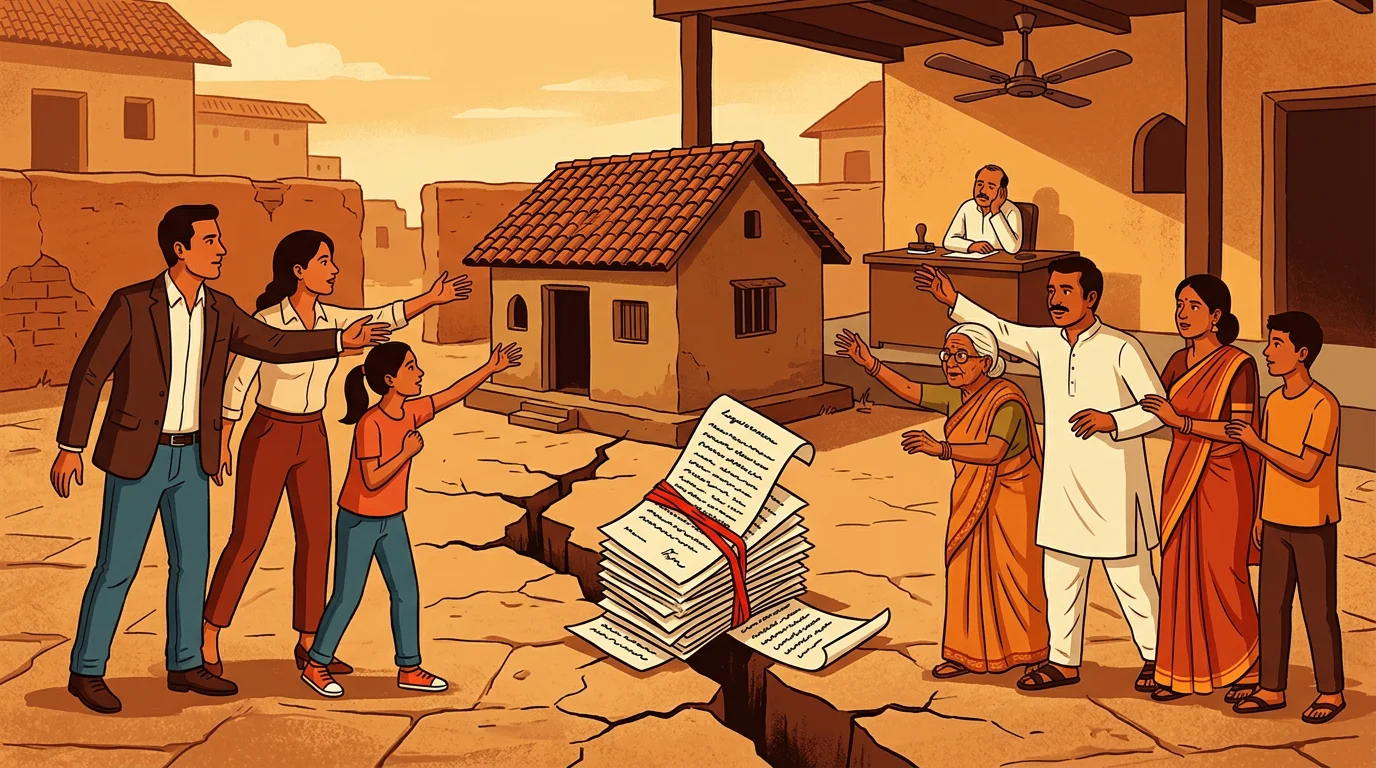

Families often think an inheritance problem begins when the siblings start fighting. In practice, it usually begins much earlier, on the day someone dies and nobody can answer three basic questions clearly:
Who are the heirs? Is there a valid will? And which document does the next authority actually need?
For NRIs, that confusion gets magnified by distance. A flat in Mumbai, farmland near Hyderabad, or an ancestral house in Kerala can sit “temporarily” unresolved for years because the family has some documents but not the right ones. Nobody files mutation because they are waiting for a succession certificate. Nobody applies for probate because they assume registration of the will was enough. Everybody keeps paying tax, so the property looks fine on the surface. Then a buyer, bank, tenant, or relative forces the issue.
That is when the asset gets stuck.
The First Reason: Families Use the Wrong Document for the Wrong Problem
This is the most common pattern.
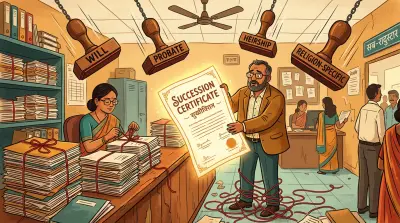
A succession certificate sounds like the universal inheritance document, but legally it is not. Under Section 372 of the Indian Succession Act, 1925, it is a court process for debts and securities. In plain English: bank balances, shares, deposits, and similar movable assets.
Immovable property works differently. For land, flats, and houses, what families usually need first is a combination of:
- a will, if one exists
- a legal heir or family member certificate
- mutation in revenue or municipal records
- probate or civil-court determination if the will is disputed
When an NRI family uses a succession certificate as though it automatically transfers the property itself, months are lost before anyone realises they have been pursuing the wrong paper.
The Second Reason: Mutation Feels Like Ownership Even Though It Is Not
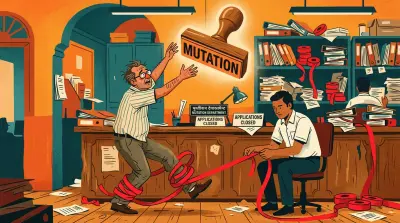
Families often relax once one heir’s name appears in the records. That can be misleading.
The Supreme Court has been blunt on this point. In Sawarni v. Inder Kaur, the Court said:
“Mutation of a property in the revenue record does not create or extinguish title nor has it any presumptive value on title.”
And in Jitendra Singh v. State of Madhya Pradesh (2021), the Court repeated the same principle in the context of a disputed will:
“mutation entry does not confer any right, title or interest”
This is the legal core of many succession disputes. One person gets their name entered in revenue records, starts behaving like sole owner, and the rest of the family treats the mutation as conclusive. It is not conclusive. It is administrative. If the underlying inheritance position is disputed, the mutation does not solve the real issue.
That is why a property can look “transferred” in practice while remaining legally unstable underneath.
The Third Reason: Wills Are Often Present, But Not Clean
Having a will is better than having no will, but many NRI families discover too late that the will itself raises questions.
The classic Supreme Court framework still comes from H. Venkatachala Iyengar v. B.N. Thimmajamma. The Court explained that where a will is surrounded by suspicious circumstances, the burden becomes much heavier:
“The presence of such suspicious circumstances naturally tends to make the initial onus very heavy”
This matters in ordinary family life more than most people realise. A will becomes vulnerable when:
- one child arranged everything and benefits heavily
- the property description is vague or partly wrong
- two different versions of the will circulate
- witnesses cannot be traced easily
- the testator was ill, frail, or dependent on one branch of the family
For NRIs, the risk is sharper because they often see only scanned copies after the death, not the original execution process. By the time doubts surface, positions have hardened.
The Fourth Reason: The Remote-Owner Delay Changes the Family Dynamic
Distance does not create disputes by itself. But it changes how quickly they harden.
If one heir lives near the property and another lives in London or California, the local heir is often the first to:
- collect the original papers
- interact with the housing society or revenue office
- pay taxes and maintenance
- represent the family informally
Sometimes that person acts honestly. Sometimes they slide from convenience into control. The NRI siblings discover the problem only when:
- a sale is proposed
- rent has been collected for years without accounting
- the mutation is in one name only
- a development agreement appears
- the land records are no longer aligned with what the family believed
The emotional cost of these disputes is obvious. The document cost is less obvious but more fixable.
The Fifth Reason: Succession and Land Records Interact Poorly
A death in the family does not automatically update land records. Somebody has to move the file.
Telangana’s Bhu Bharati FAQ makes this explicit. It says:
“All legal heirs of deceased Pattadar have to apply in Application for succession including assigned lands”
And it asks for:
“Death certificate, Family member certificate, Joint Agreement of legal heirs and other relevant documents.”
That official wording is useful because it shows what the system expects. It does not expect a vague family understanding. It expects a document stack and, where necessary, a joint position.
This is exactly where NRI families struggle. One heir may want mutation immediately. Another wants the shares first clarified. A third is abroad and does not want to sign anything without seeing the title chain. All of those concerns are rational. But unless the family organises the documents early, the disagreement migrates from a private conversation into a public dispute.
What “Succession Dispute” Usually Means in Practice
From a distance, the phrase sounds very legal. On the ground, it usually means one of five things:
1. No will exists.
The family must fall back on the applicable succession law and then carry that into revenue and municipal records.
2. A will exists but somebody contests it.
At that point the issue is no longer administrative. It becomes a title dispute.
3. The will covers the property badly.
The address is incomplete, the survey number is wrong, or the property is described loosely enough to invite argument.
4. The heirs never regularised the record after death.
Everybody assumed it could be sorted out later. Later becomes the dispute.
5. One heir used mutation or possession as a bargaining chip.
The family starts treating the revenue record or physical control as proof of sole ownership when the law does not.
The broader property-dispute crisis in India makes all of this worse. When even a simple correction takes time, families tend to postpone hard conversations. Postponement is what turns inheritance administration into succession litigation.
What NRIs Should Do in the First 30 Days
The first month matters more than most families think.
1. Secure the death certificate and identify all heirs
Do not start with assumptions. Start with the official family position and the applicable personal law.
2. Find the latest will, and verify whether it is the final one
Do not rely on family memory. Check whether there is:
- a later will
- a registered version
- a codicil
- a scanned copy but no original
If there is any ambiguity, record it immediately rather than allowing one branch of the family to present one version as settled truth.
3. Freeze the property document set
Collect:
- title deed or sale deed
- old mutation records
- property tax receipts
- society records, if it is a flat
- encumbrance certificate
- loan or mortgage papers, if any
This step sounds administrative, but it is the moment at which rumours get replaced by documents.
4. Separate the movable-asset problem from the immovable-property problem
If there are bank balances, shares, and deposits, the family may need a succession certificate. If there is land or a flat, the family may need mutation, a legal heir or family member certificate, and possibly probate or a civil suit if the will is disputed.
Do not run both tracks as though they are the same file.
5. Decide who is gathering documents, not who is “in charge”
This distinction matters. An NRI family can safely authorise one person to gather records. That is not the same as authorising them to settle ownership questions informally.
What to Do If a Will Is Already Being Disputed
At that point, stop treating the problem as a routine mutation exercise.
The Supreme Court’s reasoning in Jitendra Singh is the practical guide here: when title is claimed through a disputed will, the party must go to the civil court and crystallise rights there first. Revenue entries come later.
That means:
- do not over-read mutation entries
- do not let one branch use municipal or revenue records as final proof
- do not sign release deeds, family settlements, or sale documents casually just to “keep peace”
The cost of premature compromise is often invisible until the property is sold or redeveloped.
What NRIs Should Do Differently
If you live abroad, your priority is not speed. It is record discipline.
Do these things differently:
Keep one shared document index.
Not just a WhatsApp group. A real list of original documents, where they are, who has them, and what each one proves.
Use a narrow PoA if needed.
If someone in India must act for you, limit the PoA to document collection, filing, and representation. Do not default to a wide, reusable property-management authority.
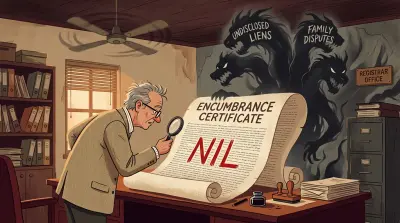
Get a fresh EC before any sale discussion.
Families often discover old mortgages, gifts, or court attachments only when a buyer’s lawyer does due diligence.
Track the state portal status yourself.
If the property is in Telangana, Bhu Bharati now has an NRI module and a succession workflow, and our guide to checking a property owner’s name in Telangana shows how to confirm whose name the record actually carries. If it is elsewhere, the equivalent revenue portal matters just as much. The point is to reduce informational dependence on one relative.
Do not confuse document possession with entitlement.
The person holding the original file is not automatically the person with the best legal claim.
The Practical Rule
An NRI succession dispute usually does not begin in court. It begins when the family leaves a gap between the death event and the document event.
If the property owner has died and the family has still not:
- identified the heirs clearly
- confirmed the status of the will
- separated movable and immovable asset processes
- gathered the title record and EC
- initiated the correct mutation or succession workflow
then the property is already drifting towards a dispute, even if nobody has said the word aloud yet.
Succession disputes feel emotional because they involve family. But they persist because they are documentary. That is the part NRIs can actually control.
Related Reading
- Indian Property Stuck in a Succession Dispute? Here Is What to Do From Abroad - the scenario-by-scenario guide for unblocking inherited property when the process has already stalled.
- Will and Succession Certificate: The Documents That Decide Who Gets Your Property - the legal-document explainer covering wills, probate, succession certificates, and legal heir certificates.
- Inherited Property in India? Here’s What NRIs Must Do - the practical 90-day guide for NRIs who have just inherited property.
- Mutation Record: The Property Document Most People Forget - why revenue records matter, and why they do not settle title.
- The TDS Refund NRIs Are Entitled To But Rarely Claim - useful if the inheritance dispute ends in a sale and excess tax has been deducted.
- Selling Inherited Property in India: Tax and Legal Guide - what changes once the family is ready to transfer or sell.
Assetly is a property document management platform that helps Indian property owners organise, verify, and track their property documents digitally. Learn more.