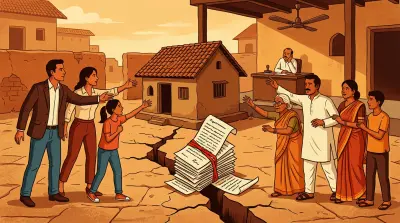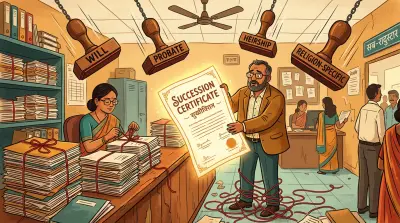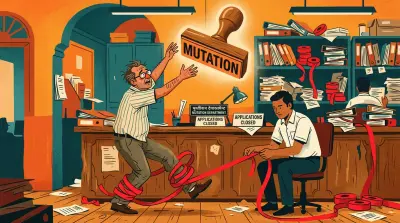


You are in the US or the UK or Dubai. A parent has passed away. The flat in Hyderabad, the plot near Chennai, the house in Pune - it should be yours or jointly yours. But weeks become months, and the property is stuck. The records are still in your parent’s name. A sibling is not responding. A bank is asking for documents you do not have. The lawyer in India says “it will take time.”
It does not have to take forever. But the path forward depends entirely on which of these five scenarios you are actually in.
Scenario 1: Nobody Has Filed for Mutation
This is the most common. The property owner died months or years ago, and nobody has formally updated the land or municipal records. The title documents, property tax receipts, and revenue records still show the deceased’s name.
Why it happens: Families assume inheritance is automatic, so the records will update themselves. They will not. Mutation is a separate administrative act that someone has to initiate.
What you need to do:
- Obtain the death certificate from the municipal authority where your parent died.
- Apply for a legal heir certificate (also called a family member certificate) from the tehsildar or revenue office. This lists all surviving legal heirs. It is not a succession certificate - that is a court document for bank balances and movable assets. This is a revenue document for property purposes.
- File a mutation application at the relevant municipal body (GHMC, BBMP, Panchayat office, etc.) or the state revenue portal, attaching the death certificate, legal heir certificate, title deed, and latest property tax receipts.
- If all heirs agree on the mutation, this is largely paperwork. Realistic timelines vary by state - three to six months is common, even when the application is uncontested.
Can you do this remotely? Mostly yes. The legal heir certificate application may require an in-person appearance in some states, or a representative with a registered Power of Attorney. Mutation applications are increasingly accepting online submissions in Telangana, Karnataka, and Maharashtra.
Assetly’s document checklist tells you exactly what documents are missing for a mutation filing in your state, so you are not guessing what the office will ask for.
Scenario 2: A Will Exists But Someone Is Contesting It
One sibling, or a cousin, or another relative is saying the will is invalid - that the parent was pressured, that the document is forged, that it does not accurately describe the property.
Why it gets stuck: Once a will is formally contested, the property cannot be freely transferred or sold without court clearance. Revenue offices will typically not process mutation if they receive a formal objection. Everything waits on the civil court.
What you need to do:
- Do not sign anything. Not a family settlement, not a power of attorney giving another party broad control, not a release deed. These can be used against you.
- Hire a property lawyer in the city where the property is located. Not a general-practice lawyer - one who handles civil title disputes.
- If the will has not been probated and the other party is filing suit, consider proactively filing for probate in the High Court of the relevant state. Probate has historically been mandatory only for wills executed within the original civil jurisdiction of the Bombay, Madras, and Calcutta High Courts - i.e., specific city-limit areas of Mumbai, Chennai, and Kolkata, not the wider states. The Repealing and Amending Act 2025 (presidential assent on 20 December 2025) removed that mandatory requirement under Section 213 of the Indian Succession Act, but the change applies prospectively: wills executed before 20 December 2025 may still be subject to the older rule under the savings clause, so don’t assume your case is exempt without checking. Even where probate is now optional, voluntarily obtaining probate when a will is being contested gives the document court-backed validity and substantially strengthens your title position.
- Apply for an interim injunction to prevent any unauthorised transfer, sale, or mortgage of the property while the dispute is pending.
- Get a fresh encumbrance certificate covering the last 30 years. This will show you if any liens, transfers, or attachments have already been registered against the property.
Can you do this remotely? The legal strategy and court filings require a local lawyer. Day-to-day instructions can be given remotely. You may need to appear personally for certain deposition or examination steps - ask your lawyer early which steps require physical presence so you can plan.
Scenario 3: A Sibling in India Has Physical Control and Informal Claim
One heir lives near the property. They have been collecting rent, paying property tax, dealing with the housing society. Gradually, they have started treating the property as theirs alone. Documents may have been moved. Revenue records might have been mutated in their name only.
Why it gets stuck: Physical possession and administrative familiarity create an informal presumption of ownership, especially if the NRI never engaged with the property. By the time the NRI notices, several years may have passed.
What you need to do, urgently:
- Pull the encumbrance certificate yourself, directly from the state’s online portal or the sub-registrar’s office. This shows every registered transaction on the property. If there has been a sale, gift deed, or GPA transfer you were not informed of, it will appear here.
- Check the revenue or municipal records (Bhu Bharati for Telangana, Meebhoomi for AP, Kaveri for Karnataka) for the current recorded owner. If mutation has already been done in a sibling’s name only, you have a factual basis to contest it.
- File a partition suit in the civil court. This establishes your share of the jointly inherited property and prevents any further unilateral action by the sibling.
- Apply simultaneously for a temporary injunction to prevent the sibling from selling, mortgaging, leasing, or further transferring the property while the partition suit proceeds.
- Send a formal legal notice through a lawyer. This is not just a formality - it creates a paper trail showing you objected, and it sometimes prompts settlements that court proceedings would not.
The crucial thing: Do not delay this once you discover the situation. Courts look unfavourably on NRIs who knew about a problem, took no steps for years, and then filed suit when a sale was imminent.
If the property is already being monitored in Assetly, the document health check will flag if an EC check shows an unexpected transfer - before a sale happens, not after.
Scenario 4: Documents Are Missing or Cannot Be Located
The original title deed is missing. The sale deed from 1982 cannot be found. Nobody knows if there was a will. The property tax is in a name that nobody can trace to the family tree.
Why it happens: Families in India often kept physical documents without duplicates or scans. Multiple moves, floods, fires, or simply decades of neglect mean that the original papers are gone.
What you need to do:
- Reconstruct via the encumbrance certificate. The EC from the sub-registrar’s office lists every registered transaction on the property going back to a specified date. A 30-year EC will usually show enough of the chain of ownership to establish who the recognised owner is and what transactions have been registered.
- Apply for certified copies of registered documents from the sub-registrar’s office. Any document that was registered (sale deed, gift deed, partition deed, GPA) has a registered copy that you can obtain. The process varies by state but is available in most.
- Check the revenue records for the pahani or record of rights (Telangana, AP), 7/12 extract (Maharashtra), or equivalent document. These often contain the ownership history even when the original deeds are unavailable.
- If the original title is genuinely untraceable and the property is of significant value, commission a title search by a lawyer who will examine all available records across sub-registrar offices, revenue authorities, and court records.
Use the link-document and chain-of-title guide to organise the reconstructed sequence. Where the missing instrument was registered, the certified-copy guide also explains the distinction between a portal copy and an official certified copy, although the issuing process varies by state.
Can you do this remotely? Pulling records from online portals can be done from anywhere. Certified copies require a representative or lawyer to appear at the office in most states.
Scenario 5: All Heirs Agree But the Process Is Just Not Moving
Nobody is contesting anything. Everyone agrees on who inherits what. But the mutation is delayed, the legal heir certificate application has been stuck at the tehsil office for months, or the portal keeps returning errors.
Why it happens: India’s revenue and municipal machinery is slow, often requires follow-up in person, and has backlogs. Well-meaning families let applications lapse because nobody is local enough to follow up.
What you need to do:
- Appoint a local representative with a specific, narrow Power of Attorney: authority to file mutation applications, collect documents from revenue and municipal offices, and follow up on pending applications. Nothing broader than that.
- Set a follow-up rhythm - a phone call or status check every two weeks. Revenue offices respond to persistence.
- If the application has been formally rejected (not just delayed), find out the reason in writing. Most rejections are for missing documents or form errors, not legal disputes.
- In Telangana, the Bhu Bharati portal has a dedicated succession and mutation workflow with a documented checklist. Andhra Pradesh’s Meebhoomi portal has a similar track. Using the official portal flow is faster than manual filing in many districts.
- If the delay is in a state that does not have an efficient portal, the District Collector’s office has a grievance mechanism for stalled revenue processes. A formal complaint sometimes moves a file faster than repeat follow-ups.
Managing All of This From Abroad
Regardless of which scenario you are in, a few things apply across the board.
Get a registered, narrow POA. Do not give one person unlimited property authority. Define exactly what they are authorised to do: file mutation applications, collect certified copies, represent you at the revenue office. Execute the POA abroad (notarised and apostilled for Hague Convention countries), then register it at the sub-registrar’s office in India before using it. Note: some sub-registrar offices also require Indian consulate attestation alongside the apostille in practice - confirm the specific SRO’s requirements before relying solely on apostille.
Do your own record checks. Do not rely entirely on what a sibling or representative tells you the records say. Pull the encumbrance certificate and revenue records yourself through the state portal. The information is public and free.
Know which steps need your physical presence. Most document-gathering and administrative filings can be done by a representative. Civil court matters - depositions, cross-examinations, some probate hearings - may require you to appear. Ask your lawyer this question at the start, not when you are already mid-process.
Do not let family pressure shortcut the documents. The most expensive mistake NRIs make in succession disputes is signing a document - a family settlement, a release deed, an informal sale - under family pressure, without legal review. Once signed, these documents are very hard to undo.
What To Do First, Whatever Your Scenario
If you are not sure which scenario applies, start here:
- Pull the encumbrance certificate for the last 30 years.
- Check the current name in revenue records via the state portal.
- Locate the will, death certificate, and most recent title deed - or confirm they do not exist.
- Talk to a property lawyer in the city where the property sits, not a general family lawyer.
These four steps will tell you exactly which scenario you are in and what the next move is.
If the family agrees on the outcome but not the instrument, compare a partition deed, family settlement and relinquishment deed before anyone signs. If the dispute remains active, the property-dispute resolution guide explains the mediation and court-status routes.
The asset is not permanently stuck. It is stuck because a specific document is missing, a specific filing has not happened, or a specific legal step has not been taken. Find that gap, and the path forward becomes clear.