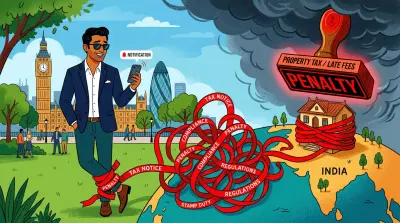

Your property is 8,000 miles away. You have not visited in two years. You assume everything is fine because nobody has called to tell you otherwise.
This is how NRI property owners lose money, lose land, and sometimes lose the property entirely.
Not in one dramatic event. Gradually. Property tax piling up because the tenant forgot to pay it. Mutation records still showing your father’s name, years after he passed. An encumbrance certificate you have not checked since you bought the flat, while a third party quietly registered an agreement against it. A Power of Attorney you gave your cousin five years ago that you have not reviewed since.
None of these are unusual situations. They are the exact patterns that appear, again and again, in Indian property dispute cases.
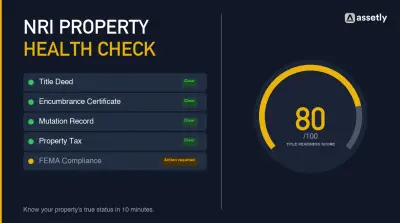
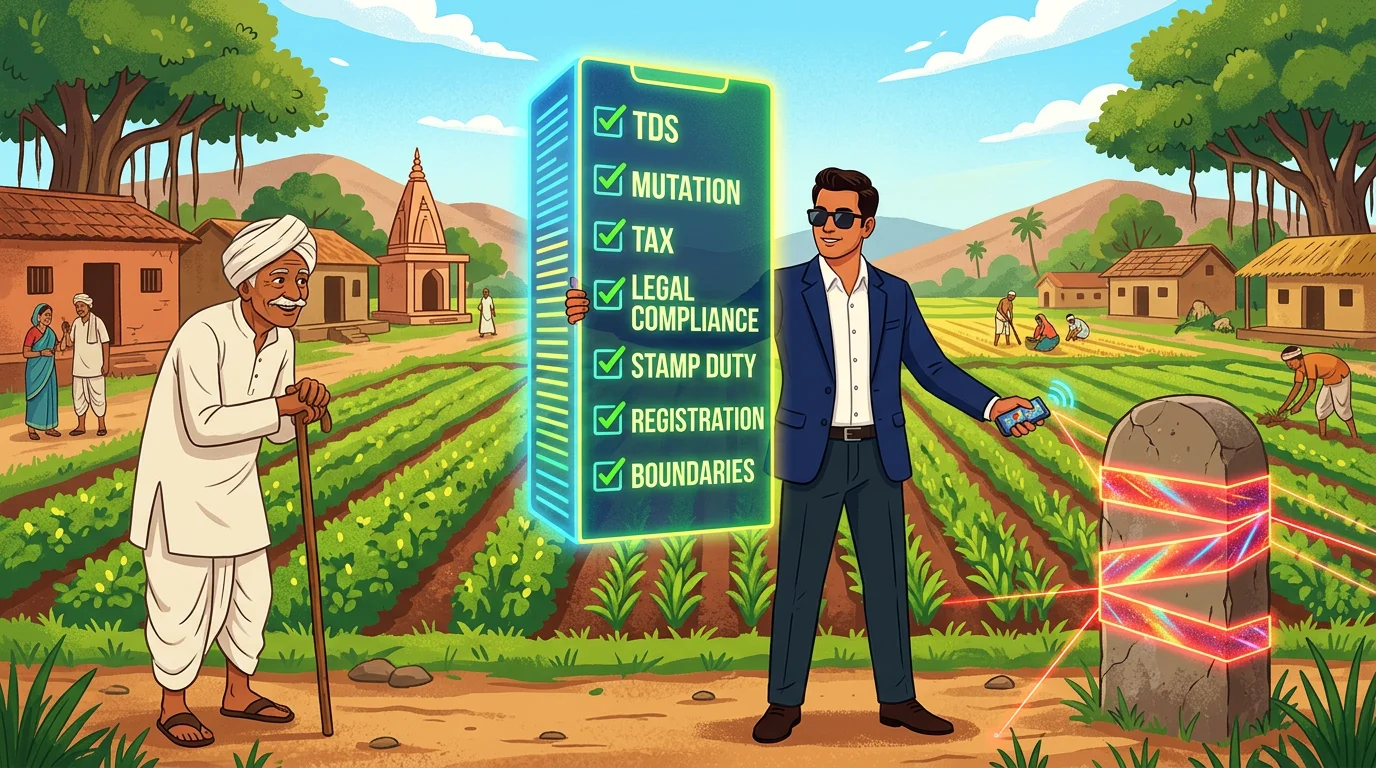
The fix is not complicated. It is a routine. Once a year, you work through a checklist. Ten items. Most can be done online or delegated. All of them take far less time than a court case.
Here is the checklist.
1. Pay Property Tax (and Verify the Assessment)
This is the most basic one, and the one most often missed.
Property tax is a local municipal levy. Every city has its own portal, its own deadlines, and its own penalty structure. Most cities charge 1% to 2% per month on unpaid dues. In Hyderabad, it is 2% per month. Forget for three years, and the penalties can exceed the original tax.
More importantly, the Delhi High Court confirmed in Shubha Bhattacharya v. South Delhi Municipal Corporation (2024) that a new buyer is liable for the previous owner’s unpaid property tax. The tax follows the property, not the name on the bill.
What to do: Visit your city’s municipal portal (GHMC for Hyderabad, BBMP for Bangalore, BMC for Mumbai, MCD for Delhi). Enter your property ID. Check the current assessment, verify it matches what you expect, and pay. Most cities offer a 5% to 10% rebate for early payment in April or May. Take it.
If you own more than one property, set a separate reminder for each. Property IDs and portals vary.
Full details on city-specific portals, penalty rates, and international payment options are in our guide to paying property tax from abroad.
2. Pull a Fresh Encumbrance Certificate
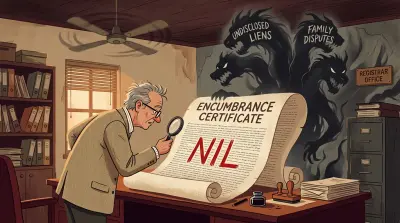
An encumbrance certificate is a record of every registered transaction against a property: sales, mortgages, court attachments, and registered agreements. It is issued by the Sub-Registrar’s office and covers a specific period of years.
Most NRIs get an EC when they buy a property, and never check again.
This is a mistake. A fraudulent registered agreement, a court-ordered attachment, or an undisclosed mortgage can appear on your property’s EC years after purchase, without you knowing about it. If you are abroad and not watching, you may only discover it when you try to sell.
What to do: Download an EC covering the last two to three years through your state’s property registration portal. In Telangana, use the IGRS Telangana portal (registration.telangana.gov.in). In Andhra Pradesh, use the IGRS AP portal (registration.ap.gov.in). In Karnataka, use Kaveri Online Services (kaverionline.karnataka.gov.in). In Maharashtra, use the iGR portal (igrmaharashtra.gov.in).
Look for any transactions you did not authorise. If something appears that should not be there, involve a property lawyer immediately.
For a full explanation of what an EC shows (and, critically, what it does not show), read our encumbrance certificate guide.
3. Verify Your Mutation Records
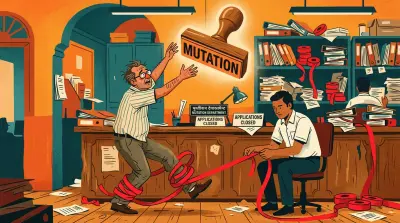
Mutation is the revenue department’s record of who owns the land. It is separate from the registered title deed and from property tax records. Think of it as the government’s internal ownership ledger.
Skipping mutation does not affect legal ownership. But mutation fraud is real. A fraudulent khata transfer or patta update in someone else’s name, done without your knowledge, can complicate your ability to sell, take a loan, or even pay property tax in your own name.
In states where digital records are accessible, anyone can potentially trigger a mutation application against your property. You want to catch it before it is processed.
What to do: Log on to your state’s land records portal and search for your property. In Telangana, use Bhu Bharati. In AP, Meebhoomi. In Karnataka, Bhoomi. In Punjab and Haryana, check Jamabandi Punjab or Haryana Bhulekh. Verify that your name appears as the recorded owner, and that no pending mutations are listed.
If you have recently inherited property or bought through a GPA holder but have not completed mutation, do it now. An unmutated property is an invitation for complications.
Our mutation and khata guide covers the full process, including how to apply remotely.
4. Inspect for Encroachment
Encroachment is the quiet kind of property loss. A neighbour extends a compound wall a few feet. Someone constructs a small structure on a boundary. A pathway gets absorbed into an adjacent property over years of use. By the time you notice, the encroacher may have years of possession in their favour.
The Supreme Court has consistently held that the doctrine of adverse possession requires continuous, open, and hostile possession for 12 years. Most encroachments do not meet this threshold quickly. But if you do not catch them early, they compound.
What to do: Have someone you trust, a family member, a friend, or a hired caretaker, visit the property once a year. Ask them to check the boundary markers, photograph the perimeter, and confirm no new construction has appeared along the boundary. For land parcels, cross-reference the current site with the boundaries shown in your sale deed or pattadar passbook.
For high-value land, consider paying a local surveyor to verify the boundary every two to three years.
Our guide on protecting land from encroachment explains what evidence you need and how to act if you discover an encroachment.
5. Review Your Power of Attorney
If you have given a Power of Attorney to anyone in India, that PoA does not expire with time (unless it has a built-in expiry date). It stays valid until you revoke it. This means someone you trusted five years ago still has the legal authority to act on your behalf today, unless you have cancelled it.
PoA misuse is one of the most common ways NRI property is lost. Family members, caretakers, and even lawyers have used PoAs to sell or mortgage property without the owner’s knowledge.
What to do: Once a year, ask yourself three questions. First, is this PoA still necessary? Second, is the person I trusted still trustworthy? Third, has anything happened since I granted it that I should know about?
If the PoA is no longer needed, revoke it. Revocation is done through a registered deed at the Sub-Registrar’s office. You can execute the revocation from abroad through a consulate-attested authorisation. Send formal notice of revocation to the PoA holder by registered post, and inform any bank or institution where the PoA was registered.
If the PoA is still needed, check whether the person has taken any actions under it that you were not aware of. Ask them to account for everything done in the last year under your authority.
Also check this: do you have an old PoA that you gave someone years ago and simply forgot to revoke? If so, revoke it now.
The Supreme Court’s ruling in Suraj Lamp and Industries v. State of Haryana (2012) made clear that a General Power of Attorney cannot be used to effect a property transfer. But PoA holders can still mortgage, enter into agreements, and cause significant harm within the bounds of the authority you granted. Do not let an old, forgotten PoA become a liability.
6. Verify Tenant TDS Compliance
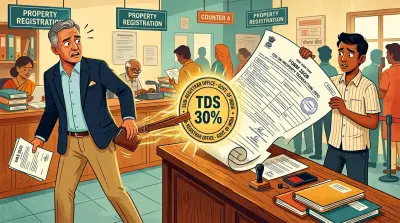
If you rent out property in India, your tenant may have to deduct tax at source under the non-resident provisions in Section 393 of the Income-tax Act, 2025 (the successor to former Section 195). Do not hard-code a flat rate from an older guide: the correct rate depends on the current law, the landlord’s tax position and any valid lower-deduction certificate.
Most tenants do not know this. Many NRI landlords do not know this either. Rent gets paid in full, no TDS is deducted, and years later the Income Tax Department sends a notice. The tenant is treated as an assessee in default. Interest and penalties accumulate on both sides.
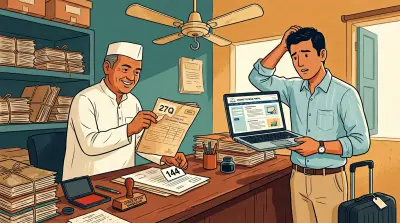
What to do: Confirm that your tenant has obtained any required TAN, is deducting and depositing TDS on time, and is filing the current non-resident quarterly return, Form 144 (the successor to Form 27Q). The tenant should give you Form 16A after each quarter. If you have not received it, ask the tenant or their adviser to reconcile the filing and your Form 26AS.
If your actual tax liability on the rental income is lower than the ordinary withholding, you can apply for a lower-deduction certificate using Form 128 under Section 395(1). This is the current successor to Form 13 under former Section 197.
All of this is covered in detail in our guide to TDS on NRI rental income.
7. File Your Indian Income Tax Return
This one often gets overlooked because many NRIs assume they have no Indian tax obligations if they do not have a salary in India.
That assumption is frequently wrong.
If you earn rental income from Indian property, you must declare it and pay tax. If you own more than one property, the Income Tax Act’s deemed rental income rules require you to declare a notional rent on non-self-occupied properties. If you have interest income from an NRO account, that too is taxable in India.
The due date for NRI income tax returns is typically 31 July for the previous financial year (April to March). Filing late attracts interest under Section 234A, and you cannot carry forward losses to offset future capital gains if you file after the due date.
What to do: Work with a CA who handles NRI returns. Confirm your filing obligation, declare all Indian income, claim any TDS credits (from tenant TDS or TDS on NRO interest), and keep the acknowledgement (ITR-V) for your records.
If you are planning to sell the property in the next few years, having clean, consistent ITR filings makes the transaction smoother. Banks and buyers’ CAs ask about tax history.
8. Check Land Records on State Portals
State portals for land records have become more accessible over the last five years. Most major states now let you download land records, view ownership history, and check for pending transactions online, without visiting an office.
The point of this annual check is simple: you want to know what the government’s records say about your property, before someone else uses a discrepancy to cause you problems.
What to do: Log on to your state’s land records portal. Check the ownership entry, the survey or plot number, the extent (area), and the classification (agricultural vs. non-agricultural). Cross-reference it against your title documents.
State portals:
- Telangana: Bhu Bharati (bhubharati.telangana.gov.in)
- Andhra Pradesh: Meebhoomi (meebhoomi.ap.gov.in)
- Karnataka: Bhoomi (landrecords.karnataka.gov.in)
- Maharashtra: Mahabhulekh (bhulekh.mahabhumi.gov.in)
- Punjab: Jamabandi Punjab (jamabandi.punjab.gov.in)
- Tamil Nadu: TN Patta Chitta (eservices.tn.gov.in)
- Rajasthan: Apna Khata (apnakhata.rajasthan.gov.in)
For the two states where the portals changed most recently, we have step-by-step walkthroughs: checking a property owner’s name in Telangana, Telangana’s Section 22A prohibited land list, and Adangal versus ROR 1-B in Andhra Pradesh.
If you spot any discrepancy between the portal and your documents, investigate promptly. Do not wait. Errors in digital land records can be corrected, but they require action.
9. Review FEMA Compliance
FEMA (the Foreign Exchange Management Act) governs how property money moves across the Indian border. It is not just for when you buy or sell. Ongoing ownership comes with ongoing compliance obligations.
Specifically: rental income from property must be credited to your NRO (Non-Resident Ordinary) account, not your NRE account. If you are repatriating money from property-related income or a sale, the cap is USD 1 million per financial year from the NRO account, with a CA certificate confirming tax compliance.
If you have been receiving rental payments into the wrong account, or if your tenant has been paying directly to an NRE account or a resident rupee account, that is a FEMA violation. Penalties can be up to three times the amount involved.
What to do: Check that your NRO account is active and that all Indian property income (rent, sale proceeds, interest) flows into it. If you have converted from NRI to resident status (or are planning to), inform your bank and update your accounts. NRI and NRE accounts must be reclassified within a specific time after you return to India.
If you are thinking of selling in the coming year, understand your repatriation options before the sale, not after. Our FEMA guide for NRI property owners has the full picture.
One more piece worth checking at the same time: your Tax Residency Certificate (TRC) and Form 10F. India has Double Taxation Avoidance Agreements with over 90 countries, and these two documents are what let you actually claim any treaty benefit, whether that is a lower TDS rate on rent or a credit for Indian tax in your home country. Electronic filing of Form 10F on the Indian income-tax portal has been mandatory for non-residents since CBDT Notification No. 3/2022 (16 July 2022). A TRC is valid for only one financial year and must be renewed annually from the tax authority of your country of residence. If you do not have both, the DTAA rate simply does not apply, no matter how favourable the treaty is. Add the TRC renewal to your annual FEMA review so it does not get forgotten.
A separate note on form names: the Income-tax Act, 2025 replaced the 1961 Act on 1 April 2026, moving the former Section 195 obligation into Section 393 and the lower-deduction certificate into Section 395. Form 144 replaced Form 27Q for the TAN-based non-resident quarterly return. A further change took effect on 1 October 2026: a resident individual or HUF buying immovable property from a non-resident now uses Form 141 Schedule E through the e-filing portal and does not obtain a TAN for that transaction. Form 144 remains relevant outside that narrow PAN-based route. Form 15CA and Form 15CB remain part of the separate remittance workflow where applicable.
10. Back Up and Update Your Document File
All the compliance in the world means nothing if you cannot produce the documents when it matters.
Property transactions in India require a chain of documents: the original title deed, past mutation records, property tax receipts for the last few years, an encumbrance certificate, identity proof, and any registered agreements. Buyers’ lawyers and banks ask for these. Courts ask for these. Revenue authorities ask for these.
Many NRIs discover too late that they have a sale deed but no mutation record, or tax receipts but no current-year EC, or a will but no probate order. The documents exist somewhere; they just cannot be found in time.
What to do: Once a year, review what you have. Scan anything that was received in physical form. Check that the following are accessible and current:
- Original title deed or sale deed
- Mutation certificate or khata/patta in your name
- Encumbrance certificate (covering the current year)
- Property tax receipts for the last three to five years
- Building approval plan and occupancy certificate (for constructed properties)
- Registered Power of Attorney (if any)
- Will or succession certificate (if inherited)
- Lease agreement and Form 16A from the tenant (if rented out)
Organise these in a secure digital system you can access from anywhere. If a family dispute or a sale or a court notice arrives tomorrow, you should be able to pull every relevant document within minutes, not months.
Platforms like Assetly are built for this. NRIs can store, organise, and track all property documents in one place, with access from any country.
Beyond the Ten: Four More Things Worth Checking
The ten items above cover the core annual routine. Depending on your situation, four more are worth adding.
Property insurance. Buildings can burn, flood, or be damaged in an earthquake while you are 8,000 miles away. Property insurance is not legally mandatory in India, but a basic fire-and-perils policy on a constructed property costs very little relative to the replacement cost. Once a year, check that the policy is active, the sum insured reflects current replacement value, and the premium has been paid. For vacant land, insurance is generally not available and not needed.
Will or succession plan. If you have not drafted a will covering your Indian property, the property will pass through intestate succession laws on your death, which can trigger disputes among legal heirs. For NRIs, the overlap between Indian succession law and the succession rules of your country of residence can get complicated quickly. A simple registered will covering your Indian assets goes a long way. Review it annually to confirm the beneficiary details and executor still reflect your intentions.
Caretaker or property manager agreement. If you are paying someone to look after the property, whether a family member, a hired caretaker, or a property management firm, put the arrangement in writing. A short agreement that defines scope, access rights, payment, and termination protects both sides. Verbal arrangements with relatives turn into disputes more often than NRI owners like to admit. Once a year, review the agreement and confirm the caretaker is still the right person for the job.
Occupancy Certificate (for built-up property). If you own a flat or independent house, the Occupancy Certificate from the municipal authority confirms the building was constructed as per approved plans. Many NRIs discover during a sale that the builder never obtained an OC, or that the OC covers only part of the structure. Check yours once. If it is missing, chase the builder or society to obtain it. Without an OC, future sale, home loan, and even utility connections can get stuck.
If You Might Sell in the Next 12 Months
If you are thinking of selling your property in the coming year, four items move from “nice to have” to “do now”. Getting these wrong can lock up a large chunk of your sale proceeds for 12 to 18 months, or lose you a tax exemption permanently.
Apply for a lower-deduction certificate under Section 395(1). The current application is Form 128. It lets the Assessing Officer specify a lower or nil withholding rate based on the estimated tax position, reducing the risk that an excessive amount is locked up until the return is processed. Apply well before the first substantial payment and have the buyer follow the certificate exactly.
Make sure the buyer uses the correct TDS form. For deductions from 1 October 2026, a resident individual or HUF buying property from an NRI uses Form 141 Schedule E under Section 393(2), without a TAN or a separate Form 144 quarterly return for that transaction. Companies, firms and other buyer categories should confirm the TAN-based Form 144 route. The buyer should not use the resident-seller schedule or an old Form 26QB workflow simply because it is familiar. Our 2026 NRI property TCS and TAN rule changes guide covers the distinction.
Understand the reinvestment windows for capital gains exemptions. If you are selling a long-term held property and reinvesting the proceeds, Sections 54, 54EC, and 54F can exempt part or all of the gain from tax. Section 54 lets you roll the gain into a new residential house, purchased within 2 years of the sale or constructed within 3 years. Section 54F requires investing the entire net sale consideration in a new house. Section 54EC allows investing up to ₹50 lakh in notified capital gains bonds (NHAI, REC, PFC, IRFC) within 6 months of sale, with a 5-year lock-in. The deadlines are strict. If you cannot complete the reinvestment before the ITR due date for the year of sale, you must park the unutilised amount in a Capital Gains Account Scheme (CGAS) deposit before the due date. Miss that, and the exemption is lost permanently. Our capital gains tax guide for NRI property sales has the full picture.
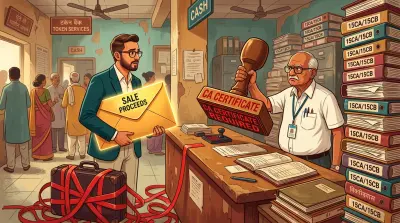
Prepare for Form 15CA and 15CB repatriation filings. If you plan to repatriate the sale proceeds abroad, your bank will not process the remittance without these forms. Form 15CA is a declaration by the remitter; Form 15CB is a certificate from a Chartered Accountant, required when the remittance is taxable and exceeds ₹5 lakh. Despite the Income-tax Act 2025 renumbering of several TDS forms, Form 15CA and 15CB themselves are unchanged - the filing process is identical to what it was before 1 April 2026. Line up a CA who handles NRI filings before you start the sale process, not after. Annual NRO repatriation is also capped at USD 1 million per financial year. Our Form 15CA/15CB repatriation guide walks through the mechanics.
The Annual Calendar
One way to approach this without it feeling overwhelming: spread the tasks across the year.
| Month | Task |
|---|---|
| April | Pay property tax (early payment rebate window in most cities) |
| May | Check mutation records on state portal |
| June | Review Power of Attorney status |
| July | File income tax return (deadline: 31 July) |
| August | Pull a fresh encumbrance certificate |
| September | Verify tenant TDS compliance (Form 16A for Q1 and Q2) |
| October | Check land records on state portal |
| November | Review FEMA compliance; confirm NRO account activity |
| December | Encroachment inspection (have someone visit the property) |
| January | Document backup and update |
| February | Review FEMA; prepare for year-end property statement |
| March | Confirm property tax receipts are filed; prepare for new financial year |
This is not rigid. If your property is in a state with a different property tax deadline, adjust accordingly. The point is that the 10 items get done, once a year, not all at once.
What Happens When You Skip This
India has over 7 million pending property cases. A significant proportion of them involve NRIs who were absent while something went wrong, and discovered the problem years too late. The annual checklist covers the once-a-year review; for the gaps in between, continuous property monitoring covers mutation changes, EC updates, tax status, and boundary shifts without requiring a manual portal check each time.
The legal system is not fast. A mutation dispute can take three to five years to resolve. A title dispute can take a decade. The cost, in legal fees, lost rental income, and sheer time, dwarfs the few hours this annual checklist requires.
Compliance is not the interesting part of owning property. But it is the part that protects everything else.
Assetly is a property document management platform that helps Indian property owners, especially NRIs, organise, verify, and track their property documents digitally. Learn more.