
Imagine buying a car from a neighbour, paying him in full, driving it for twenty years, and never once transferring it into your name at the RTO. You have the car and his signature on a scrap of paper, but on every official record the car is still his. Now imagine he dies, and his children turn up asking for it back.
That, in a nutshell, is what a Sada Bainama is - except the asset is farmland, the paper is even flimsier, and the stakes are a family’s entire livelihood. Across rural Telangana, lakhs of families are sitting on land they genuinely bought, sometimes generations ago, with no legal title to show for it. The state’s new land law has quietly reopened a door that had been shut for years. If you or your family hold land on one of these informal papers, this is the moment to understand what a Sada Bainama is, why it leaves you exposed, and how Section 6 of the Bhu Bharati Act now lets you fix it.
What a Sada Bainama Actually Is
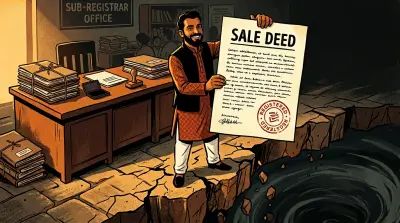
“Sada Bainama” translates roughly to “plain agreement.” It is a sale of land written up on ordinary white paper, signed by buyer and seller, often witnessed by a couple of villagers, and then simply kept in a trunk at home. No stamp duty. No trip to the Sub-Registrar. No registered sale deed.
For decades this was not some shady workaround. It was just how a lot of rural land changed hands. Registration offices were far away and intimidating. Stamp duty felt like a needless expense on a deal between two people who trusted each other. Many sellers held land on old assignment or inam records that were themselves messy, so a clean registered deed was not always possible. So people paid, shook hands, took possession, and farmed. The paper was proof enough - until the day it wasn’t.
To see why this is a problem, it helps to understand what registration actually does. A registered sale deed is the difference between owning land and merely occupying it. We cover this in detail in our guide to sale deeds, registration, and how title actually works, but the short version is this: in India, a transfer of immovable property worth more than Rs 100 is not legally complete unless it is registered. An unregistered paper is not a title. It is, at best, evidence that a transaction may have happened.
Why an Unregistered Purchase Leaves You Exposed
Holding land on a Sada Bainama is a bit like living in a house with no lock on the front door. Most days, nothing happens. But you are one bad day away from a serious problem.
Here is what you cannot do with an unregistered purchase:
- You have no pattadar passbook (PPB) in your name. The passbook is the working proof of agricultural ownership in Telangana. Without it, the revenue record still shows the original seller, or his heirs, as the owner.
- You cannot sell the land cleanly. Any buyer who does basic due diligence will find that the record does not match you. The deal collapses, or the price gets slashed.
- You cannot raise a loan against it. Banks lend against registered title and a passbook, not a handwritten note.
- You cannot claim government benefits tied to ownership - crop schemes, compensation on acquisition, and the like often flow to whoever is on the record.
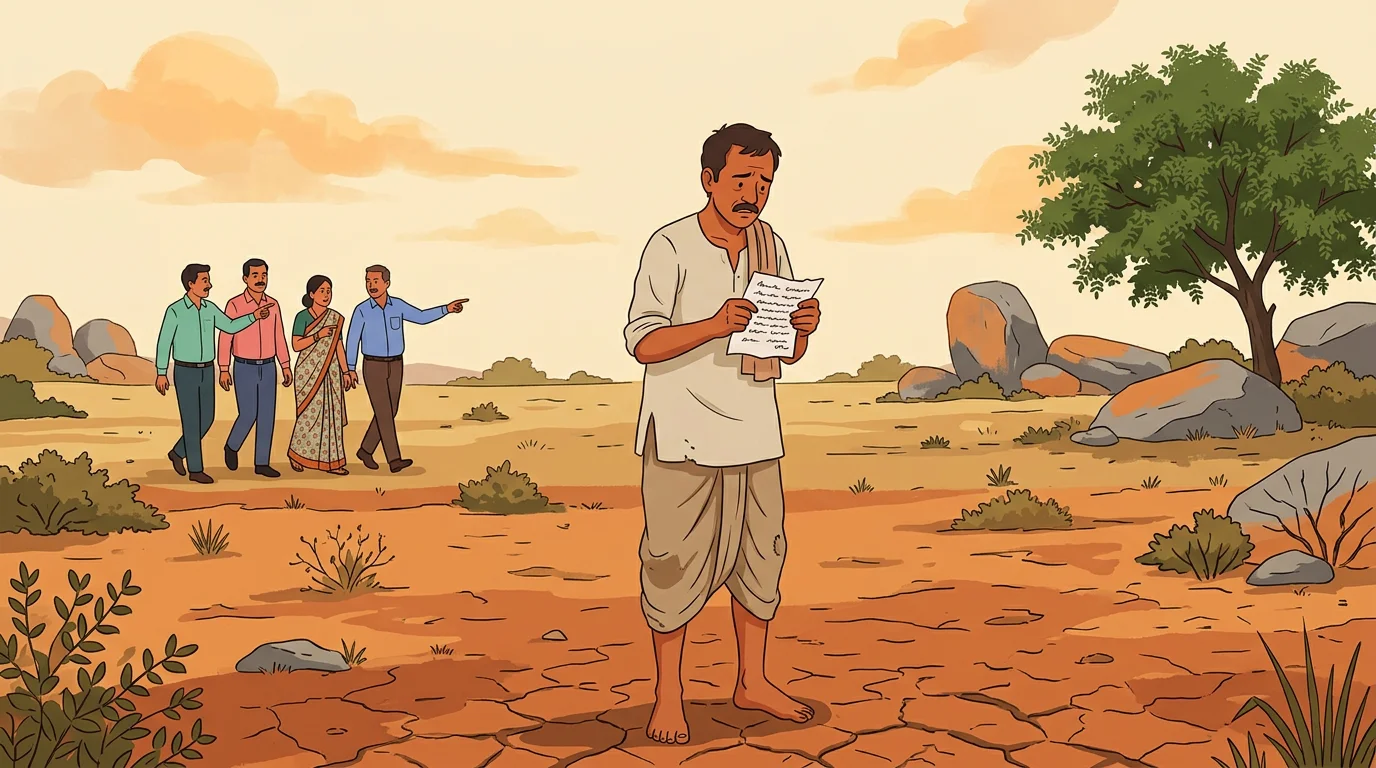
- You are exposed to the original seller’s heirs. This is the big one. The seller dies. His children, who may never have seen the plot, discover on paper that it is still legally “theirs.” They can sell it again to someone else, mortgage it, or simply refuse to acknowledge the decades-old deal. Your only defence is a fragile piece of paper and the memory of a few ageing witnesses.
This is not a rare edge case. It is a recurring theme in Telangana property disputes, and a close cousin of the trouble we describe in our look at an unregistered gift deed dispute near Hyderabad, where the absence of registration turned a family transfer into years of litigation. Unregistered transfers of every kind - sale, gift, family settlement - share the same weakness: no registration, no reliable title.
How the Door Got Shut, Then Reopened
Telangana has actually tried to fix the Sada Bainama problem before. Earlier drives, run under the old Record of Rights Act of 1971, invited people to apply to have their informal purchases regularised. The most recent big call for applications ran from 12 October to roughly 10-11 November 2020, and around 9 lakh farmers applied, covering close to 10 lakh acres.
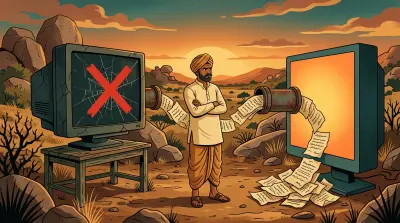
Then the door slammed. The 2020 Dharani law reorganised the entire land records system and, in the process, removed the legal provision that allowed Sada Bainama regularisation. On top of that, a public interest petition led to a court stay that froze the pending applications. So nearly a million families had applied, been told to wait, and then watched the whole mechanism vanish. Their applications sat in limbo for years. For the fuller story of how Dharani was built and why it was scrapped, see our explainer on the move from Dharani to Bhu Bharati.
Two things changed in 2025. First, the new Telangana Bhu Bharati (Record of Rights in Land) Act, 2025 included Section 6, which restored the legal pathway to regularise these unregistered transfers. Second, on 27 August 2025 the Telangana High Court disposed of the long-pending petition and vacated the stay, clearing the way to process the backlog. The door was open again.
What Section 6 Offers
Section 6 of the Bhu Bharati Act authorises the government to issue a certificate validating a land transfer that was “effected otherwise than by a registered document” - in plain English, a sale done on a Sada Bainama instead of a registered deed. Where the conditions are met, that certificate becomes the basis for entering the buyer’s name in the Record of Rights and issuing a pattadar passbook.
In effect, Section 6 lets the state say: yes, this informal sale was real, the buyer has held the land long enough, and we will now treat it as proper legal ownership. It converts a scrap of paper into title. The point is to give genuine long-term occupants clean ownership, not to bless recent or speculative land grabs, which is why the eligibility conditions are fairly tight.
The Eligibility Checklist
Based on the framework and the government orders issued so far, an application is meant to qualify only if it ticks every one of these boxes:
- The transaction was executed before 2 June 2014. This is the hard cut-off - the day Telangana was formed. A Sada Bainama dated after this does not qualify.
- Continuous possession. The buyer must have been in continuous possession of the land. The possession threshold is reported to be around 12 years, so this is aimed at long-standing occupants, not recent buyers.
- The applicant is a small or marginal farmer. The scheme is built for smallholders, not large landholders or investors.
- The land is agricultural and in a rural area. Lands inside the Hyderabad Metropolitan Development Authority (HMDA) limits, municipal corporations, and municipalities are generally excluded, with exceptions only for certain notified mandals. Urban and commercial plots are out.
- No violation of land-ceiling or assigned-land laws. The land must not breach the Andhra Pradesh Land Reforms (Ceiling on Agricultural Holdings) Act, 1973, and must not be assigned land barred from transfer under the Assigned Lands (Prohibition of Transfer) Act, 1977. You can check whether a Telangana survey number sits on the Section 22A prohibited-property registers before you rely on it for regularisation. If your holding is close to the ceiling, our guide to the Land Ceiling Act and inherited land explains why this matters.
On the money side, small and marginal farmers holding up to about 5 acres of dry land or 2.5 acres of wet land get stamp duty and registration fees fully waived. Those above that extent are expected to pay the applicable stamp duty and regularisation fees. So a genuine smallholder can, in principle, get clean title at little or no cost, while larger holdings pay their way in.
The Step-by-Step Regularisation Process
Under the current framework, set out in G.O.Ms.No.106 of September 2025, the process is run by the Revenue Divisional Officer (RDO) acting as an inquiry officer. Responsibility was deliberately shifted up from the mandal-level Tahsildar to the RDO to bring more scrutiny to each claim. Here is how a case moves:
- Application. The applicant’s claim (in most current cases, one of the roughly 9 lakh applications filed back in 2020) enters the RDO’s queue for processing.
- Document scrutiny. The RDO’s office examines the Sada Bainama, proof of possession, identity, and any supporting revenue records.
- Affidavit. The applicant submits an affidavit confirming the transaction, the possession, and that the conditions are met. Originally affidavits were needed from both buyer and seller, which was a nightmare when the seller had died or vanished. A later relaxation, reported as G.O. 76 in March 2026, cut this down to an affidavit from the purchaser only.
- Field verification. Revenue officials physically inspect the land and confirm who is actually in possession.
- Notices and a 30-day objection window. Notices go to neighbouring landowners, and a 30-day period runs for anyone to object. This is the step that protects against fraudulent claims - and the step that can slow a genuine one down.
- Decision. If the claim survives scrutiny with no valid objection, the RDO issues a regularisation certificate. If the RDO rejects it, that order is not the end: an RDO decision under Section 6 can be appealed to the District Collector, and beyond that to the Land Tribunal. See our guide to the Bhu Bharati appeal ladder for the rungs and time limits.
- Record entry and passbook. The regularised transfer is entered in the Bhu Bharati Record of Rights, and a pattadar passbook is issued in the buyer’s name. At that point, for the first time, the record and the reality match.
This process cannot be used to decide a contested root transaction or displace an existing registered deed. The September 2026 Palle Sabitha case study shows where a revenue authority’s regularisation jurisdiction ends.
Once the passbook is in hand, it is worth pulling your record on the portal and checking every field against your documents, exactly as you would after any land-record change. Our step-by-step guide to checking and correcting Bhu Bharati land records walks through what to verify - name spelling, survey number, extent, and classification - so a fresh error does not creep in at the last step.
The Current Status, as of Mid-2026
This is the part to be clear-eyed about, because it is easy to get wrong.
As of July 2026, there is no fresh, open application window for new Sada Bainama regularisation applications. What is happening is that the government is working through the backlog of roughly 9 lakh applications that were filed in the October-November 2020 window and then frozen for years. The 2025 law and the 2025 court ruling reopened the processing of those old applications; they did not, at least not yet, invite a new round.
So the practical picture splits into two groups:
- If your family applied in 2020, your case is in the pipeline. The 2025 Act and the vacated stay mean it can finally be decided. The realistic advice is to track it through your RDO’s office, keep your documents ready, and be prepared for field verification and the objection window.
- If you never applied, you are in a harder spot. The express window that produced those 9 lakh applications was in 2020. Whether the government opens a fresh window is a political and administrative decision that had not been confirmed as of mid-2026. Keep an eye on the Bhu Bharati portal and announcements from the Revenue Department, and get your paperwork in order now so you can move the moment a window opens.
Either way, the honest position is: the mechanism is alive again, and the backlog is being cleared, but do not assume you can walk in today and file a brand-new application. Verify the current status before you rely on it.
Practical Pitfalls to Watch For
Even for eligible families, the process is not frictionless. The most common snags:
- Untraceable sellers. Many original sellers have died or moved. District authorities previously rejected large numbers of cases on exactly this ground. The purchaser-only affidavit relaxation helps, but a missing seller can still complicate the chain of proof.
- Weak possession evidence. “We have always farmed it” is not enough. Old land-revenue receipts, electricity or borewell records, crop-loan papers, and consistent enjoyment entries all help establish continuous possession.
- Neighbour objections. The 30-day notice period gives a hostile neighbour or a rival heir a formal chance to object. Boundary disputes that were dormant for decades can suddenly surface.
- Inconsistent decisions across districts. Officials in different divisions have been interpreting the guidelines differently, so outcomes are not uniform. Do not assume your cousin’s result in another district predicts yours.
- The ceiling and classification traps. If the land is assigned, or the holding breaches the ceiling, or the parcel sits just inside a municipal limit, the application can fail on eligibility no matter how genuine the purchase. If a survey number is missing or muddled in the master records, sort that out first - it will surface during verification anyway.
A Note for Families Spread Across the World
Not everyone chasing a Sada Bainama still lives in the village. Plenty of these old papers now sit with a son in Hyderabad, a daughter in Bengaluru, or an heir who has settled abroad and inherited a plot they have barely seen. The regularisation process is stubbornly physical - field verification, an in-person inquiry, a 30-day clock ticking on objections - which is awkward to run from another city, let alone another country.
If you are managing this from a distance, the two things that decide whether it goes smoothly are documents and representation. You need the original Sada Bainama, a clear record of the possession chain, and, if you cannot attend in person, a Power of Attorney holder in India whose authority specifically covers dealing with revenue records and appearing before the RDO. A vague, general POA often is not enough for revenue authorities. Keeping the sale paper, possession evidence, and any 2020 application acknowledgement organised and reachable - rather than in a trunk in the village - is half the battle. This is the kind of scattered, decades-old document trail that Assetly is built to help owners store and track, so that when the RDO asks for proof, it is a search away rather than a road trip away.
The Bottom Line
A Sada Bainama is a genuine purchase wearing the wrong clothes. The land is yours in fact; it just was never made yours in law. For years, the mechanism to fix that was either shut or frozen. Section 6 of the Bhu Bharati Act and the 2025 court ruling have reopened it, and the government is now grinding through a backlog of close to a million applications.
If your family is in that backlog, this is the time to engage - gather your evidence, track your RDO case, and see it through to the passbook. If you missed the 2020 window, get your paperwork ready and watch for the next one. A registered passbook does what a piece of white paper never could: it lets you sell, borrow, defend, and pass on your land without fear of someone else’s signature undoing decades of work.
Related Reading
- From Dharani to Bhu Bharati: What Changed and What Property Owners Must Know - how Telangana’s land-records system was rebuilt, and why Sada Bainama regularisation went dark and came back.
- Your Telangana Land Records May Have Errors: How to Check and Correct Them - the step-by-step way to verify your record on Bhu Bharati after any change.
- Sale Deed, Registration and Title: How Ownership Actually Works - why an unregistered paper is not a title, and what registration actually buys you.
- Unregistered Gift Deed Property Dispute in Hyderabad - what happens when a family transfer is never registered.
- IGRS Telangana: How to Search Property Records Online - pulling your registered deeds and encumbrance certificate to build the paper trail.
Assetly is a property document management platform that helps Indian property owners organise, verify, and track their property documents digitally. Learn more.