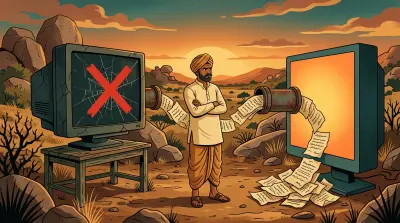

Under the old Dharani portal, a wrong land record was often a dead end. If the District Collector rejected your correction, there was no clear authority above them to appeal to. Your only option was to hire a lawyer and file a writ petition in the High Court, which meant years and money most families do not have.
Telangana’s new system changed that. The Telangana Bhu Bharati (Record of Rights in Land) Act, 2025, which replaced Dharani and went live on 14 April 2025, does something Dharani never did. It gives you a proper, written-into-law ladder of appeals. If one officer gets your record wrong, there is a named authority above them who has to hear you out.
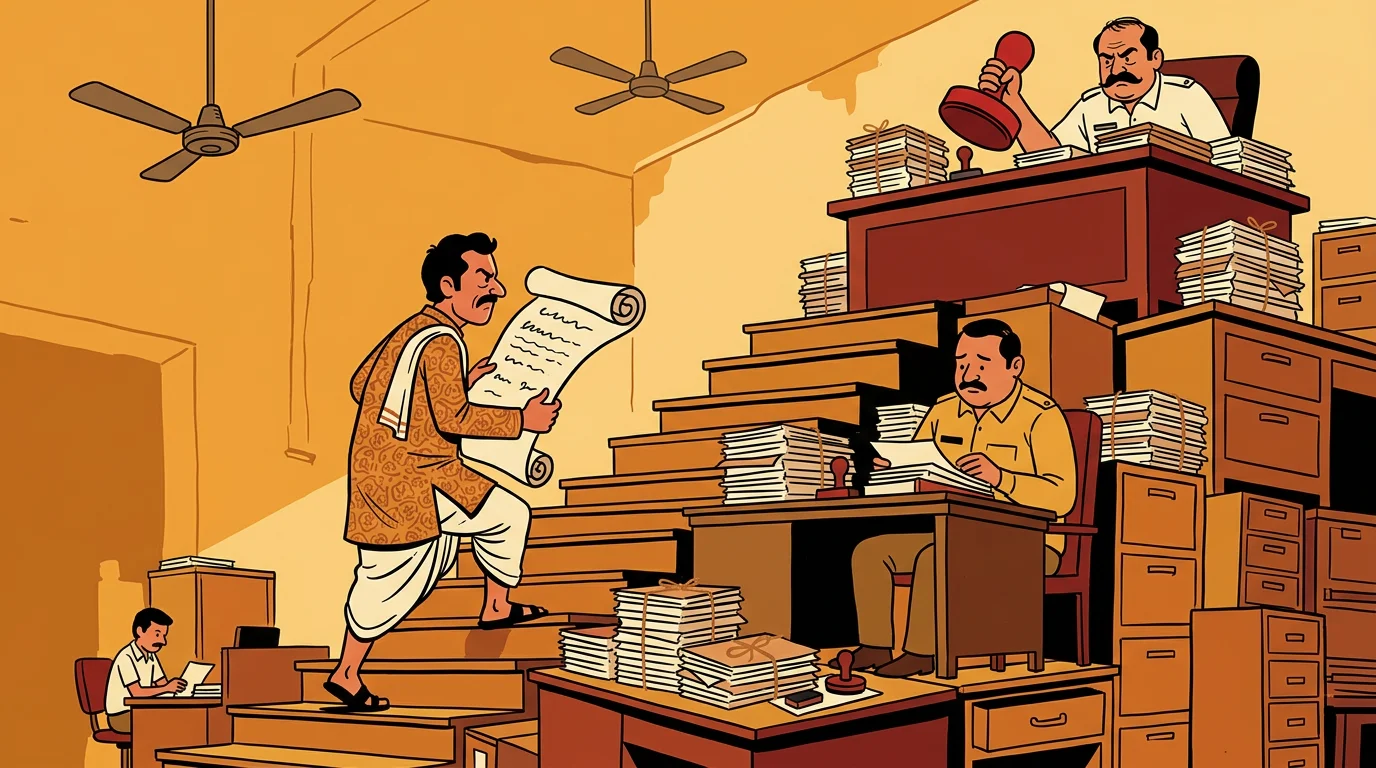
Think of it like a complaint that keeps climbing until someone with enough authority signs off. Each rung has a person, a deadline, and a rule for when it applies. This guide walks you up that ladder, one step at a time, so that if your Bhu Bharati record is wrong or your correction application was rejected, you know exactly where to go next.
What Dharani never had, and Bhu Bharati now does
Dharani concentrated almost all decision-making at the District Collector’s desk. It abolished the village revenue officers, offered 33 confusing correction modules, and, crucially, had no appellate body. A rejection came back with a single word, “rejected,” and no route to argue it out short of the High Court.
Bhu Bharati flips this. The Act lays down a chain of authorities, each able to review the one below. For the full story of why Dharani was scrapped and how Bhu Bharati replaced it, we have a separate explainer. What matters here is the practical upshot: for the first time, a Telangana landowner has a statutory appeal, not just a prayer to the High Court.
The appeal ladder at a glance
Here is the ladder. Read it as “who decided my case, and who is the next person up.”
| Rung | Who decides | Time limit to file | When it applies |
|---|---|---|---|
| Original order | Tahsildar or Sub-Registrar for registrations, Record of Rights entries and will or succession mutations; RDO for Sada Bainama regularisation and other mutations; District Collector for land valued above Rs 5 lakh | This is the order you are challenging | Your first application, or the decision you disagree with |
| First appeal | RDO if a Tahsildar or Sub-Registrar decided; District Collector if an RDO decided | Reported as 60 days (the Act text), though 30 days is reported for some order types | You believe the original order is wrong |
| Second appeal | Land Tribunal (currently the CCLA, until a Tribunal is notified) | Reported as 30 days | You believe the first-appeal order is still wrong; this decision is final |
A word of caution before you rely on those day-counts. The Act itself, in Section 15, provides sixty days for a first appeal and thirty days for the second appeal to the Land Tribunal. But some news reports and the Rules describe a thirty-day window for certain order types, such as straightforward Record of Rights corrections, and sixty days for others, such as Sada Bainama regularisation and mutation orders. The sources genuinely conflict on the exact number.
So do not treat any single figure as gospel. The safe habit is simple: assume the shortest reported window, thirty days, is your clock, and then confirm the exact limit printed on the order you actually receive. Every order should tell you the appeal period and the authority. If it does not, ask the office that issued it, in writing, and keep that reply.
The Rs 5 lakh line that decides who handles your case
There is one threshold worth memorising, because getting it wrong sends your file to the wrong desk.
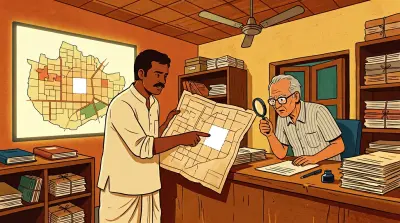
For corrections to a Record of Rights, the value of the land decides who is allowed to act. As reported for the new system, land with a market value above Rs 5 lakh has to be dealt with by the District Collector. The Tahsildar and the RDO are not authorised to correct records above that value. Below it, the lower authorities can act.
Why does this matter to you? Because most urban and peri-urban plots in and around Hyderabad cross Rs 5 lakh comfortably. If you own a plot in a town or a city fringe and you file your correction with the Tahsildar, expecting a quick fix, it may simply bounce or sit unactioned because that officer cannot legally sign it. Check the guidance value of your parcel first, then start at the right level.
This is a Rules-level allocation rather than a headline section of the Act, so confirm the current position with your mandal office before you file. But the direction is clear and consistent across the system: bigger value, higher authority.
The Land Tribunal, and the free legal aid clause
The top of the statutory ladder is the Land Tribunal. This is the part that did not exist under Dharani at all.
Section 14 of the Act authorises the government to “constitute one or more Land Tribunals” by notification. Here is the important nuance for right now. The same section adds that until such a Tribunal is actually constituted, or when there is a vacancy, “the Commissioner shall be deemed to be Land Tribunal for the entire State.” In plain terms, the Chief Commissioner of Land Administration, the CCLA, currently sits as the Land Tribunal. So when you read “second appeal to the Land Tribunal,” in practice today that means the CCLA hears it, until a dedicated Tribunal is notified.
Section 15 makes the Tribunal the end of the road inside the revenue system. It describes the second appeal to the Land Tribunal, and states that “the decision of the Land Tribunal thereon shall be final and conclusive.” After that, the only remaining route is a writ petition in the Telangana High Court, which is not an appeal so much as a constitutional challenge to how the decision was made.
There is also a quietly important line for people who cannot afford a lawyer. Section 15(8) says the government “may take necessary measures to provide free legal services to the farmers who are not in a position to file appeal before the Tribunal or the Appellate Authority.” The state has also spoken about placing volunteers at the mandal level to help people file. If cost is what is stopping you, ask your mandal revenue office about legal aid under this provision before you give up.
How to actually file an appeal
The ladder is only useful if you know how to climb it. Here is the practical sequence.
Step 1: Read your order carefully. Find two things on it: which authority signed it, and what the stated appeal period and appellate authority are. That tells you your next rung and your deadline. If the order is silent on these, treat thirty days as your clock and query the issuing office in writing straight away.
Step 2: Pick the right rung. If a Tahsildar or Sub-Registrar signed the order, your appeal goes to the RDO. If an RDO signed it, your appeal goes to the District Collector. Do not skip levels, and do not file at the Collector’s office just because it feels more senior. An appeal filed at the wrong rung is time wasted while your clock keeps ticking.
Step 3: Gather your evidence. An appeal is decided on documents, not on how strongly you feel. Assemble your registered sale deed (a certified copy if the original is lost), the old pattadar passbook, a fresh encumbrance certificate, and any earlier RDO or Collector order that confirms your ownership or classification. If the dispute is about a missing or mismatched survey number, read our note on what a missing survey number usually means first, because that changes what evidence you need.
Step 4: File in person or online. The revenue offices accept both walk-in applications and online filings through the Bhu Bharati portal. File within the window, attach the order you are challenging, attach your documents, and keep the acknowledgement. That acknowledgement, with its date, is your proof that you appealed in time.
Step 5: Attend the hearing. Appeals involve notices, and often a hearing where the officer weighs your documents against the record. Turn up, or send an authorised representative. A missed hearing can sink an otherwise strong case.
What to do now the correction window has closed
Timing matters here, and the calendar has moved.
The Bhu Bharati Act came with a one-year administrative correction window. Any owner affected by a wrong Record of Rights entry could apply for a straightforward rectification within one year of the Act’s commencement. The Act commenced on 14 April 2025, which set the deadline at 13 April 2026. That fast administrative window has now closed, and no extension had been announced at the time of writing.
This does not mean a wrong record is frozen forever. It means the easy door has shut and you now use the appeal ladder instead. The difference is the difference between filling in a form and arguing a case: more evidence, a hearing, and timelines measured in months rather than weeks.
So the practical move today is this. If you have an uncorrected error, file your correction anyway so there is a dated rejection or referral on record, then escalate through the RDO or Collector, and if needed the Land Tribunal. If your correction application was already rejected, the ladder above is your route. And if even the Tribunal does not fix it, the writ petition remains. Our guide to checking and correcting Bhu Bharati records covers the correction-filing side in detail; this post is the deep-dive on the escalation that follows.
If your problem is that you bought land on plain paper years ago and never got a registered deed, note that this is not an appeal at all. That is Sada Bainama regularisation under Section 6, a separate route to title, and going down the appeal ladder for it will only lose you time.
The pitfalls that sink good cases
Most appeals do not fail on the merits. They fail on avoidable mistakes.
Missing the deadline. This is the big one. The windows are short, the counts conflict, and the clock starts from when the order is communicated to you, not from when you got around to reading it. If you are abroad and the order reaches your India address weeks before it reaches you, you can lose the window without ever seeing the paper. Assume thirty days and act fast.
Filing at the wrong rung. Appealing a Tahsildar’s order directly to the Collector, or a value-above-Rs-5-lakh correction to the Tahsildar, gets your file bounced. Match the rung to the authority that signed your order, and the Rs 5 lakh line to the value of your land.
Thin evidence. “The record is wrong” is not an argument. “Here is my registered 2005 sale deed, my old passbook, and a 2019 RDO order all showing this land as patta” is. Build the documentary case before you file, not after.
Treating the Tribunal as a formality. The Land Tribunal’s decision is final and conclusive within the revenue system. There is no third appeal. Put your strongest case at the first appeal and keep it strong all the way up, because you do not get infinite bites.
For disputes that are heading beyond the revenue system altogether, into a civil or title fight between two claimants, the appeal ladder is not the tool. Read our guide on resolving a property dispute, ideally out of court, for that situation.
A note for owners who are not on the ground
If you live abroad or in another city, the appeal ladder is unforgiving in one specific way: the deadlines assume you are around to receive an order and act on it quickly. You are not.
Two practical safeguards help. First, make sure your Power of Attorney holder is specifically authorised to receive revenue orders, file appeals, and appear before the RDO, Collector and Land Tribunal on your behalf. A vague general POA may not cover appearing before these authorities. Second, keep your own dated copies of what your record shows, so that when an order arrives you can compare it against your evidence in minutes rather than weeks. Platforms like Assetly exist to keep those documents organised and reachable from anywhere, which is the difference between meeting a thirty-day window and missing it.
The ladder is a genuine improvement. Dharani gave you a wall. Bhu Bharati gives you a staircase. But a staircase only helps if you start climbing before the clock runs out, and if you get on at the right step.
Related Reading
- Your Telangana Land Records May Have Errors: How to Check and Correct Them - the correction-filing companion to this post, field by field
- Dharani to Bhu Bharati: What Changed and What Owners Must Know - why the old system had no appeals and how the new one differs
- Sada Bainama Regularisation in Telangana - the separate Section 6 route to title for unregistered purchases
- Survey Number Missing in Telangana Master Plan? - how to diagnose the problem before you file the wrong appeal
- IGRS Telangana: Register Property and Check Records Online - where to pull the sale deed and EC you will need as evidence
- Resolving an Indian Property Dispute from Abroad - for fights that go beyond the revenue system
Assetly is a property document management platform that helps Indian property owners organise, verify, and track their property documents digitally. Learn more.