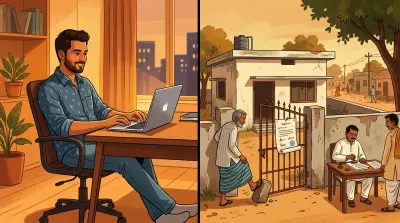


A property dispute in India is rarely one problem. There are usually two, stacked on top of each other.
The first problem is the dispute itself. The second problem, which most NRIs do not appreciate until they are inside it, is the calendar. A contested title suit in India routinely takes five to fifteen years to reach a final decree. Some take longer. NJDG data shows that around ten per cent of district court cases are more than ten years old. In Samiullah v. State of Bihar (2025), the Supreme Court itself described buying property in India as “traumatic”, citing the systemic problems with title verification, fragmented land laws, and a registration system that does not guarantee ownership. None of this is unusual or extreme. For most NRIs, this is just the median experience.
This is why the most important question, the moment you discover a dispute over your Indian property, is rarely “should I file a suit.” It is “is there any version of this I can settle without filing a suit.” If the answer is yes, take it. If the answer is no, you need to know how to follow what is happening in the courtroom from another country.
This guide covers both. First, the settlement options that genuinely work for NRIs, with the mechanics of signing each one from abroad. Then, the tools you need to actually track your case online once it has been filed.
Why settling is almost always the better play
A civil suit in India is anything but a controlled, predictable process. It is long, expensive, and attendance-heavy, with outcomes that depend on documents you may not have, witnesses who may not be available, and procedural delays you cannot control. Even when you win, enforcement is its own multi-year exercise. The structural problem behind this is real and not getting better quickly.
If police have also become involved, separate the alleged offence from the ownership issue. The Andhra Pradesh High Court’s 2026 ruling explains what police may investigate and what only a civil court can decide.
Settlement, by contrast, is fast, binding when documented correctly, and can be signed from abroad. The remainder of this section explains the four settlement routes that actually exist in Indian law and which one fits which type of dispute.
Pre-litigation mediation under the Mediation Act, 2023
The Mediation Act, 2023 came into force in 2023 and formalises something that already existed in practice. Parties can attempt mediation before filing a suit. The mediator is a neutral third party, often a retired judge or accredited mediator empanelled with a court-annexed mediation centre.
For ordinary civil property disputes, this is voluntary. For commercial disputes above the specified value under the Commercial Courts Act, 2015, pre-institution mediation under Section 12A is mandatory, unless the matter requires urgent interim relief. Most NRI property disputes (family partitions, boundary disagreements, sale deed disputes) fall on the voluntary side, but voluntary does not mean useless. Even a brief mediation attempt creates a record that the dispute could not be resolved informally, which is often useful later.
A settlement reached through mediation under the Act is binding and enforceable in the same manner as a civil court decree. This is the key advantage over an informal handshake agreement: once it is signed, the other side cannot walk back from it.
How an NRI participates from abroad: Most court-annexed mediation centres now allow video appearances. You can attend the session by video call, and any settlement deed that emerges can be signed by you at the Indian consulate or notarised and apostilled in your country of residence. A trusted family member or lawyer in India can then register the deed on your behalf using a narrow Power of Attorney.
Family settlement deeds and registered partition deeds
If the dispute is between heirs or co-owners of inherited property, a family settlement is usually the cleanest path. The Supreme Court in Kale v. Deputy Director of Consolidation (AIR 1976 SC 807) held that a bona fide family settlement, which merely records a pre-existing arrangement among family members, is binding on the parties and may not require registration. That principle still holds.
This is narrow, though. The settlement must reflect an actual prior arrangement, must be in good faith, and must not create new rights in immovable property out of nothing. The moment a family settlement is doing the work of a transfer of title, the courts treat it as a partition or transfer deed and registration becomes essential.
For property in India, the safer default is:
- Draft a registered family settlement deed if you are recording a pre-existing arrangement.
- Draft a registered partition deed if you are actually dividing property between co-owners for the first time.
Stamp duty rules differ. Family settlements among Class I heirs often attract concessional stamp duty in many states. Partition deeds attract a duty based on the value of the share separated. Check your state’s stamp duty schedule before drafting, or your lawyer will. The deed is registered at the Sub-Registrar’s office in the jurisdiction where the property is located.
Lok Adalats and compromise decrees
A Lok Adalat is a forum constituted under the Legal Services Authorities Act, 1987 where pending civil disputes can be settled by consent. Two features matter for property disputes:
The award of a Lok Adalat has the status of a civil court decree, is final, and cannot be appealed. This finality is the whole point.
There is no court fee for matters settled in a Lok Adalat, and if a previously filed civil suit is settled there, the court fee already paid is refunded.
The trade-off is that a Lok Adalat works only when both sides genuinely want to settle. It cannot impose an outcome on an unwilling party. For NRI property disputes where there is some goodwill left, or where the other side recognises the suit will drag for years either way, Lok Adalat is often the fastest exit.
If a suit has already been filed and parties later reach an agreement out of court, the agreement can also be recorded as a compromise decree under Order 23 Rule 3 of the Code of Civil Procedure. The court records the terms, passes a decree in those terms, and the matter ends. Compromise decrees are enforceable just like contested decrees but are reached at a fraction of the time and cost.
Signing settlements remotely
Each of the routes above can be signed without flying to India. The mechanics are well-understood. They just need to be done correctly.
Drafting: Your lawyer in India drafts the deed. It must specify the parties, the property (with full schedule including survey numbers, area, boundaries), the prior arrangement or division being recorded, and the consideration if any.
Execution from abroad: You have two options.
The first is to sign the deed before the Indian consulate or High Commission in your country of residence. The consular officer attests your signature. This is recognised across all Indian states.
The second is to sign before a notary public in your country and then have the document apostilled if your country is a signatory to the Hague Apostille Convention (the US, UK, UAE, Australia, Canada, most of Europe). The apostille is a certification on the document itself. Apostilled documents are accepted in India without further legalisation.
Registration in India: Once executed, the deed travels to India and is presented for registration at the Sub-Registrar’s office in the property’s jurisdiction. You can issue a narrow Power of Attorney, limited to the specific act of registering this specific deed, to a family member or lawyer in India. This POA itself must also be consular-attested or apostilled. The Sub-Registrar will accept the registration with the POA holder presenting on your behalf.
Stamp duty is paid in the state of the property, not in India broadly. Each state has its own schedule.
When out-of-court fails: tracking a property suit from abroad
If a civil suit has to be filed, or has already been filed against you, the next problem is information. You need to know when hearings happen, what the order sheet says after each hearing, what documents have been filed, and whether the case is moving or sleeping.
Indian district courts have done one genuinely useful thing over the past decade. They have built a national case-tracking infrastructure that works from a browser anywhere in the world.
The eCourts Services portal
The portal at services.ecourts.gov.in is the primary tool. It covers nearly every district and taluka court in India. You can search for a case using:
- Case Number Record (CNR), a 16-character alphanumeric unique identifier (the first four characters identify the state and district court, the remainder identify the case) that stays with the case across transfers at the district level. Your lawyer can give it to you, or you can find it by searching your name as a party.
- Party name in the relevant court.
- Advocate name.
- Filing number or registration number if you have the case papers.
- FIR number for criminal proceedings.
Once you find the case, the portal shows the case status (pending, disposed, transferred), the next hearing date, the cause list for upcoming dates, the order sheet recording what happened at each past hearing, and the list of documents filed.
For an NRI watching a property suit play out, the order sheet is the most important screen. It is the formal record of what the court did at each hearing. A pattern of repeated adjournments tells you the case is sleeping. An order on an interim application tells you something material happened. Your lawyer’s summary plus the order sheet, read together, is usually enough to know what is going on.
The National Judicial Data Grid
njdg.ecourts.gov.in is the national pendency dashboard. It does not show individual case detail, but it shows aggregate data: pendency by court, age of cases, disposal rates. Useful for one thing in particular: getting a realistic sense of how slow the specific district court hearing your case actually is. If your court has a median pendency of seven years, plan accordingly.
High Court cases
High Courts maintain their own case status portals. Most are linked from ecourts.gov.in. The interface differs by High Court, but the search inputs are similar (case type, year, number).
Email and SMS alerts
The eCourts Services portal supports SMS and email alerts for case updates. If your lawyer registers your case with your contact details, you receive a notification when the next hearing is listed, when an order is uploaded, or when the case status changes. This is the single setting that changes the experience from “calling the lawyer every two weeks” to “knowing when something has actually happened.”
When the portal lags reality
Two warnings. The order sheet is uploaded by court staff and can lag the actual hearing by days or, occasionally, weeks. The “next hearing date” can also change if a court reschedules without updating the portal. The portal is reliable enough to follow a case at a high level but should not be the only source of truth on a specific hearing. Confirm with your lawyer.
The portal also does not cover everything. Tribunal proceedings, some specialised courts, and certain Lok Adalat matters are not on services.ecourts.gov.in. If your matter is in a Debt Recovery Tribunal, a Rent Controller, or a specialised land tribunal, the relevant tribunal’s own portal applies.
What you still need a lawyer on the ground for
To be clear about what remote tracking cannot replace.
You still need a lawyer in India to file pleadings, appear at hearings, conduct cross-examination, lead evidence, deal with court commissioners (especially in boundary disputes), and execute decrees. None of this is remote work. Tracking a case online tells you what is happening. It does not make the case happen.
For boundary and encroachment disputes specifically, you also typically need a court-appointed advocate commissioner or local commissioner to physically visit the site, measure, and submit a report. That report is one of the most decisive pieces of evidence in such cases, and the absence of clean boundary documentation is often what loses these cases.
The honest takeaway
If you can settle the dispute through mediation, a family settlement, a partition deed, or a Lok Adalat, do it. The civil court system in India will not deliver justice in a timeframe that matches your life. Settlement gives you finality measured in months, with paperwork that is enforceable just like a court decree.
If you cannot settle, file the suit, get a competent lawyer, set up eCourts alerts on the CNR, and accept the timeline you are now inside. Track the case. Read the order sheet. Stay informed. But also keep monitoring the property itself, because property left unwatched while a case is pending tends to attract a second dispute on top of the first.
Assetly tracks ownership records, encumbrance updates, and dispute signals across Indian state portals so an NRI managing a contested property knows about the next problem before it becomes the next suit. See how monitoring works.