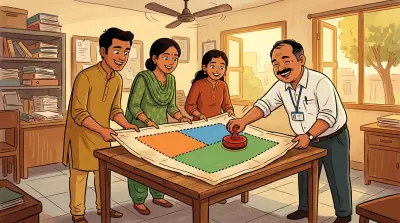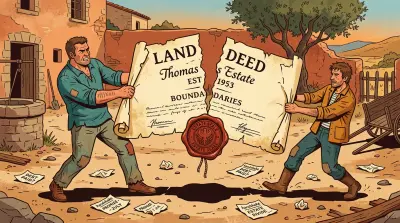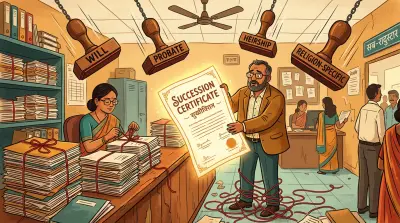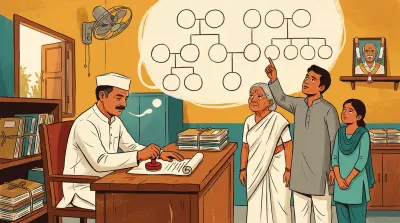


Three instruments come up constantly when families divide property: a partition deed, a family settlement, and a relinquishment (or release) deed. They are used almost interchangeably in conversation, drafted almost interchangeably by some clerks, and the confusion between them is behind a surprising share of property disputes.
They are not interchangeable. Each does a fundamentally different thing. One divides rights, one records an arrangement, and one surrenders a share. Pick the wrong one and you can end up paying the wrong stamp duty, creating a document that is void for non-registration, or leaving a gap an unhappy relative walks straight through years later.
This guide sets out what each instrument does, when each is appropriate, who has to sign, and the traps, deceased co-owners, minors, mortgages, and absent heirs, that turn a tidy family plan into a court case. It ends with a plain decision table and worked examples.
The One-Line Difference
Before the detail, hold on to this:
- A partition deed divides co-owned property into separate individual shares. Each co-owner walks away as the absolute owner of a demarcated portion.
- A family settlement records an agreement among family members about who holds what, resolving or heading off a dispute. It recognises existing claims rather than transferring anything.
- A relinquishment or release deed surrenders one co-owner’s undivided share to the other existing co-owners. One person steps out; the others’ shares grow.
Everything else follows from that distinction.
Partition Deed: Dividing Rights
A partition deed takes property held jointly by several co-owners and splits it into defined shares, so that each person becomes the sole owner of a specific portion. This survey number to A, that plot to B, this floor to C. It is the instrument you want when co-owners intend to go their separate ways and hold their shares independently.
Because a partition deed itself creates the division of rights, it must be registered. The Supreme Court in Roshan Singh v. Zile Singh (1988) drew the line clearly: “if the writing itself effects a division, it must be registered.” A partition deed is exactly such a writing. Our step-by-step guide to registering a family partition deed covers the drafting, valuation, and registration process in full.
Who signs: every co-owner. A partition binds only the people who are parties to it. If a co-owner is left out, the partition does not bind them, and they can have it reopened.
Family Settlement: Recording an Arrangement
A family settlement, or family arrangement, is an agreement among family members to allocate existing rights and put a dispute (actual or looming) to rest. Its legal character is different from a partition or a transfer: the law presumes each family member already has some antecedent claim, so the settlement recognises rights rather than conveying them.
The leading authority is Kale v. Deputy Director of Consolidation (1976), where the Supreme Court explained the purpose in warm terms: “The object of the arrangement is to protect the family from long drawn litigation or perpetual strifes which mar the unity and solidarity of the family.” The court also held that “the family arrangement may be even oral in which case no registration is necessary”, and that a mere memorandum “prepared after the family arrangement had already been made either for the purpose of the record or for information of the court” does not need registration.
This sounds like the easy path. It is also the most misused, because of a fine but decisive line. A document that merely records an arrangement already reached does not need registration. A document that itself makes the arrangement, that is the operative instrument dividing the rights, does need registration, and is void as evidence of the division if unregistered. Courts spend a lot of time deciding which side of that line a given “memorandum” falls on. Draft it loosely and you may find the family settlement you relied on cannot be used to prove anything about who got what.
For property, the safe reading is: use a family settlement to resolve genuinely disputed or tangled claims among family, and if it allocates immovable property, register it rather than gambling on the memorandum exception.
Who signs: all the affected family members with a claim. Leaving out an entitled member leaves the settlement open to challenge by that person.
Relinquishment / Release Deed: Surrendering a Share
A relinquishment or release deed is how one co-owner gives up their undivided share in favour of the other co-owners. The releasor exits; the remaining co-owners’ shares enlarge accordingly. It is the natural instrument when, say, three siblings inherit a house and one wants the other two to have it.
There is one rule that catches people out. A release only works in favour of an existing co-owner. You cannot “release” your share to an outsider. If you try, the law re-characterises the document. The Supreme Court in Kuppuswami Chettiar v. Arumugam Chettiar (1967) held that a deed releasing an interest without consideration in favour of a person who had no prior interest “took effect as a gift”, not as a release. In other words, a “release” to a stranger is really a gift or a sale, and is taxed and treated as one, whatever the heading says.
A relinquishment can be made with or without consideration (money can change hands, or not). Because it extinguishes the releasor’s right in immovable property, a release deed for property worth Rs 100 or more must be registered under Section 17 of the Registration Act, 1908.
Who signs: the releasor (the person giving up the share) must execute it. Unlike a partition, a release does not require every co-owner to sign; a single co-owner can release their share to the others. In practice the releasees are usually joined too, to keep the record clean.
Divided, Recorded, or Surrendered: The Core Comparison
| Partition deed | Family settlement | Relinquishment / release deed | |
|---|---|---|---|
| What it does | Divides co-owned property into individual shares | Records an agreement allocating existing rights | Surrenders one co-owner’s share to the others |
| Rights are | Divided | Recognised / recorded | Surrendered |
| Typical trigger | Co-owners want to separate their holdings | A dispute needs settling to avoid court | One heir wants to give up their share |
| Who must sign | All co-owners | All affected family members | The releasor (releasees usually joined) |
| In favour of | All parties, to themselves | The family members concerned | An existing co-owner only |
| Registration | Required if it effects the division | Required if the document itself makes the arrangement | Required for immovable property (Rs 100+) |
Registration: The Trap That Voids Documents
The single most expensive mistake with all three instruments is treating registration as optional paperwork. Under Section 17 of the Registration Act, 1908, any non-testamentary document that creates, declares, assigns, limits, or extinguishes a right in immovable property worth Rs 100 or more must be registered. A partition deed that effects the division, and a release deed that extinguishes a share, both fall squarely inside this.
The consequence of skipping it is set out in Section 49: an unregistered document that required registration cannot be used to prove the transaction. It may be admitted only for a limited “collateral” purpose, not to prove the division or the surrender itself. That is why an unregistered partition, however carefully drafted and however genuinely agreed, so often collapses in court. The family settlement memorandum is the only narrow exception, and only when it truly just records a past arrangement rather than making it.
Stamp Duty: A State-by-State Warning
Here is the honest position on cost: stamp duty is a state subject, the rates vary widely, and they change by notification. Do not trust any single nationwide figure, including one a well-meaning relative quotes from another state.
What is generally true is that partition deeds and release deeds among family members attract concessional stamp duty in many states, far below the duty on a sale or a gift to an outsider. What that concession actually is, and what value it is charged on, differs sharply:
- In Tamil Nadu, the official registration schedule charges a partition among family members and a release among family members at 1% of the value each, while a release to a non-family co-owner is charged 7%. The word “family” is doing heavy lifting.
- In Maharashtra, a release of ancestral property without consideration in favour of close family (spouse, children, parents, siblings, and their heirs) attracts a flat Rs 200, while a partition is charged 2% of the value of the separated shares.
- In Telangana, the official registration fee for a release, settlement, or gift among family is 0.5% (subject to a minimum and a cap), with partition deeds carrying a low fixed registration fee; the stamp-duty percentages sit alongside these and should be confirmed against the current state schedule.
Two lessons. First, the family-versus-stranger distinction is where most of the money is: a genuine release to a co-owning sibling is cheap, but a “release” to a non-co-owner is re-characterised as a gift or sale and taxed at the higher rate. Second, always confirm the current figure on your state’s official stamp and registration department schedule before you commit, because the number in any guide, including this one, is a snapshot that can move.
Effect on Future Sale and Mutation
None of these three instruments, by itself, updates the government’s revenue records. After registration, whoever now holds the property must separately apply for mutation so the revenue and municipal records reflect the new position. Skip mutation and the records still show the old joint ownership, which snarls the next sale, loan, or tax bill.
And mutation is not title. The Supreme Court in Sawarni v. Inder Kaur (1996) held that “mutation of a property in the revenue record does not create or extinguish title nor has it any presumptive value on title.” So the real chain is: the registered instrument creates or moves the rights, mutation updates the record to match, and on a future sale the buyer’s lawyer relies on the registered deed and the chain of title, not the mutation entry. Get the instrument right and register it, and the sale two decades later is clean. Get it wrong and the defect surfaces at the worst possible moment, when a buyer’s due diligence finds it.
The Risk Scenarios That Break Family Deals
The instruments are simple. The situations are not. Four recurring complications deserve specific care.
A co-owner has died. A deceased person cannot sign a deed, and their share does not evaporate. It devolves on their legal heirs under the applicable succession law. Those heirs must be identified, usually starting with a legal heir certificate, and brought in as parties before the division can happen. A partition or release that quietly ignores a dead co-owner’s heirs does not bind them, and they can undo it later.
A minor is involved. A minor cannot execute a deed, and a natural guardian’s powers are limited. Under Section 8 of the Hindu Minority and Guardianship Act, 1956, a natural guardian cannot transfer or part with a minor’s immovable property without the previous permission of the court, and a disposal made without it is voidable at the minor’s instance. Translation: a partition or release touching a minor’s share should obtain court permission and give the minor a fair share, or the child can challenge the whole arrangement on reaching majority.
The property is mortgaged. An existing mortgage or charge runs with the property. Dividing or releasing the property among the co-owners does not shake off the mortgagee, who was never a party to the family’s arrangement. The lender’s security continues to bind the property. Sort out the charge, or account for it in the deal, before dividing.
An heir is absent or missing. A partition or settlement that omits an entitled co-owner or heir is not binding on that person and can be reopened at their instance. This is the direct corollary of the rule that these arrangements bind only their parties. If a sibling is uncontactable or abroad, do not proceed as though they do not exist; either bring them in (a Power of Attorney lets an overseas heir participate) or take the route the law provides for genuinely unavailable parties. The pattern of informal family arrangements that fall apart is almost always a story of someone who was left out.
A Plain Decision Table
| Your situation | The instrument that usually fits |
|---|---|
| Co-owners want to split the property and each hold a separate portion | Partition deed |
| One heir wants to give up their share to the other co-owners | Relinquishment / release deed |
| The family disagrees about who holds what and wants to settle it without court | Family settlement (registered if it allocates property) |
| You want to give property to someone who is not a co-owner | Gift deed, not a release (see our gift deed guide) |
| A co-owner has died | Establish heirs first (legal heir certificate / succession), then choose the instrument |
Worked Examples
Example 1: Three siblings, one house, a clean split. A father dies intestate leaving a house to three children equally. They want to divide it, one takes the ground floor, one the first floor, one is paid an equalisation amount for taking less. This is a partition deed: it divides the co-owned property into defined portions, all three sign, it is registered, and each then applies for mutation.
Example 2: Two brothers, one steps back. The same house, but one brother wants nothing to do with it and is happy for his two siblings to have his share. He executes a relinquishment deed in favour of the other two co-owners. Because it is in favour of existing co-owners and among close family, it attracts concessional stamp duty in most states, far less than if he had “gifted” it to an outsider. Had he tried to release his share to a family friend instead, the law would treat it as a gift, and the concession would vanish.
Example 3: A tangled dispute across several properties. A large family disputes how a grandfather’s flat, farmland, and shop should be held, with different branches asserting different understandings going back decades. Rather than litigate, everyone agrees on an allocation. This is a family settlement: it recognises the various antecedent claims and puts them to rest. Because it allocates immovable property, they register it, avoiding the memorandum-versus-instrument argument entirely.
The Bottom Line
Divide, record, or surrender. That is the choice, and it is worth getting right the first time. A partition deed divides, a family settlement records, and a relinquishment deed surrenders. Register whatever you use, confirm the stamp duty on your own state’s official schedule, and never proceed while a co-owner is dead-and-unrepresented, a minor is unprotected, a mortgage is unaddressed, or an heir is missing. The cheapest version of any of these documents costs a little. The dispute that follows the wrong one costs years.
Related Reading
- How to Register a Family Partition Deed in India - the full process for the division route
- Family Property in India: How to Protect It Before Disputes Start - why informal arrangements collapse
- Gift Deed for Property in India - the right instrument for transfers to non-co-owners
- How to Get a Legal Heir Certificate in India - establishing heirs before any division
- Will and Succession Certificate Guide - the documents that decide who inherits in the first place
Assetly is a property document management platform that helps Indian property owners, including NRIs, organise, verify, and track their property documents digitally. Learn more at assetlyhq.com.