
Adangal vs ROR 1-B: The Two Andhra Pradesh Land Records You Keep Mixing Up

Adangal vs ROR 1-B: The Two Andhra Pradesh Land Records You Keep Mixing Up

Adangal shows what is happening ON your Andhra Pradesh land; ROR 1-B shows WHO legally owns it. How the two MeeBhoomi records differ and which you need.

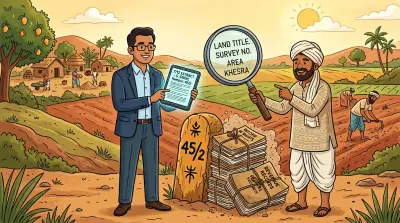
If you own farmland in Andhra Pradesh, at some point you will open the Meebhoomi portal and hit a wall of buttons: My Adangal, Village Adangal, Your 1-B, Village 1-B, e-Passbook, FMB. Two of these buttons cause more confusion than everything else on the site put together. Adangal and 1-B.

People treat them as the same thing. Estate agents quote one when you need the other. Relatives download whichever loads first and assume it settles the question. And because the official portal publishes almost no plain-English explanation, most owners never learn the one distinction that actually matters.

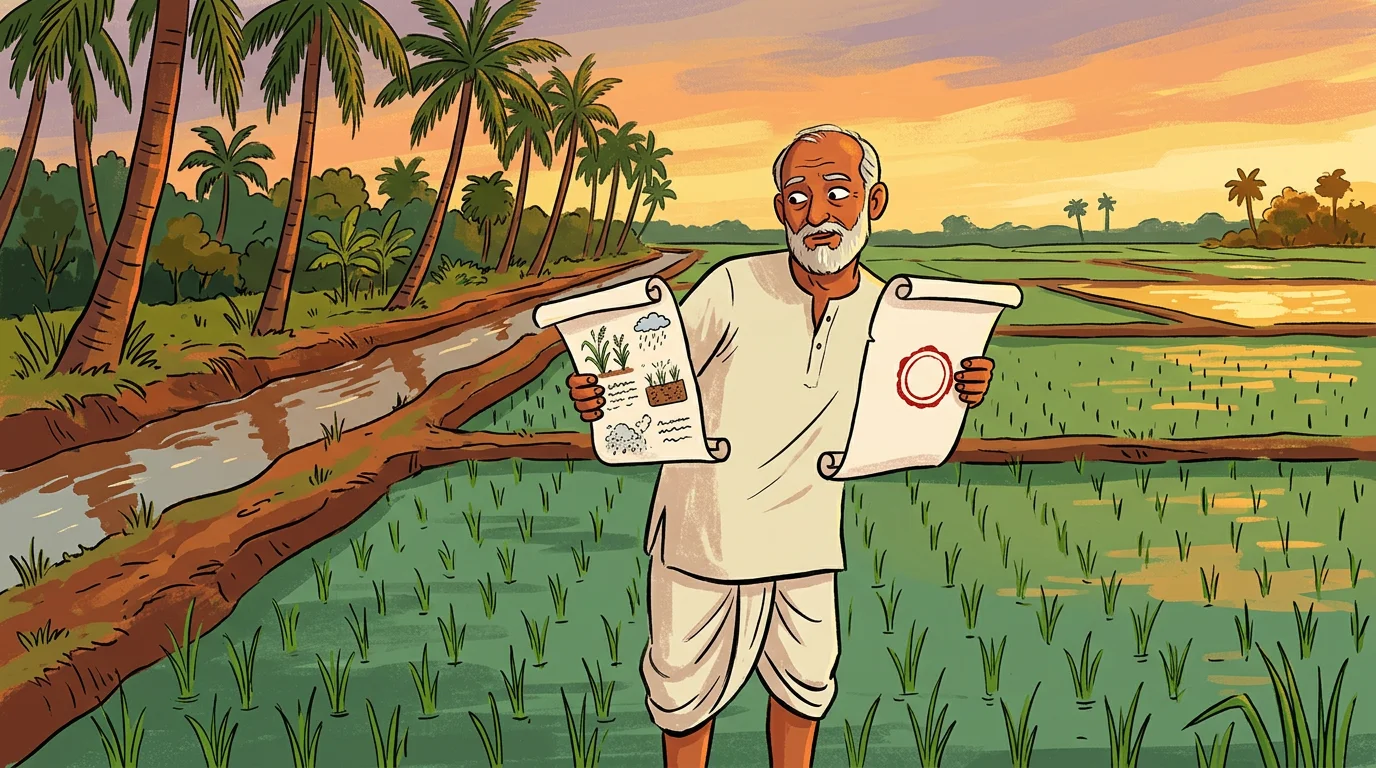
So here it is, in a single line: Adangal tells you what is happening ON the land. The 1-B tells you WHO legally owns it.

Think of a parcel of land as a house that is rented out. The Adangal is the tenant’s diary: it says who is living there, what they are doing inside, what furniture is in each room. The 1-B is the house’s title deed: it says who the landlord is. Both describe the same house. Only one of them proves who owns it.

Get this backwards and you can waste weeks. This guide untangles the two records, shows you what each one contains, how to pull both from Meebhoomi, and which document you actually need for selling, borrowing, insuring a crop, or checking a parcel before you buy.

Adangal vs 1-B at a glance

Before the detail, here is the whole thing on one card.

Adangal (Pahani)ROR 1-B (Record of Rights)
What it isAgricultural register - the physical log of the landOwnership register - the legal record of who holds title
Also calledPahani, Village Account No. 3Record of Rights, RoR 1-B
Who maintains itVillage Revenue Officer (VRO), at village levelRevenue Department, authenticated under the Tahsildar at mandal level
What it provesWhat the land is and how it is usedWho the pattadar (owner) is
Key fieldsSoil type (wet/dry), water source, crop grown, cultivator, extent, liabilitiesPattadar name, father’s/husband’s name, khata number, survey numbers, extent, mutation history
UpdatedSeasonally, after a field inspectionOn mutation, when ownership changes
You need it forCrop loan, crop insurance, PM-KISAN, farm schemesSelling, raising a loan against the land, proving title
Meebhoomi labels”My Adangal”, “Village Adangal""Your 1-B”, “Village 1-B”

Neither record, on its own, is a full title document. Courts across India have held that revenue entries raise a presumption about possession but do not by themselves create ownership. For the wider point on why revenue records are not the same as your registered deed, see our guide to verifying property title in India. But within the AP revenue system, these two records answer two different questions, and you need to know which question you are asking.

The Adangal: the land’s diary

Adangal is the older of the two ideas. In the pre-computer era it was literally a bound village register, and in the old accounting scheme it sat as Village Account No. 3. In everyday speech, Adangal and Pahani mean the same thing, and you will hear both used interchangeably across the Telugu-speaking districts.

What makes the Adangal distinctive is that it describes the land as a piece of earth, not as an asset on a balance sheet. It is maintained and updated by the Village Revenue Officer (VRO), the government’s eyes on the ground, who revises it seasonally after a field inspection (the old term is Azmoish). For each survey number, the Adangal records:

Notice what the Adangal is good for. Because it captures what is physically happening on the land, it is the document the system leans on for anything farm-related. A bank wants to see the Adangal before sanctioning a crop loan or a Kisan Credit Card, because it shows the land is real, classified as agricultural, and actually under cultivation. It feeds eligibility checks for crop insurance, PM-KISAN, and input-subsidy schemes. If a scheme depends on you being an active cultivator, the Adangal is where that is written down.

What the Adangal does not settle is ownership. The cultivator named in the Adangal can be a tenant, a relative, or someone informally working the land. Reading a name in the Adangal and assuming that person owns the parcel is one of the most common mistakes in AP land dealings.

On Meebhoomi, the Adangal appears under two buttons. “My Adangal” pulls the parcels tied to a single owner. “Village Adangal” pulls the record for the whole village, which is useful when you want to see neighbouring parcels or cross-check boundaries.

The 1-B: the ownership register

The 1-B, formally the Record of Rights (RoR), is the document you reach for when the question is “who owns this?” It is the ownership register, authenticated within the Revenue Department at the mandal level under the Tahsildar, and it is the AP revenue record that carries the most weight in a transaction.

For each holding, the 1-B records:

If a bank is lending against the land itself, if you are selling, or if you are trying to prove title in a dispute, the 1-B is the revenue document that matters. It is issued under the Andhra Pradesh Rights in Land and Pattadar Pass Books Act, 1971, the same law that underpins the pattadar passbook.

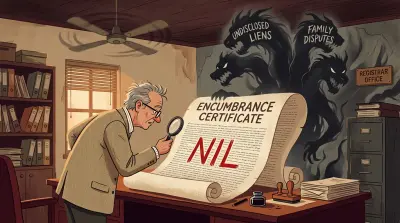
A crucial caveat, and one worth repeating: the 1-B being clean is necessary but not sufficient. The 1-B is a revenue record. Your registered sale deed, and the chain of deeds behind it, is what actually transfers ownership. The two systems - revenue records and registration - are maintained by different departments and do not always agree. The registration side of AP (encumbrance certificates, registered deeds, the Section 22A prohibited list) lives on a separate portal, IGRS AP, which we cover in the IGRS Andhra Pradesh records guide. Before any purchase, you pull both: the 1-B from Meebhoomi to see who the revenue department thinks owns the land, and the encumbrance certificate from IGRS AP to see every registered transaction on it.

On Meebhoomi, the 1-B sits under “Your 1-B” (a single owner’s holdings) and “Village 1-B” (the village-wide register).

Adangal is the AP cousin of the 7/12 and RTC

If you own land in more than one state, the Adangal will feel familiar. Every state runs the same idea under a different name. Maharashtra’s 7/12 extract combines a rights form and a crop form. Karnataka’s RTC is literally the “Record of Rights, Tenancy and Crops”. Andhra Pradesh splits that same information across two documents: the Adangal carries the tenancy-and-crops half, and the 1-B carries the rights half.

The takeaway if you are used to another state’s system: do not go looking for one all-in-one extract in AP. The state deliberately keeps “who owns it” and “what is growing on it” in separate files. For the cross-state picture, see our explainer on 7/12, RTC, Pahani and Jamabandi, and for the portal directory, the state-by-state land records guide.

How to check each on Meebhoomi

The good news is that viewing both records is free, needs no login, and works from anywhere in the world. The official portal is meebhoomi.ap.gov.in, and only that address.

To pull the Adangal:

  1. Open meebhoomi.ap.gov.in and choose “My Adangal” for one owner’s parcels, or “Village Adangal” for the whole village.
  2. Select the district, mandal (zone), and village.
  3. Enter a search key: survey number, khata number, owner’s Aadhaar number, or owner name, depending on which the portal offers for that option.
  4. Complete the captcha and view. You can download or print the result.

To pull the 1-B:

  1. From the home page, choose “Your 1-B” or “Village 1-B”.
  2. Select district, mandal, and village.
  3. Enter the survey number, khata number, or Aadhaar number.
  4. Complete the captcha and view or download.

Keep your survey number handy before you start - it is the key that works across every Meebhoomi service, and it is printed on your old Pahani, your passbook, or your sale deed. If a survey number returns nothing, remember that AP has resurveyed large numbers of parcels in recent years, so a new survey number may have replaced the one you remember.

For the parcel’s shape and boundaries, Meebhoomi also offers the FMB (Field Measurement Book) sketch and the village or LP (land parcel) map. The 1-B and Adangal give you extent as a number; the FMB shows you the actual outline and how the parcel sits against its neighbours. If a boundary dispute is even a remote possibility, pull the FMB alongside the two records.

Which record do I actually need?

Here is the practical decision, use case by use case.

The absentee-owner traps

If you live outside AP, or outside India, three specific snags catch people out.

The e-Passbook OTP. Viewing the Adangal and 1-B is open to anyone. But the moment you want the electronic pattadar passbook (e-Passbook) - the consolidated document listing all your holdings - Meebhoomi sends a one-time password to the owner’s registered mobile number. For an owner who registered an old Indian SIM years ago and has since moved abroad, that number is often dead. No live number, no OTP, no e-Passbook. If you are anywhere near this situation, the single most useful housekeeping task is to get your current, active mobile number linked to your land records through the mandal revenue office before you need the passbook in a hurry. The same visit is the natural moment to check whether your Aadhaar is seeded to the holding, which ties your verified identity to the record and makes it harder to spoof - see our guide to Aadhaar seeding of AP land records.

There is no official app, and there are many fakes. Meebhoomi is a website, full stop. The Andhra Pradesh government has not published an official Meebhoomi mobile app. The apps on the Play Store and App Store that carry the Meebhoomi name are third-party builds - several of them state in their own listing that they are not affiliated with or endorsed by the government. Some simply wrap the public website; others exist to serve ads or harvest what you type. Do not enter survey numbers, Aadhaar numbers, or personal details into them.

The look-alike domains. Search for “Meebhoomi” and the results are thick with sites like meebhoomi.in, meebhoomiap.in, and a dozen similar variations. None of these is the government portal. They are private SEO pages that republish screenshots, and some route you through their own forms. This mirrors what happens with the registration portal, where lookalikes such as igrsap.org and apigrs.com outrank the real site. The rule is the same for both: the only official land-records address for AP is meebhoomi.ap.gov.in, and the only official registration address is registration.ap.gov.in. If a page asks you to pay to “download” a record that the government gives away free, leave.

Anything that needs a physical presence in AP - filing a mutation, correcting a wrong entry, updating your registered mobile number, getting a certified copy - still needs someone on the ground with a registered Power of Attorney. The portal lets you watch your records; it does not let you change them from a laptop abroad. Between visits, the safest habit is to download your 1-B, Adangal, FMB, and deeds once a year and keep them together, so a lapsed SIM or a lost cupboard file does not become a crisis when you need the record fast. Tools like Assetly are built to keep every property document organised in one place for exactly this reason.

If a record does look wrong - a name you do not recognise as cultivator, an extent that has shrunk, a mortgage entry you never authorised - treat it as a prompt to act, not a portal glitch to ignore. Raise it through the grievance and helpline channels listed on the Meebhoomi portal and, if it touches ownership, with the Tahsildar. For the wider context on why outdated and tampered revenue records fuel so many disputes, our overview of India’s property dispute crisis is the anchor read.

The bottom line

Two buttons, two questions. The Adangal answers “what is this land and what is happening on it” - soil, water, crop, cultivator - and it is your document for crop loans, insurance, and farm schemes. The 1-B answers “who owns it” - pattadar, khata, survey, mutation - and it is your document for selling, borrowing against the land, and proving title. Pull both before you buy, keep both current, and never confuse the tenant’s diary for the title deed.

Assetly is a property document management platform that helps Indian property owners, including NRIs, organise, verify, and track their property documents digitally. Learn more.

Frequently Asked Questions

What is Adangal in Andhra Pradesh land records?

Adangal, also called Pahani or Village Account No. 3, is the agricultural register maintained by the Village Revenue Officer (VRO) for each parcel of land. It records the physical reality of the land: soil classification (wet or dry), water source, the crop grown, extent, who is cultivating it, and any liabilities such as a crop loan or mortgage. It is updated seasonally after a field inspection. Banks ask for it before a crop loan, and it is used for crop insurance, PM-KISAN, and other farm schemes. Adangal is a land-use record, not a proof of ownership.

What is the difference between Adangal and 1-B?

Adangal tells you what is happening on the land; the 1-B tells you who legally owns it. Adangal (Pahani) is the agricultural register kept by the Village Revenue Officer and records soil type, crop, water source, and cultivation. The 1-B, or Record of Rights, is the ownership register authenticated at the mandal level under the Tahsildar and records the pattadar's name, khata number, survey number, extent, and mutation history. You read the Adangal to understand the land's condition and use; you rely on the 1-B to prove title, sell, or raise a loan.

What is ROR 1-B in Meebhoomi?

ROR 1-B stands for Record of Rights, form 1-B. It is Andhra Pradesh's core land ownership record, viewable on the Meebhoomi portal (meebhoomi.ap.gov.in) under the labels 'Your 1-B' and 'Village 1-B'. It lists the pattadar (owner) name, father's or husband's name, khata or account number, survey numbers, extent, land classification, and any recorded mortgage or judicial freeze. It is the revenue document you need to prove ownership, register a sale, or apply for a loan against the land.

How do I download Adangal online in AP?

Go to the official portal meebhoomi.ap.gov.in and open 'My Adangal' (for a single owner's parcels) or 'Village Adangal' (for the whole village). Select your district, mandal (zone), and village, then enter the survey number, khata number, or the owner's Aadhaar number, complete the captcha, and view or download the record. Viewing is free and needs no login. Only a certified copy of the e-Passbook needs an OTP sent to the owner's registered mobile number.

Is there an official Meebhoomi mobile app?

No. Meebhoomi is a web portal only. There is no official Meebhoomi app from the Andhra Pradesh government. The apps on the Play Store and App Store that use the Meebhoomi name are third-party builds, and several carry a disclaimer that they are not affiliated with or endorsed by the government. Similarly, domains like meebhoomi.in and meebhoomiap.in are private SEO sites, not the government portal. The only official address is meebhoomi.ap.gov.in.