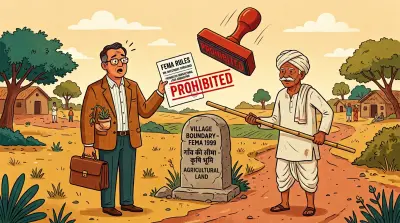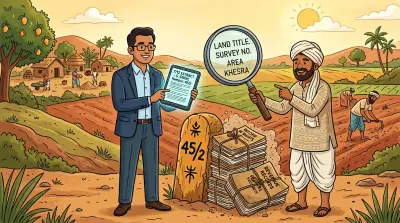
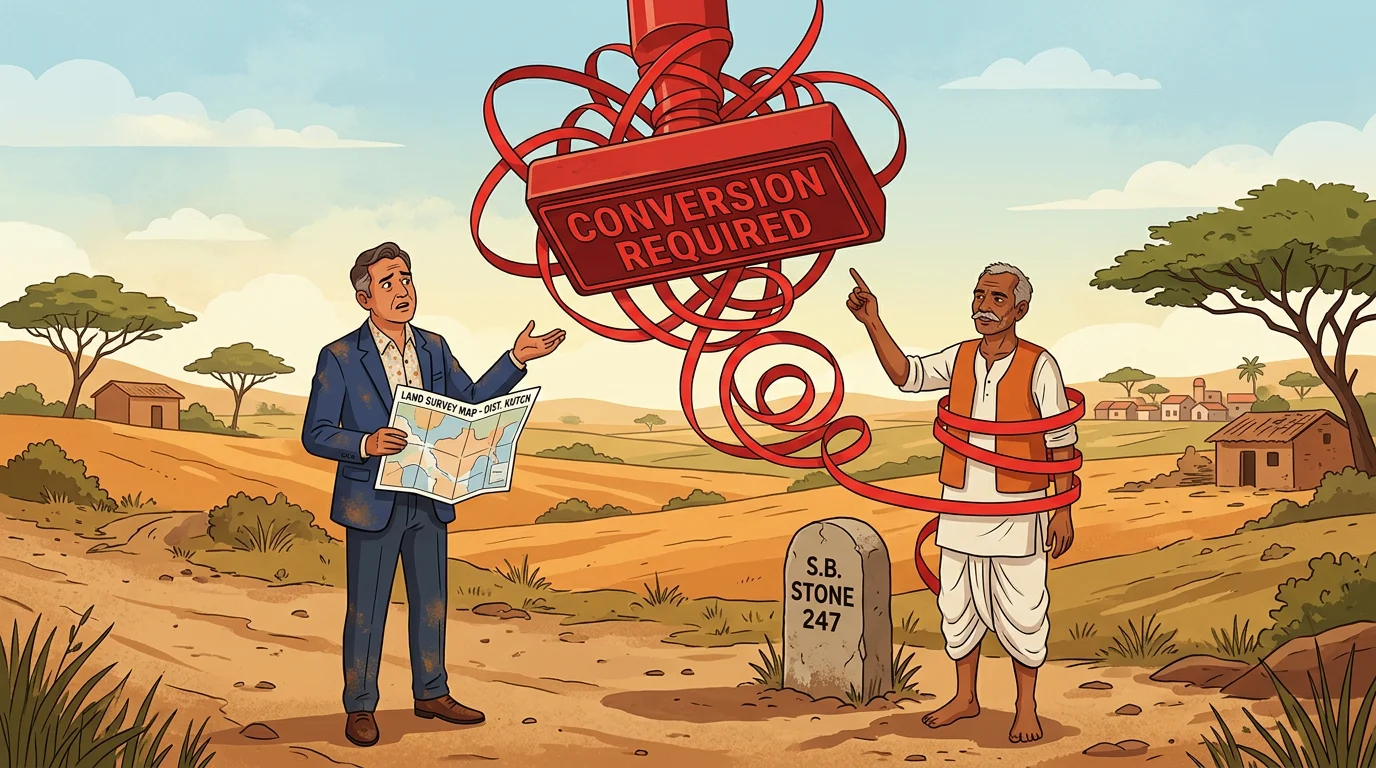

A farmer in Maharashtra wants to sell five acres of agricultural land to a software engineer from Pune. Simple enough, you would think. Willing seller, willing buyer, agreed price.
Except the software engineer is not an agriculturist. Under Maharashtra’s land revenue code, he cannot buy agricultural land unless the land is first converted to non-agricultural use. The conversion process requires an application to the District Collector, a set of documents most people have never heard of, and fees that can run up to 50% of the land’s ready reckoner value.
Welcome to the world of agricultural land sales in India, where the question “can I sell my land?” has a different answer depending on which state the land is in, who the buyer is, and whether the land has been converted.
India has roughly 160 million hectares of agricultural land, and every state has its own set of rules about who can buy it, who can sell it, and what needs to happen before the transaction goes through. If you are an NRI who inherited agricultural land, the rules get even more layered, with FEMA adding a federal prohibition on top of the state restrictions.
This guide walks through all of it: buyer restrictions, the conversion process, capital gains implications, and the documents you will need.
State-specific rules, stamp duty rates, and conversion processes in this guide are current as of March 2026. Land laws change frequently. Verify with the relevant state authority before acting.
Who Can Buy Agricultural Land? (It Depends on the State)
This is the first thing most sellers get wrong. They assume anyone with money can buy their land. In many Indian states, that is simply not true.
Think of it this way. India’s land reform laws were designed after independence to prevent wealthy landlords from hoarding farmland. The idea was that only people who actually farm should own farmland. Decades later, many of these restrictions still exist, even though the economy has changed beyond recognition.
Here is how the major states handle it:
Maharashtra: Agriculturists Only
Maharashtra’s Bombay Tenancy and Agricultural Lands Act, 1948 restricts the purchase of agricultural land to agriculturists. If you are not an agriculturist, you cannot buy agricultural land in Maharashtra. Period.
But here is the nuance: if you hold agricultural land anywhere in India, you can be deemed an agriculturist in Maharashtra. You do not need to be actively farming in Maharashtra itself. The ceiling limit is 54 acres.
This means a seller in Maharashtra has a limited buyer pool. If the land is in a peri-urban area and most interested buyers are professionals or developers, conversion to non-agricultural use becomes practically necessary.
Karnataka: The Rules Changed
Until 2020, Karnataka had some of the strictest agricultural land restrictions in the country. Sections 79A and 79B of the Karnataka Land Reforms Act, 1961 prohibited non-agriculturists from acquiring agricultural land and set income ceilings for buyers.
Then the Karnataka Land Reforms (Second Amendment) Act, 2020 (Karnataka Act No. 56 of 2020) omitted Sections 79A, 79B, and 79C entirely. All pending cases under these sections were abated.
Today, any Indian citizen who is a resident of India can buy agricultural land in Karnataka, regardless of whether they are an agriculturist. This dramatically expanded the buyer pool and increased land values across the state.
Telangana and Andhra Pradesh: Relatively Open
Both states allow any Indian resident to purchase agricultural land, though ceiling limits apply. In Telangana, the ceiling is based on the concept of a “standard holding” under the Land Reforms (Ceiling on Agricultural Holdings) Act. A family of five can hold agricultural land equivalent to one standard holding.
The key difference here is that the buyer does not need to be an agriculturist. This makes selling agricultural land in these states significantly easier than in Maharashtra or Gujarat.
Punjab and Haryana: Custom Meets Modern Law
Punjab does not impose strict restrictions on non-agriculturists buying agricultural land, but it is not completely open either. Buyers may need to provide an affidavit or business plan showing intent and capability for agriculture. Custom law still plays a significant role, particularly in matters of succession and alienation. The land records in Punjab are maintained through jamabandi, and checking the latest entries before any transaction is essential.
Gujarat and Himachal Pradesh: Still Restrictive
Gujarat restricts agricultural land purchases to agriculturists, similar to Maharashtra. Himachal Pradesh goes further, restricting land purchases by outsiders altogether, to prevent land hoarding in its ecologically sensitive regions.
Quick Reference Table
| State | Who Can Buy Agricultural Land? | Key Restriction |
|---|---|---|
| Maharashtra | Agriculturists only | Ceiling: 54 acres |
| Karnataka | Any Indian resident (post-2020) | Sections 79A/79B omitted |
| Telangana | Any Indian resident | Ceiling limits apply |
| Andhra Pradesh | Any Indian resident | Ceiling limits apply |
| Punjab | Generally open, with conditions | Affidavit may be required |
| Gujarat | Agriculturists only | Similar to Maharashtra |
| Himachal Pradesh | Restricted to state residents/agriculturists | Outsider restrictions |
| Tamil Nadu | Any Indian resident | Ceiling limits apply |
NRIs and Agricultural Land: What FEMA Says
If you are an NRI reading this, the state-level restrictions above are almost irrelevant to you. That is because FEMA creates a federal prohibition that overrides everything else.
Under the RBI’s Master Direction on acquisition and transfer of immovable property, NRIs and OCIs (Overseas Citizens of India) are prohibited from purchasing agricultural land, plantation property, and farmhouses in India. This is not a guideline. It is a hard prohibition. The full breakdown of FEMA rules for NRI property covers the details.
But NRIs are not locked out entirely. There are two important exceptions:
Inheritance. An NRI can inherit agricultural land from a person resident in India or from another NRI who acquired it lawfully. No RBI approval is needed. This is covered in detail in our guide on NRI agricultural land restrictions.
Selling. An NRI who holds agricultural land (either inherited or acquired before becoming an NRI) can sell it. The buyer must be a person resident in India who is an Indian citizen. The sale proceeds can be repatriated, subject to RBI documentation requirements.
So if you are an NRI sitting on inherited agricultural land and wondering what to do with it, selling is a perfectly legal option. The question is how to do it efficiently.
Converting Agricultural Land to Non-Agricultural Use
This is where most of the complexity lives. And it is also where most of the value creation happens.
Agricultural land that gets converted to non-agricultural (NA) use typically sees a significant jump in value. In peri-urban areas around Pune, Bangalore, or Hyderabad, the price difference between agricultural and NA land can be five to ten times. Conversion opens the land to developers, businesses, and non-farming individuals who could not otherwise buy it.
When Should You Convert Before Selling?
Convert if:
- Your buyer is not an agriculturist (in states that restrict buyers)
- The land is near an urban area and the buyer plans residential or commercial use
- You want to maximise the sale price
- The buyer’s bank requires NA status for a loan against the property
Do not convert if:
- The buyer is an agriculturist who wants to continue farming
- You want to take advantage of lower stamp duty rates for agricultural land (some states charge 2 to 3% for agricultural transactions versus 5 to 7% for non-agricultural)
- You plan to claim the Section 54B capital gains exemption (which requires reinvestment in agricultural land)
The Conversion Process: State by State
The basic process is similar across states, but the timeline, fees, and authority involved vary wildly.
Step 1: Application. The landowner submits an application to the District Collector (Maharashtra), Deputy Commissioner (Karnataka), or the relevant revenue authority. The application specifies the proposed non-agricultural use: residential, commercial, industrial, or institutional.
Step 2: Documents. You will typically need:
- 7/12 extract or RTC (Record of Rights, Tenancy, and Crops) showing the land details
- Zone certificate from the town planning authority
- Town planning department NOC (No Objection Certificate)
- Gram panchayat NOC (for rural areas)
- Environmental clearance (for larger parcels or environmentally sensitive areas)
- Survey map and property sketch
- Tax payment receipts (land revenue paid up to date)
- Mutation records showing clear ownership
Step 3: Verification. The revenue authority verifies the documents, inspects the land, and checks for encumbrances, tenant claims, or legal disputes. This is where things slow down. If there are tenants on the land (and in some states, tenants have a first right of refusal before the land can be sold or converted), the process can stall.
Step 4: Order. If everything clears, the Collector issues a conversion order (NA order). The land records are updated to reflect the new classification.
Step 5: Use within timeline. In Maharashtra, converted land must be used for its stated non-agricultural purpose within one year of the conversion order. If you do not, the order can lapse.
Maharashtra: The Most Developed Process
Maharashtra’s process under the Maharashtra Land Revenue Code, 1966 is well-established. The application goes to the District Collector with a non-judicial stamp of Rs 5. The Collector is supposed to acknowledge within seven days and send a copy to the Tahsildar for verification.
Timeline: Officially 15 to 30 days. In practice, two to six months depending on the district and complexity.
Fees: This is where it gets expensive. Maharashtra charges conversion fees based on ready reckoner rates, and the amount can be as high as 50% of the land’s value for certain categories. For agricultural to residential conversion, expect to pay a substantial premium.
Karnataka: Post-2020 Simplification
Karnataka’s conversion process has become smoother since the 2020 amendments. The application goes to the Deputy Commissioner. The conversion fees are calculated as: Guidance Value multiplied by Land Area multiplied by the applicable percentage (2% for residential, 3% for commercial), plus any surcharge.
Timeline: One to three months for straightforward cases.
Fees: Significantly lower than Maharashtra. The percentage-based calculation makes costs more predictable.
Telangana: Through Bhu Bharati
Telangana has digitised much of its land administration through the Bhu Bharati portal (which replaced the discontinued Dharani portal in 2025). Conversion applications can be initiated online, though physical verification and approvals still happen offline.
Timeline: One to four months depending on the mandal.
The Environmental and Panchayat Layer
Two additional clearances catch sellers off guard:
Gram Panchayat NOC. For agricultural land in rural areas, the local gram panchayat must issue a no-objection certificate. This is usually straightforward, but panchayat politics can sometimes create delays.
Environmental clearance. For larger land parcels or land near water bodies, forests, or eco-sensitive zones, environmental clearances from the State Environment Impact Assessment Authority (SEIAA) may be required. This adds months to the process and significant costs if an Environmental Impact Assessment (EIA) is needed.
Selling Without Conversion: What You Need to Know
Conversion is not always necessary. If you are selling agricultural land to a buyer who is eligible to purchase it (an agriculturist in restrictive states, or any resident Indian in open states), you can sell without converting.
The advantages of selling without conversion:
- Lower stamp duty. Several states charge reduced stamp duty for agricultural land transactions. Maharashtra charges 2 to 3% in gram panchayat areas, compared to 5 to 6% for non-agricultural property. Gujarat similarly offers lower rates for agricultural transactions.
- Faster process. No conversion application, no waiting for the Collector’s order, no additional fees.
- Simpler documentation. You need the standard sale documents, not the additional conversion paperwork.
The disadvantages:
- Limited buyer pool. In restrictive states, your buyers are limited to agriculturists.
- Lower sale price. Agricultural land generally commands lower prices than NA land in peri-urban areas.
- Buyer’s future restrictions. The buyer inherits the agricultural classification and will face the same restrictions if they want to change the land use later.
Capital Gains Tax: The Urban vs Rural Distinction
Here is something that surprises many agricultural land sellers: your tax liability depends on where your land is, not what it is used for.
Section 2(14) of the Income Tax Act defines “capital asset” in a way that excludes certain agricultural land. The exclusion works like this:
Agricultural land that IS a capital asset (taxable on sale):
- Land within the limits of a municipality, cantonment board, or notified area committee with a population of 10,000 or more
- Land within 2 km of such limits where the population is between 10,000 and 1 lakh
- Land within 6 km where the population is between 1 lakh and 10 lakh
- Land within 8 km where the population exceeds 10 lakh
Agricultural land that is NOT a capital asset (not taxable):
- Land outside all of the above limits, commonly called “rural agricultural land”
So if your agricultural land is near a growing city, it is almost certainly a capital asset, and the sale will attract capital gains tax. If it is in a remote rural area far from any municipality, the sale may not attract any capital gains tax at all.
For NRIs selling agricultural land that qualifies as a capital asset, the buyer must deduct TDS at 12.5% for long-term capital gains (held for more than two years) or at applicable slab rates (up to 30%) for short-term gains. Our capital gains tax guide for NRIs covers the full computation, exemptions, and how to reduce TDS through a Lower Deduction Certificate.
Section 54B: The Reinvestment Exemption
If you sell agricultural land and the capital gains are taxable, Section 54B offers a way out. The conditions:
- You (or your parent) must have used the land for agricultural purposes for at least two years before the sale
- You must purchase new agricultural land within two years of the sale
- The exemption is the lower of: the capital gains amount, or the cost of the new agricultural land
If you cannot buy the new land before your tax return is due, you can deposit the capital gains in a Capital Gains Account Scheme with a nationalised bank and purchase the land later (within the two-year window).
Important catch: If you sell the new agricultural land within three years of purchasing it, the Section 54B exemption is clawed back, and you will owe the capital gains tax on the original sale.
This exemption is particularly relevant for families selling agricultural land in one state and wanting to buy in another. It provides flexibility while keeping the tax benefit intact.
Documents Needed for an Agricultural Land Sale
Whether you are selling with or without conversion, you need a comprehensive set of documents. Missing even one can delay or derail the transaction.
Core Documents
| Document | What It Proves | Where to Get It |
|---|---|---|
| 7/12 Extract / RTC / Pahani | Land details, ownership, crop pattern, encumbrances | Talathi office or state land records portal |
| Mutation Record | Ownership transfer history | Revenue department |
| Title Deed / Sale Deed | Legal ownership and chain of title | Sub-Registrar’s office |
| Land Revenue Receipts | Taxes paid up to date | Talathi or revenue office |
| Encumbrance Certificate | No outstanding loans or legal claims | Sub-Registrar’s office |
| Survey Map | Exact boundaries and area | Survey department |
| Conversion Order (if applicable) | NA permission granted | District Collector’s office |
Additional Documents for Specific Situations
If the land is inherited: Succession certificate or legal heir certificate, death certificate of the previous owner, and proof of relationship. Our guide for NRIs with inherited property covers this process.
If the seller is an NRI: Power of Attorney (consulate-attested or apostilled), passport copy, OCI/PIO card (if applicable), NRE/NRO bank account details for receiving sale proceeds.
If there are tenants: Written consent from tenants or evidence that the tenant’s first right of refusal was offered and declined. In states like Maharashtra, the Bombay Tenancy Act gives certain tenants a deemed purchase right that must be extinguished before the land can be sold.
If the land is joint family property: Consent from all coparceners, partition deed (if the land has been partitioned), or a family settlement deed.
Common Disputes: What Can Go Wrong
Agricultural land sales generate a disproportionate number of property disputes in India. Here are the most common ones.
Tenant Claims
This is the big one. In states like Maharashtra, tenants who have been cultivating the land for a certain period acquire rights under tenancy laws. The Bombay Tenancy and Agricultural Lands Act, 1948 gives tenants a deemed purchase right in certain circumstances. In Laxminagar Co-Op. Housing Society v. Mamlatdar (2005), the Gujarat High Court found a breach of Section 84-C of the Act when agricultural land held by tenants was sold to a cooperative housing society without following the proper process.
Before selling, verify whether there are any recorded tenants on the 7/12 extract or RTC. If there are, their rights must be settled first.
Boundary Disputes
Agricultural land boundaries are often defined by natural markers (streams, trees, ridges) rather than precise survey measurements. Over generations, these boundaries shift, and neighbouring landowners encroach. A fresh survey before selling can prevent disputes after the sale.
Joint Family Land
A significant chunk of agricultural land in India is ancestral property held jointly by Hindu Undivided Families. Under the Hindu Succession Act (as amended in 2005), daughters have equal coparcenary rights. Selling joint family agricultural land requires the consent of all coparceners. If even one coparcener objects, the sale can be challenged.
Conversion Order Disputes
If you convert and sell, but the conversion order is later challenged or found to be improperly obtained, the entire transaction can unravel. Ensure the conversion order is issued by the proper authority, that all required NOCs were obtained, and that the order is reflected in the updated revenue records.
A Practical Checklist for Sellers
Before listing your agricultural land for sale:
-
Check the revenue records. Download the latest 7/12 extract, RTC, or pahani and verify ownership, area, classification, and any noted encumbrances or tenancies.
-
Decide on conversion. If your target buyer pool includes non-agriculturists, or if the land is in a peri-urban area, get the NA conversion done before marketing the land. Factor in the time (two to six months) and cost.
-
Clear tenancies. If there are tenants recorded on the land, settle their rights before proceeding. This can involve negotiation, compensation, or formal proceedings under the state’s tenancy act.
-
Get a fresh survey done. Boundary certainty prevents post-sale disputes.
-
Obtain an encumbrance certificate. Confirm there are no mortgages, liens, or pending litigation on the property.
-
Prepare your documents. Gather all the documents listed in the table above. Missing documents at the time of registration cause delays and sometimes derail transactions.
-
Understand your tax position. Determine whether your land is a capital asset under Section 2(14). If it is, consider whether the Section 54B exemption applies to your situation.
-
Organise digitally. Whether you are in India or abroad, keeping all property documents in one accessible place prevents last-minute scrambles. Assetly lets you store, organise, and share property documents digitally, which is particularly useful when coordinating with buyers, lawyers, and registration offices.
The Bottom Line
Selling agricultural land in India is not like selling a flat. The buyer restrictions, conversion requirements, tenancy laws, and capital gains rules create a compliance landscape that varies by state and by situation. What works in Karnataka (where anyone can buy) does not work in Maharashtra (where only agriculturists can buy without conversion).
The single most important step is knowing your state’s rules before you start. Everything else, from pricing to marketing to documentation, follows from that.
For NRIs, the additional FEMA layer means working with a local lawyer who understands both the state land laws and the foreign exchange regulations. The penalties for getting FEMA wrong, as we covered in our NRI agricultural land guide, are severe and non-negotiable.
Assetly is a property document management platform that helps Indian property owners organise, verify, and track their property documents digitally. Learn more.