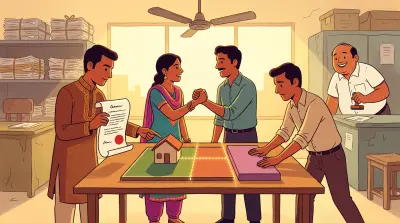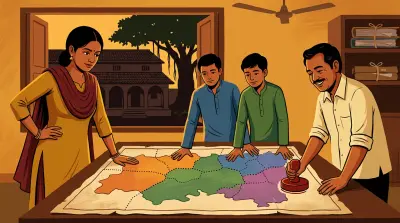

A family in Guntur decides to sell an inherited plot. The paperwork looks simple. Three siblings inherited it from their father, one of them has passed away, and that sibling’s share now sits with his widow and their twelve-year-old daughter. Everyone agrees on the sale. The buyer is ready. Then they reach the sub-registrar’s office, and the registration stalls.
The problem is the twelve-year-old. She owns a slice of that land, and in the eyes of Indian law she cannot sell it, sign for it, or agree to anything about it. Nobody in the family can simply sell it on her behalf either. Before that plot can change hands cleanly, a court has to look at the deal and say yes.
This catches families off guard all the time, and it catches NRIs hardest, because the minor is often a niece, a cousin’s child, or their own child, and the whole transaction has to be run from another country. Here is how the rule actually works, why it exists, and what it takes to sell land that a child part-owns.
Why a minor cannot sign
Indian law treats anyone under 18 as incapable of entering a contract. Section 11 of the Indian Contract Act says only a person of majority can contract, and the courts settled long ago, in the well-known Mohori Bibee case, that an agreement made by a minor is not just weak but void from the start. It has no legal effect at all.
A sale deed is a contract. So a minor cannot be the one who signs away property. Their thumbprint, their signature, a consent letter from them, none of it carries weight. This is not a formality that a friendly sub-registrar can wave through. It is a hard limit built into how contracts work in India.
That raises the obvious question. If the child owns a share and the child cannot sell it, who can?
Who controls a minor’s property
For a Hindu child, the answer is the natural guardian. Under the Hindu Minority and Guardianship Act 1956, that is the father first, and the mother after him. The guardian manages the minor’s property, protects it, and acts for the child in dealings with it.
There is one important exception, and NRIs run into it often. Where a minor holds an undivided share in joint family property, the kind of ancestral land where several relatives own by birth, the Act does not appoint a natural guardian for that share at all. That property is treated as being under the management of the family’s adult manager, the Karta. This matters because a lot of NRI family land is exactly this: undivided, held across a family tree, with a child somewhere in it who has a birthright but no name in the record. We covered how those hidden shares arise in our guide to daughters’ rights in ancestral property.
But whether the minor holds a clean inherited share or an undivided coparcenary one, the same wall stands in the way of a sale.
The rule that stops the sale
Section 8 of the Hindu Minority and Guardianship Act is the heart of it. A natural guardian may do what is reasonable to manage a minor’s property, but the guardian cannot, without the prior permission of the court, sell, mortgage, gift, or otherwise dispose of any part of the minor’s immovable property. The same section blocks long leases: anything beyond five years, or extending more than a year past the date the child turns 18.
So the guardian is not powerless. A mother can look after her child’s inherited plot, pay the taxes, keep it safe. What she cannot do is sell it on her own signature. To turn that land into money, she has to go to a district court and ask for permission first.
This is not a Hindu-only idea, though the sections differ. For a Muslim minor, a legal guardian also needs the court’s sanction to sell immovable property, and a de facto guardian, someone acting for the child without legal authority, has no power to sell at all. The Supreme Court has held such sales by de facto guardians to be void, not merely voidable. For Christians, Parsis, and others, the Guardians and Wards Act 1890 supplies both the guardian and the permission route. Across every community, the principle holds: a child’s land is not the family’s to sell at will.
What the court actually looks for
Getting permission is not a rubber stamp. The guardian files a petition, usually before the District Court or the designated guardian court, under Section 8 read with the Guardians and Wards Act. The court then tests the sale against two standards, and the sale must meet at least one.
The first is legal necessity. Is there a real need that the sale money will meet? Medical treatment, the child’s education, maintenance of the family, clearing a genuine inherited debt. A vague wish for cash does not qualify.
The second is benefit to the minor. Even without a pressing need, a sale can be allowed if the child is clearly better off for it. Selling a distant, disputed, or unproductive plot to reinvest the proceeds somewhere safer is the classic example. The test is the child’s advantage, not the family’s convenience.
Beyond the reason, the court scrutinises the numbers. It checks the sale price against the guidance value and the going market rate, so the child’s share is not sold cheap. And it almost always controls where the money goes. A very common condition is that the minor’s portion of the sale proceeds be deposited in a fixed deposit or a bank account in the child’s name, frozen until they turn 18. The guardian does not get to spend it freely. The court is protecting the child from the very people acting for the child.
This process takes time. Between filing, notice, inquiry, and the order, a permission petition can run several months. It is not something to discover in the week before a registration slot.
What happens if you skip it
Some families sell anyway. The guardian signs, a cooperative sub-registrar registers the deed, and the money changes hands. The land looks sold. It is not, cleanly.
A sale of a minor’s property made without court permission is voidable at the instance of the minor. That is the exact language of Section 8. The child, on reaching adulthood, can go to court and have the whole sale set aside. Under the Limitation Act, they get three years from turning 18 to do it, which means the transaction sits under a cloud until the person is 21.
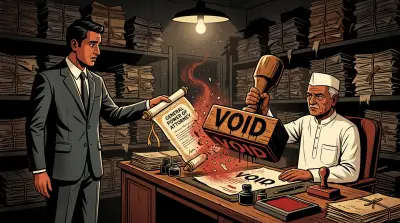
Think about what that does to a buyer. You pay full price, you take possession, you may even build, and for years afterwards a growing child holds the power to unwind your purchase of their share. This is not theoretical. It is why banks refuse loans against such property, why title insurers flag it, and why any careful buyer or their lawyer walks away the moment a minor’s uncleared share appears in the chain. The defect does not fade with time until that three-year window closes. It is the same category of hidden weakness we described in our piece on why a GPA sale can be legally worthless: the paperwork exists, the title does not.
The traps that catch NRIs
If you live abroad, three of these problems bite harder.
The first is the assumption that a Power of Attorney solves it. It does not. A PoA can only pass on authority the giver actually has. Since a guardian has no authority to sell a minor’s share without a court order, a PoA signed by that guardian cannot manufacture that authority. Routing a child’s share through a GPA holder in India does not make the sale valid. You have simply added a layer to a transaction that is still voidable.
The second is being the guardian yourself, from another country. An NRI mother selling her late husband’s estate, where a minor child holds a share, still has to obtain permission from an Indian district court. That means a petition, an Indian advocate, and often personal appearance or a properly executed representation, all coordinated across time zones. It cannot be shortcut because the family agrees or because everyone trusts each other.
The third is buying, not selling. NRIs looking to invest in family land or a resale plot sometimes take a seller’s word that the title is clean. But if a minor sat anywhere in the inheritance, a niece who was 15 when her grandfather died, a cousin’s son, and that share was sold without a court order, the buyer inherits the risk. The land you paid for can be challenged by someone who is still in school today. This is exactly why tracing the family tree and the date of every inheritance matters as much as reading the sale deed, a point we make in our broader guide on what NRIs must do with inherited property.
How to handle it properly
If you are selling land that a minor part-owns, the sequence is not complicated, but it cannot be skipped:
- Identify the minor’s exact share. Map the family tree and the dates. Who inherited what, and how old were they when the previous owner died? A child who was a minor at the moment of inheritance holds a protected share even if they are older now.
- Have the guardian file for court permission under Section 8 of the Hindu Minority and Guardianship Act, read with the Guardians and Wards Act, before agreeing to any sale timeline. Build in several months.
- Be ready to justify the sale as a necessity or a clear benefit to the child, with documents. A vague reason gets refused.
- Expect the court to direct the child’s share of the money into a locked deposit until they turn 18. Plan the deal knowing that portion is not spendable.
- If you are the buyer, insist on seeing the court order sanctioning the sale of the minor’s share. No order, no purchase.
The frustrating part for most families is not the court process itself. It is discovering, late, that a minor was in the chain at all, after the buyer is lined up and the slot is booked. The single name in a Dharani or Webland record almost never shows the child who owns a piece of the same land by inheritance. That gap between the record and the real ownership is where the sale falls apart at the sub-registrar’s counter.
Platforms like Assetly (assetlyhq.com) help NRIs get ahead of exactly this. By organising the chain of title, the succession, and the family tree behind a property in one place, the people with a claim, including a minor, surface early, while there is still time to file for permission, rather than on the day the deal is meant to close. A child’s share is not a problem you want to meet at the registration window. It is one you want to have already cleared.