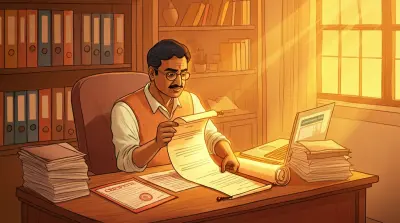


A property title does not stay clean on its own. India’s land records have evolved over two centuries through colonial deeds, state reorganisations, mass digitisation projects, and millions of unrecorded family partitions. Most defects sit quietly for years, until the moment a sale, a mortgage, or an inheritance forces the title to be examined closely. That is when the defect surfaces, the deal stalls, and the question becomes: how do we actually fix this?
The six defects below are the ones that show up most often in NRI property files in Telangana, Andhra Pradesh, and other states. For each one, here is what it looks like in practice, why it exists, and the exact route to remediation.
If you have not yet established whether your property has any defects, run a structured property title verification first. This post picks up after that: you have found something, now what.
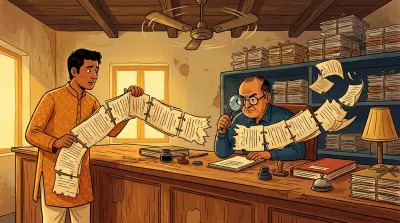
1. Broken Chain of Title (Missing Link Documents)
What it looks like. The seller produces a sale deed in their name, but cannot produce the deed showing how the property came to them. Or one document deep in the chain is unregistered, lost, or executed on stamp paper that was never registered. Banks reject the loan. A buyer’s lawyer flags the gap.
Why it happens. An inheritance was never formalised (no will, no succession certificate, no partition deed). An old partition between brothers was done on stamp paper at home and never registered. A document was lost in a flood, a divorce, or a relocation, and no certified copy was ever sought. The property changed hands through an agreement to sell paired with a Power of Attorney and a will, the so-called SA/GPA/Will route that the Supreme Court ruled invalid in Suraj Lamp & Industries v. State of Haryana (2012).
The fix.
- Apply under Section 57 of the Registration Act, 1908 for certified copies of any registered link document. The SRO where the original was registered can issue certified copies decades later, given the document number and year. Fees are nominal.
- If the link itself was never registered, execute a fresh registered deed of confirmation now between the original parties, where they are still living and willing.
- For inheritance gaps, obtain a legal heir certificate from the Tahsildar (15 to 30 days) and a succession certificate from the civil court (3 to 6 months). Where some heirs are releasing their shares, execute a registered relinquishment deed to formalise it.
- If a key party is deceased and no document exists, the remedy is a suit for declaration of title in civil court. This is slow and lawyer-led, but it is the only route when paperwork alternatives are exhausted.
When to escalate. Steps 1 and 2 are administrative. Step 4 is always lawyer-led.
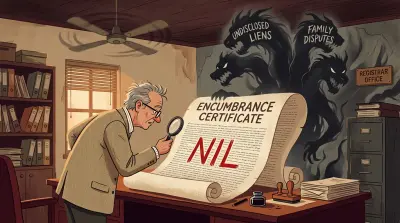
2. Encumbrance Not Discharged (Mortgage Still Showing on EC)
What it looks like. The Encumbrance Certificate shows a mortgage entry. The loan was repaid years ago, the borrower received the original documents back, but no formal release was ever executed and registered. The EC continues to show an active charge.
Why it happens. Two structural gaps. First, registered mortgages require the lender to execute a release deed and the borrower to register it at the same SRO. Lenders routinely close out the loan internally without filing this paperwork. Second, equitable mortgages (mortgages by deposit of title deeds) generate no registered document in the first place, so the EC does not show them at all, even when the original documents are still held by the lender.
The fix.
- Obtain a No Dues Certificate from the lender confirming the loan is fully repaid.
- Request the lender to execute a release deed and register it at the original SRO. Most banks have a designated department for this. The release entry then appears on the EC against the original mortgage entry.
- If the lender refuses or has been wound up, merged, or acquired: trace the successor entity through RBI records, escalate via the Banking Ombudsman, and if still unresolved, file a civil suit for declaration that the mortgage stands discharged.
- For equitable mortgages: retrieve the deposited original documents and obtain a formal letter from the lender confirming the deposit has been released. Many banks forget this final step entirely.
When to escalate. If the lender is responsive, this is paperwork that the owner can manage directly. If the lender is unresponsive, lawyer-led.
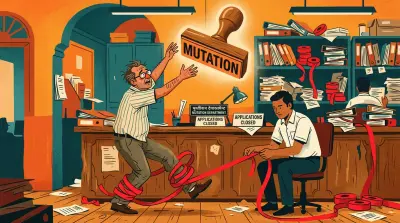
3. Mutation Not Updated After Purchase or Inheritance
What it looks like. Land records still show a previous owner or a deceased family member. Property tax bills come in the old name. A buyer’s bank flags the mismatch and refuses the home loan. In some states the SRO will not even register a fresh sale deed while mutation is pending.
Why it happens. Registration and revenue records are run by two separate departments. A registered sale deed updates the SRO’s record. It does not automatically update the revenue department’s record. Mutation is a separate application that is widely skipped because there is no immediate consequence, until the property has to be transacted.
The fix.
- For a purchase: file a mutation application through the state portal (Bhu Bharati for Telangana, Meebhoomi for AP, Bhoomi for Karnataka, Land Records Maharashtra, etc.) with the sale deed, latest EC, property tax receipt, and Aadhaar. Standard processing is 30 to 60 days if no objection is raised.
- For inheritance: file with legal heir certificate, death certificate, family member certificate, the deceased’s sale deed, and a succession certificate where available. Bhu Bharati provides a specific deceased-pattadar route under its Modification Request module.
- If the application is rejected for documentation gaps, refile after curing the specific defect identified. Do not restart from scratch.
- If a third party objects to the mutation (a sibling claiming a share, a neighbour claiming encroachment), the application is referred to the Revenue Divisional Officer and converts into a contested proceeding.
When to escalate. Uncontested mutations are owner-managed. Once it becomes contested, lawyer-led.
4. Survey Number or Extent Mismatch
What it looks like. The survey number on the sale deed does not match what currently appears in revenue records. Or the extent (acres, square yards, square feet) in the deed does not match the area reflected on Bhu Bharati or the master plan. Or the survey number on the deed does not appear on the master plan at all.
Why it happens. Government resurveys redraw boundaries and reassign numbers. Partial sales create sub-divisions that revenue records do not always pick up. The Dharani to Bhu Bharati transition in Telangana (April 2025) introduced thousands of digitisation mismatches that owners are still working through. Historical stamp duty fraud, where deeds deliberately understated area, leaves permanent gaps.
The fix.
- For a clerical error in the sale deed itself: execute a rectification deed at the same SRO where the original was registered. Both original parties (or their legal heirs) must sign. Stamp duty is nominal for genuine clerical corrections.
- For a Bhu Bharati or Meebhoomi mismatch where the deed is correct: file a Modification Request through the portal with the registered sale deed, EC, and the most recent pahani or adangal. The revenue record is then brought into alignment with the registered document.
- For a missing survey number on the master plan: this is a town planning issue rather than a title issue. Apply through the relevant authority (DTCP, HMDA, GHMC) referencing the registered deed as proof that the parcel pre-existed the current plan.
- For a missing or wrong survey number in Telangana specifically: Bhu Bharati’s missing-survey-number module is the first route, with a separate deceased-pattadar option where the registered owner has passed. It is also worth checking the survey number against Telangana’s Section 22A prohibited-property registers, since government, endowment, and assigned land are flagged there and are a frequent cause of survey-number and extent mismatches.
When to escalate. If the mismatch is large and the seller cannot demonstrate a clean correction trail, treat it as a red flag and bring in a lawyer before committing any consideration.
5. Pending Litigation on the Property
What it looks like. A National Judicial Data Grid (njdg.ecourts.gov.in) search returns a case where the property or a party in the chain of title is named. The EC may or may not show a lis pendens entry. The case may be a partition suit between siblings, a specific performance claim from a previous failed transaction, a mortgage enforcement proceeding, or a fraud complaint.
Why it happens. Section 52 of the Transfer of Property Act establishes the doctrine of lis pendens: any transfer of property during pending litigation is subject to the outcome of the suit. A formal lis pendens notice can also be registered with the Sub-Registrar under Section 18 of the Registration Act, 1908, putting later buyers on constructive notice. But that registration is compulsory only in Maharashtra and Gujarat. In Telangana, Andhra Pradesh, Karnataka, and most other states it is optional, and the duty to file falls on the party filing the suit, not the court. In practice the notice is rarely registered, so an EC can look clean while a contested suit is actively running. Family partition disputes are the most common type, particularly where one co-owner sold without releasing the others’ shares.
The fix.
- Pull the case details from NJDG. Note the court, the case number, the parties, and the relief sought.
- Obtain certified copies of orders and the current status from the court, in person or through a local clerk. A case showing as “pending” for 15 years may be effectively dormant. A recent case with active orders is a live problem.
- If you are buying: demand that the seller resolve, settle, or quash the case before completion. Do not accept “we will handle it after sale.” Any subsequent buyer takes the property subject to the doctrine of lis pendens.
- If you are already the owner and a case has been filed against your property: file the appropriate response (written statement, counter-affidavit, intervention application) within the statutory period. Missing a court deadline is the most common way owners lose property they actually own.
When to escalate. Litigation is always lawyer-led. The question is not whether, but how quickly.
6. Benami or Suspicious Transfer in the Chain
What it looks like. A link document in the chain looks irregular: a transfer between unrelated parties for a token sum, a deed executed days before the previous owner’s death, a chain that runs through a shell company. Or the Enforcement Directorate or the Income Tax Department has issued a notice referencing the property.
Why it happens. The Benami Transactions (Prohibition) Act, 1988, amended substantially in 2016, covers transactions where consideration is paid by one person but the property is held in another’s name. The 2016 amendment made the law sharply more punitive (rigorous imprisonment of 1 to 7 years plus fines up to 25% of fair market value) and widened the categories of arrangements caught. The Supreme Court in Union of India v. Ganpati Dealcom (2022) had held that the 2016 amendment cannot be applied retroactively, but the Court recalled that judgment in October 2024, so the retroactivity question is now open again rather than settled in the owner’s favour. An older suspicious chain is not automatically beyond reach. For how benami arrangements are created and the narrow exceptions that are legal, see our guide to benami property. ED and Income Tax investigations sometimes attach properties without notice to current good-faith owners where the property appears in an earlier benami chain.
The fix.
- Confirm whether the property is under any active benami attachment, PMLA attachment, or Income Tax notice. The ED portal lists confirmed attachments. A lawyer can verify case status through formal channels.
- If a suspicious link is in your chain but predates your purchase and you bought in good faith, the legal position of “bona fide purchaser for value without notice” may apply. This is a defence to be raised in proceedings, not an automatic exemption. The older the suspicious deed and the more arms-length transactions sit between it and you, the stronger the defence.
- If an attachment exists, the only remedy is to file an objection before the Adjudicating Authority under the Benami Act within the statutory window. Missing this window is effectively conclusive.
- If no attachment exists yet but the chain is genuinely suspicious, obtain a senior property lawyer’s title opinion before any sale or mortgage. Disclosure of a known irregular chain to a buyer is required. Non-disclosure converts a defendable civil position into criminal fraud.
When to escalate. Always lawyer-led, ideally a lawyer with white-collar criminal experience. Benami matters carry criminal exposure.
What Assetly Checks Automatically vs What Needs a Lawyer
The diagnostic phase of every defect on this list is now substantially automatable. The remediation phase often is not.
Assetly’s Prabhakar AI consolidates the online diagnostic dimensions:
- EC pulls and reconciliation against the registered chain (IGRS portals for Telangana, AP, Karnataka, Tamil Nadu, Maharashtra)
- Bhu Bharati, Meebhoomi, and Bhoomi revenue record verification against the deed
- NJDG litigation search by party name and survey number
- Survey number and extent mismatch detection between registered and revenue records
- GHMC and other municipal tax due verification
What still requires a lawyer or a Power of Attorney holder on the ground:
- Section 57 certified copy retrievals from older SROs, particularly pre-digitisation records
- Drafting and execution of rectification deeds, release deeds, and deeds of confirmation
- Suits for declaration, written statements, and intervention applications
- Negotiation with banks for mortgage discharge where the lender is unresponsive
- Any benami, PMLA, or Income Tax attachment matter, at any stage
For most NRI owners the practical pattern is to run the diagnostic remotely, then engage a lawyer only for the remediation steps that legally require one. Doing it in that order means the lawyer’s time is spent on the actual fix, not on figuring out what is wrong.
Run a free title check with Assetly’s Prabhakar at assetlyhq.com/free-tools and see exactly what is in your title chain before any of these defects surface at the worst possible moment.