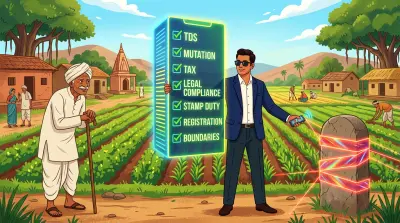
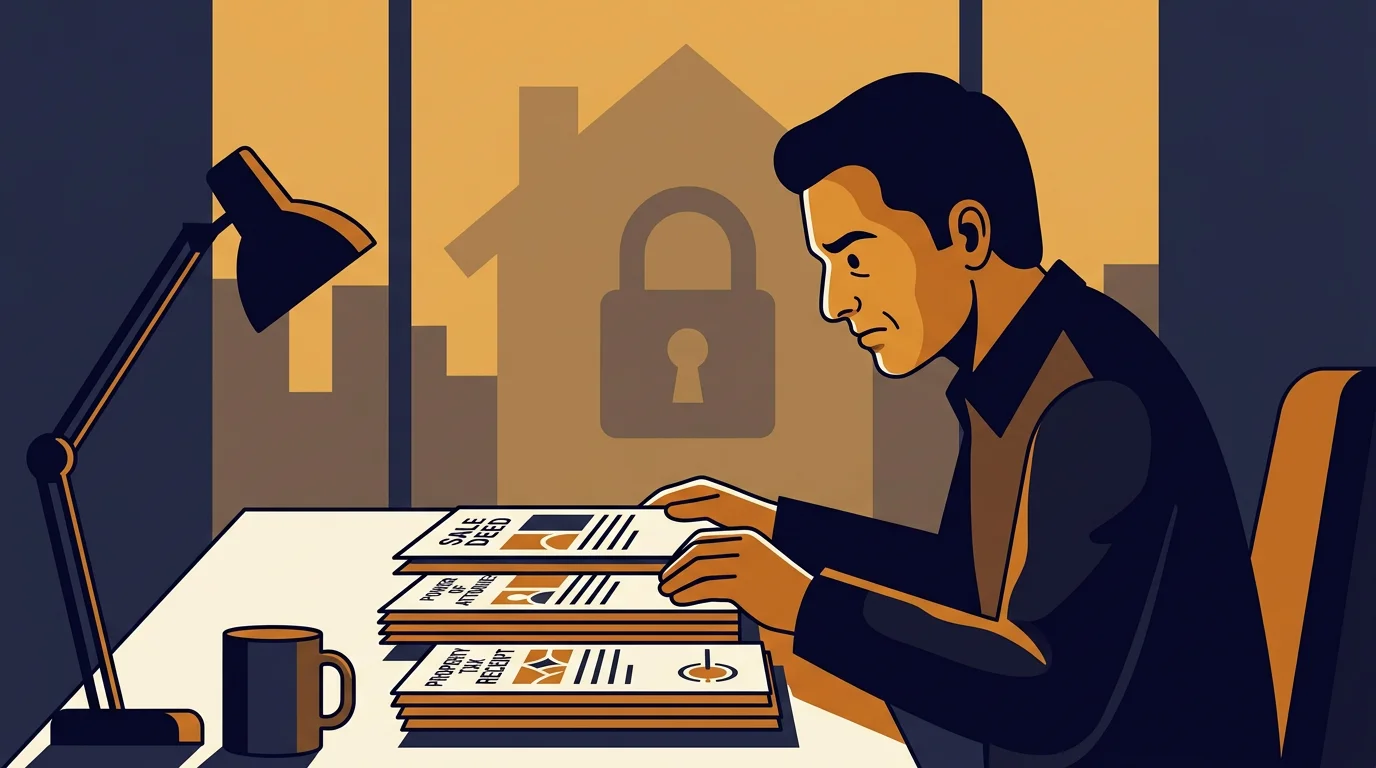

You bought the flat. Or inherited it from your parents. Or you’re planning to buy. Either way, you’re managing property from thousands of kilometres away - and the margin for error is small.
Most NRI property problems aren’t caused by fraud or bad luck. They’re caused by a handful of specific, repeatable mistakes. The same ones, made by NRI after NRI, year after year.
Here are the seven most common - what they are, why they happen, what goes wrong, and exactly how to fix each one.
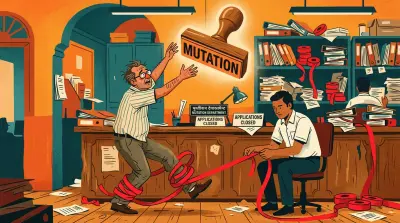
1. Not Updating Mutation After Purchase or Inheritance
What it is: Mutation - called khata in Karnataka, patta in Tamil Nadu, or simply mutation in Telangana (handled by GHMC for urban properties, or via the Bhu Bharati portal for agricultural land) - is the update of ownership records at the local municipal or revenue office. When you buy or inherit property, this record needs to be changed into your name. It is a separate step from registration.
Why NRIs skip it: The sale deed is registered and stamped, so it feels done. Most buyers don’t realise mutation is an additional filing at a different office. For inherited property, there’s no conveyance deadline pushing you to act.
What goes wrong: The property stays in the previous owner’s name in municipal records. You can’t pay property tax in your own name. When you eventually sell, buyers’ lawyers flag the ownership mismatch and the transaction stalls. In inheritance cases, other family members may contest your claim. Banks won’t approve a mortgage for buyers if mutation hasn’t been updated.
How to fix it: File for mutation at your local municipal body or revenue office shortly after registration or inheritance. Documents needed: the sale deed or inheritance document, death certificate (for inherited property), your Aadhaar and PAN, and recent property tax receipts. Most states have a simple application process - a lawyer isn’t always required.
Assetly tracks mutation status as part of your property’s document checklist, so you know exactly where you stand before it becomes a problem.
2. Leaving Property With Just a Caretaker and No Real Monitoring
What it is: Many NRIs appoint a relative or a paid caretaker to keep an eye on the property. That arrangement is often the entirety of the monitoring plan.
Why NRIs do it: It feels sufficient. Someone is physically there. They’ll call if something is wrong.
What goes wrong: Quite a lot. Unauthorised tenants move in and become legally difficult to remove. Encroachments begin - someone builds a wall, parks vehicles, or starts constructing along the boundary. The caretaker rents the property out without your permission. Property tax goes unpaid because no one is tracking due dates. You find out only when the situation is already serious.
How to fix it: A human presence isn’t monitoring - it’s presence. Real monitoring means scheduled visits with photographic records, verified boundary checks, property tax tracking, and a defined escalation process. At minimum, arrange for a professional - a chartered engineer, a property manager, or a service like Assetly - to conduct documented site visits at least twice a year.
Assetly’s monitoring service schedules regular visits, photographs boundaries, and flags issues before they become crises.
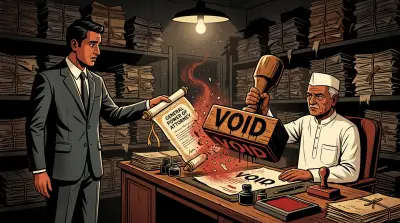
3. Signing a GPA Sale Instead of a Registered Sale Deed
What it is: A GPA (General Power of Attorney) sale is when someone sells you a property not through a proper registered sale deed, but via a GPA - making you the attorney for the original owner, so you can act on their behalf.
Why NRIs get caught in it: It’s cheaper - no stamp duty on a GPA transfer. Sellers push it when they have title complications or outstanding taxes they haven’t resolved. Some buyers are told it’s equivalent to a sale deed.
What goes wrong: In 2011, the Supreme Court of India ruled in Suraj Lamp & Industries v. State of Haryana that GPA sales do not transfer ownership. You don’t legally own the property. The original owner can sell it again to someone else. Their creditors can attach it. After their death, their heirs can claim it. You cannot pass it to your own children through a valid chain of title.
How to fix it: Never accept a GPA as a substitute for a registered sale deed. If you’ve already completed a GPA sale, consult a property lawyer - some states have provisions to regularise these transfers. When buying, insist on a registered sale deed with full stamp duty paid.
Our full GPA explainer covers the Supreme Court ruling in detail and what your options are if you currently hold a GPA title.
4. Skipping an EC Check Before Buying
What it is: An Encumbrance Certificate (EC) is issued by the sub-registrar’s office and lists every registered transaction on a property - mortgages, prior sales, loans, attachments, legal charges. It tells you whether the property is free of financial liabilities.
Why NRIs skip it: The seller provides a copy and says everything is clean. The buyer trusts the builder. Getting one from India feels cumbersome when you’re abroad.
What goes wrong: You buy a flat that’s mortgaged to a bank. Or land that was part of an earlier disputed sale. Existing liabilities don’t disappear when ownership changes - they transfer with the property. You can end up being responsible for someone else’s loan or fighting a case you didn’t know existed.
How to fix it: Always pull the EC yourself, directly from the sub-registrar’s office or your state’s online land records portal. Don’t rely solely on the one the seller provides. The EC should cover at least the last 13 years - ideally 30 years for older properties. Verify that the person selling to you matches the most recent registered owner on the EC.
Our step-by-step guide to getting an EC online covers how to do this for Telangana and Andhra Pradesh properties.
5. Not Getting Form 128 for Lower TDS in Time
What it is: When an NRI sells property in India, the buyer must follow the non-resident withholding entry under Section 393 of the Income-tax Act, 2025. The correct withholding base and rate require a current transaction-specific computation; they should not be inferred from the 12.5% capital-gains headline alone.
The capital-gains rate and the amount the buyer must withhold are not interchangeable. The seller’s status, taxable sum, surcharge, cess, exemptions and any certificate can change the result.
Form 128 is the application for a lower or nil deduction certificate under Section 395(1). If approved, the buyer follows the rate specified in the certificate.
Why NRIs miss it: Many do not know Form 128 exists. Others apply too late, after the payment schedule has already been fixed.
What goes wrong: Without an applicable certificate, the buyer follows the ordinary withholding rule. If that exceeds the final liability, the difference must be reconciled through the return and refund process.
How to fix it: File Form 128 through the current electronic route well before the anticipated payment date. You will need the cost evidence, estimated capital-gains calculation, buyer details and current tax position. A chartered accountant can prepare the application and track it.
6. Missing Property Tax Payments for Years
What it is: Property tax is an annual levy from the local municipal body on every property. Online payment is available in most Indian cities - but payment reminders rarely reach NRIs abroad, and many assume someone else is handling it.
Why NRIs miss it: They assume the caretaker is paying. Or that a family member has it covered. Or that missing a year isn’t a big deal.
What goes wrong: Unpaid property tax accumulates with penalty and interest - typically 1–2% per month in most municipalities. Multi-year arrears can trigger notices and, in some cases, attachment proceedings. When you eventually sell, buyers will require proof that all arrears are cleared as a condition of the transaction. Clearing years of accumulated dues right before a sale - under deadline pressure - is expensive and stressful.
How to fix it: Set a recurring calendar reminder for your state’s property tax payment period. Most municipal portals (GHMC, BBMP, PCMC, MCD, etc.) accept payment with an international credit card. Keep the receipts - you’ll need them for mutation updates and future transactions. If you’ve missed multiple years, pull the outstanding dues statement from the portal and settle everything at once, including penalties.
Assetly tracks property tax due dates and sends you alerts before the deadline - not after the penalty starts running.
7. Not Having an Up-to-Date Registered POA
What it is: A Power of Attorney (POA) authorises someone in India to act on your behalf for property matters - signing documents, appearing at registrations, paying taxes, and dealing with government offices. For NRIs managing property remotely, a POA isn’t optional - it’s essential.
Why NRIs neglect it: They set one up years ago and assume it’s still valid. Or they have only a notarised POA, which isn’t accepted for many official transactions. Or they’ve lost touch with the person they appointed.
What goes wrong: The POA holder dies, or your relationship with them changes. You need to urgently sign off on a transaction from abroad but your POA is outdated, unregistered, or held by someone you no longer trust. POAs executed overseas must be apostilled (or embassy-attested for non-Hague countries), and stamped within three months of arriving in India under the Indian Stamp Act. Registration at the sub-registrar’s office is required when the POA is used for sale or transfer of immovable property - many NRIs skip the registration step and discover later that the document is rejected for the very transaction they need it for.
How to fix it: Maintain a current POA with a trusted individual in India - a lawyer is often a better choice than a family member for contentious situations. Define the scope clearly: a narrow POA limited to specific actions (filing mutation, collecting documents, representing you at the revenue office) is safer than a broad open-ended one. Review every 3–5 years to confirm the holder is still trusted, reachable, and willing to act. If you’re executing a POA abroad, get it apostilled (or embassy-attested for non-Hague countries) and stamped in India within three months. If the POA will be used for a sale, transfer, or mortgage, also have it registered at the sub-registrar’s office before the transaction.
Assetly’s document tracking flags when your POA is approaching a self-imposed renewal date or when the underlying details (POA holder, scope, attestation) need to be refreshed.
The Bottom Line
None of these are obscure mistakes. They’re the ones NRI families walk into, year after year, usually because nobody told them what to watch for before it was too late.
Every single one is preventable upfront - or fixable once you know about it.
Assetly helps reduce six of these seven risks by keeping document status, monitoring evidence and deadlines visible. The lower-deduction application still needs a qualified tax professional.
If you’re managing property in India from abroad, see how Assetly works - or start by running a document health check on what you currently have in place.