

When most NRIs hear “property management”, they picture a rental agent: someone who finds tenants, collects the rent, and sends a plumber when a tap leaks. That is a real service, but for most NRI owners it is not the service they actually need.
A large share of NRI-owned property in India is vacant, occupied by family, or held as a long-term asset. There is no tenant, no monthly rent, and no maintenance call. What there is, instead, is an asset sitting thousands of kilometres away that can quietly lose value, or ownership, while no one is watching. Managing that is a different job entirely.
Property Management Means Something Different for an NRI
For a resident landlord, management is operational: keep the unit occupied, keep it maintained, keep the cash flowing. For an NRI, the centre of gravity shifts from operations to protection. The questions that matter are not “is the rent paid?” but “is the title still clean?”, “has anyone tampered with the land record?”, “am I compliant?”, and “if I needed to sell next month, could I?”.
This is why the rental-agent model fails NRIs. It is built to solve a problem most NRI owners do not have, and it ignores the problems they do. The right frame here is ownership management: the work of keeping your legal claim to the property clear, current, and defensible from abroad.
The Five Non-Negotiables
Strip away the marketing and real NRI property management comes down to five things. Miss any one and the asset is exposed.
1. Title clarity
Everything else rests on this. You need an unbroken chain of title, a clean encumbrance certificate, and original link documents that establish how ownership reached you. For inherited or jointly held property, this is where most disputes begin: a partition that was never registered, a legal heir who was never recorded. Treat title as the foundation you verify before doing anything else with the property, not a box you tick once.
2. Risk monitoring
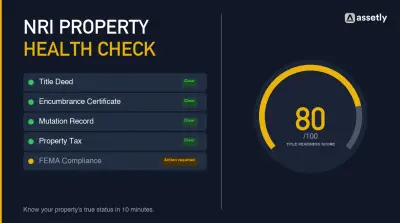
Most damage to NRI property is slow and silent. A fraudulent registration against your land, an encroachment on a vacant plot, a mutation quietly changed: none of these announce themselves. By the time a relative or neighbour mentions it, the problem may be years old and far harder to unwind. Monitoring means watching the land record and compliance status on an ongoing basis, not discovering the problem during a sale years later.
3. Document organisation
Title deeds, the encumbrance certificate, mutation records, tax receipts, approved plans, and succession papers tend to live in different cupboards, inboxes, and relatives’ homes across two countries. When you suddenly need them, for a sale, a loan, or a dispute, scrambling to reassemble them costs weeks. A single organised record of every document, accessible from abroad, turns a crisis into a five-minute task.
4. Compliance: tax and mutation
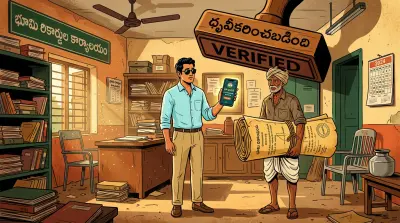
Property tax arrears accumulate quietly and can eventually cloud a title or block a transaction. Mutation, the updating of municipal and revenue records into the current owner’s name, is routinely skipped after a purchase or inheritance and surfaces painfully later. NRIs also carry tax and FEMA obligations that residents do not. Staying compliant is not glamorous, but it is what keeps the asset clean and sellable.
5. Transaction readiness
The point of protecting a property is to be able to act on it: sell, transfer, gift, or pass it on. An owner whose title is verified, documents are organised, and compliance is current can transact in weeks. An owner who let all of that drift can spend months, and sometimes litigation, just getting to the starting line. Transaction readiness is the payoff for doing the first four well.
What a Caretaker or Local Agent Can and Cannot Do
A trusted caretaker or local agent is genuinely useful for some things. They can visit the property, check whether it is physically secure, deal with a tenant if there is one, and be your eyes on the ground for a specific task. Keep that relationship if it works.
What they generally cannot do is the legal and compliance work that actually protects ownership. A caretaker does not verify your chain of title, read an encumbrance certificate, track mutation status, or flag a fraudulent registration filed at the sub-registrar’s office. Relying on one individual also concentrates risk: their memory, their availability, and their honesty become single points of failure for your most valuable asset. Boots on the ground are part of the answer, but only part of it.
The NRI Gap: Legal and Compliance, Not Just Someone on the Ground
This is the gap the traditional market leaves open. Rental agencies manage tenants. Caretakers watch the building. Lawyers help once there is already a dispute. None of them, on their own, give an NRI a continuous, organised view of whether their ownership is sound.
What an NRI actually needs is the combination: legal verification, compliance tracking, and organised records, with on-ground service available when a task genuinely requires a person there. That combination rarely exists in one place through the old model, which is why so many NRIs only discover a problem when they try to sell.
Platform-First, Not Person-First
The shift that makes remote ownership manageable is moving from person-first to platform-first. Instead of one individual holding the knowledge in their head, the property’s status lives in a system you can see from anywhere.
In practice that means your documents in one vault, your title and encumbrance verified against government records, your tax and mutation status tracked, and physical services ordered only when needed, against a clear record of what was done. People still do the on-ground work, coordinated through the platform rather than holding all the knowledge themselves. The result is something a single caretaker cannot offer: continuity, transparency, and a view that does not disappear when one person stops answering the phone.
How Assetly Approaches It
Assetly is built around ownership management rather than rent collection. The core is an Ownership Ledger and document vault where you add a property and store every related document in one place. From there you can verify records, fetch an encumbrance certificate, keep track of what is missing, and order on-ground services such as physical inspections through verified partners. Prabhakar, Assetly’s AI assistant, answers specific questions about your documents and what your results actually mean. For signed-up users, Assetly provides continuous monitoring of land records and compliance status, so changes surface early rather than during a sale.
One caveat. Assetly is not a rent-collection or tenant-management service. On-ground services currently focus on Telangana and Andhra Pradesh, where the partner network operates, and are expanding from there. The fit is NRIs who own property in India and want their legal status clear and current, rather than landlords whose main need is monthly rent.
If that describes you, the starting point is simple. Add your first property to Assetly for free, see its true status, and decide what to do from there. For most NRIs, that first clear view of where their property actually stands is worth more than any amount of rent collection.